
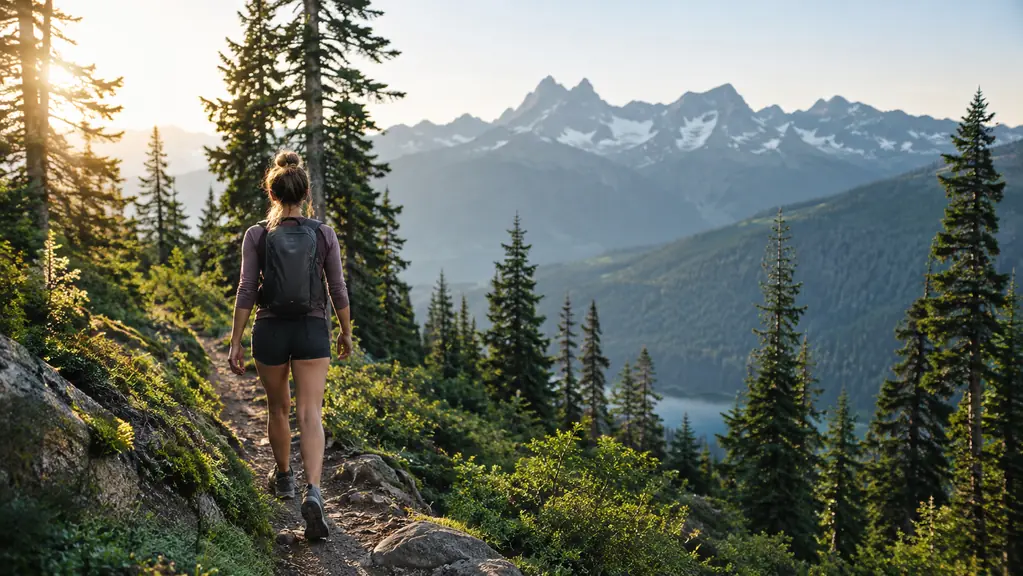
Ask me which daypack I grab from the back of my 2013 4Runner on a Saturday morning and I will hand you the folded one every time. For the last two seasons I have carried the 20L Outlander packable daypack on nearly every day hike out of the Three Sisters Wilderness, and my old 45L framed backpack has spent most of that time on a shelf in the garage. That was not the plan. I bought the Outlander as a spare, something to stuff in a duffel for a trip to the coast, and it turned into the pack I reach for first. It took about three weeks for that flip to happen, and it has never flipped back.
The short answer to the question in the title is this: for an ordinary day hike, a 20L packable daypack is enough for everything you actually carry. Water, a puffy, lunch, a headlamp, a first-aid kit, a fleece for Dana when the wind picks up on the ridge, it all fits with room left over. The full-size pack only earns its place when you are carrying a tent, a sleeping bag, and three days of food. That is the honest line I have drawn after two full seasons of testing both, and it has saved me from carrying three extra pounds of frame and suspension on every single walk.
Why I Owned a Full-Size Pack for So Long
The full-size pack came first, naturally. I bought my 45L years ago when I was section hiking the PCT in my forties, and it did that job well. For a long time I treated it as my only pack, which meant I carried it on day hikes too, because it was the only thing I owned. It felt like the responsible choice, and the weight did not bother me much when I was younger and the trail was the point.
The change came when we started car-camping out of the 4Runner most weekends from May to October. Dana and I would set up camp, then walk four or five miles to a lake and back, and I would stand there with a framed pack built to carry a tent, carrying a sandwich and a water bottle. It was absurd and I knew it. That is the moment a packable daypack made sense, and it is the moment I started shopping for one.
How I Tested the Outlander
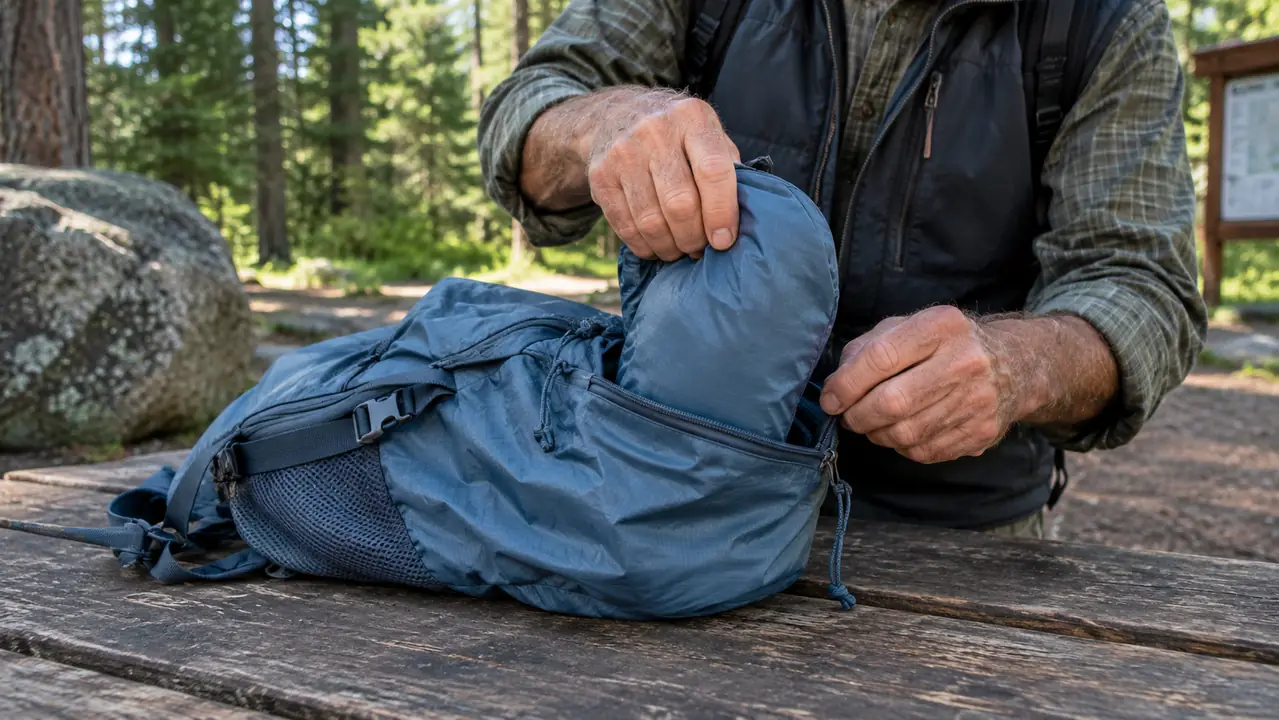
I have used the 20L Outlander on about forty day hikes over the last two seasons. The ones I remember best are a long one into the Three Sisters Wilderness in June when the trail was still patchy with snow, a hot August walk in the high desert east of Bend where I carried three liters of water, and a September trip when the temperature dropped thirty degrees by the time we came down off the ridge. Each one tested the pack in a different way.
I weighed it on the kitchen scale, eleven ounces. I stuffed it into its own pocket until it was smaller than a loaf of bread, then stuffed that into the 45L for the overnight trips. I loaded it heavy to find the limit, and I loaded it light to find the comfortable spot. I did not baby it. It has been rained on, packed wet, thrown into the back of the 4Runner under a cooler, and left in the sun on the tailgate while we ate lunch. By the end of the second season I had a clear sense of exactly where the comfort ceiling is, and that is the number I keep coming back to when people ask whether this pack can replace their big one.
What a Day Hike Actually Needs
Here is the honest list of what Dana and I carry for a normal day out. Two liters of water, split between the bottle pockets. A puffy jacket for the top of the ridge. Lunch, usually sandwiches and an apple. A first-aid kit the size of a paperback. A headlamp, even when we plan to be back by four. Sunscreen and a spare fleece. That whole list weighs maybe seven pounds, and it fits in the 20L with the roll-top barely engaged.
The things people worry about fitting, a camera, a bigger water bottle, a rain shell, they all fit too. The Outlander has a main compartment, two stretchy side pockets that hold a water bottle firmly, and a small zippered pocket on the front for keys and a phone. That is enough organization for a day. You are not carrying a tent, so you do not need forty pockets to fill, and the lack of extra pockets is part of why the pack stays so light.
| Outlander 20L Packable | Full-Size 45L Framed Pack | |
|---|---|---|
| Weight | 11 ounces, easy to forget | Close to 3 pounds before you load it |
| Packed size | Folds into its own pocket, smaller than a loaf of bread | Never folds, takes a whole shelf |
| Price | A fraction of the cost of a framed pack | A serious framed pack runs many times more |
| Day-hike capacity | 20L fits a full day of gear and water | 45L carries the same day load with room wasted |
| Load comfort | Fine under about 12 pounds, simple straps | Frame and hip belt carry 30+ pounds all day |
| Overnight capacity | No room for tent and sleeping bag | Tent, bag, stove, and food for two people |
| Organization | One main pocket, two bottle sleeves, small front pocket | Lid pocket, hip belt pockets, hydration sleeve, more |
| Best for | Day hikes, travel, a spare bag | Multi-day trips and heavy loads |
Where the Outlander Wins
Start with the thing that sold me. The whole pack folds into its own front pocket and comes out smaller than a loaf of bread, and it weighs eleven ounces on my kitchen scale. My 45L pack weighs close to three pounds before a single item goes in it. When you are walking out of the Deschutes canyon with that 45L on your back, you are carrying the pack itself as a job. The Outlander disappears to the point that I check my shoulder to remember it is there.
It also costs a fraction of what a framed pack costs, which matters because it makes the Outlander an easy second pack to own without guilt. I keep one in the 4Runner all season and one in the hall closet for travel. It does double duty as a camp bag, a grocery bag at the farmers market in Bend, and a dry place to carry a jacket and a lunch on the boat. I have also handed it to Dana on a warm day when she did not want to carry anything at all, and it worked for her the same way it works for me.
The third win is the one that surprised me, it carries better than a bag its size has any right to. The shoulder straps are simple foam rather than the molded panels you get on a big pack, but they are cut wide enough that an eleven-ounce load is a non-issue. For the seven pounds of gear a day hike actually needs, the Outlander is as comfortable as anything I have carried, and I say that as somebody who spent thirty years carrying heavy tools on my back.
I stopped carrying the 45L on day hikes about three weeks after I got the Outlander. Nothing about that decision was hard.
Where the Full-Size Pack Wins
Be honest about the other side of it. My 45L has a proper frame, a padded hip belt that takes the weight off my shoulders, load lifters, and a suspension that spreads a heavy load across my whole body. The Outlander is a lightweight bag with simple shoulder straps and a chest strap. If I load it past about twelve pounds, the weight sits squarely on my shoulders, and I feel every mile of it by the end of the day.
The full-size pack also swallows the stuff a daypack cannot. When we do an overnight near Smith Rock, the 45L carries the tent, the sleeping bags, the stove, and food for two people. That is not a job the 20L can do, and no amount of clever packing changes the math. If you are planning multi-day trips, you need a pack that carries a real load on a real frame, and a packable daypack is simply the wrong tool for it.
There is also a comfort argument that has nothing to do with load. A framed pack holds the weight close to your body and moves with your hips. On an eight-mile day with ten pounds in the Outlander, I notice the straps by mile six. It is not pain, it is just presence. On the same day with the 45L, I would not notice the pack at all, because the frame is doing the work. If you hike long miles every week, that difference matters. I do not say that to talk you out of the Outlander. I say it so you buy it for the right job.
For the day hikes you actually do, the 20L Outlander is the pack that goes with you.
If you are tired of carrying a framed pack for a six-mile walk, this is the fix. It folds small enough to live in your vehicle all season, and it weighs so little you forget it is there. Today's price on Amazon is far less than you would pay for a spare of anything else.
Amazon Check Today's Price on Amazon →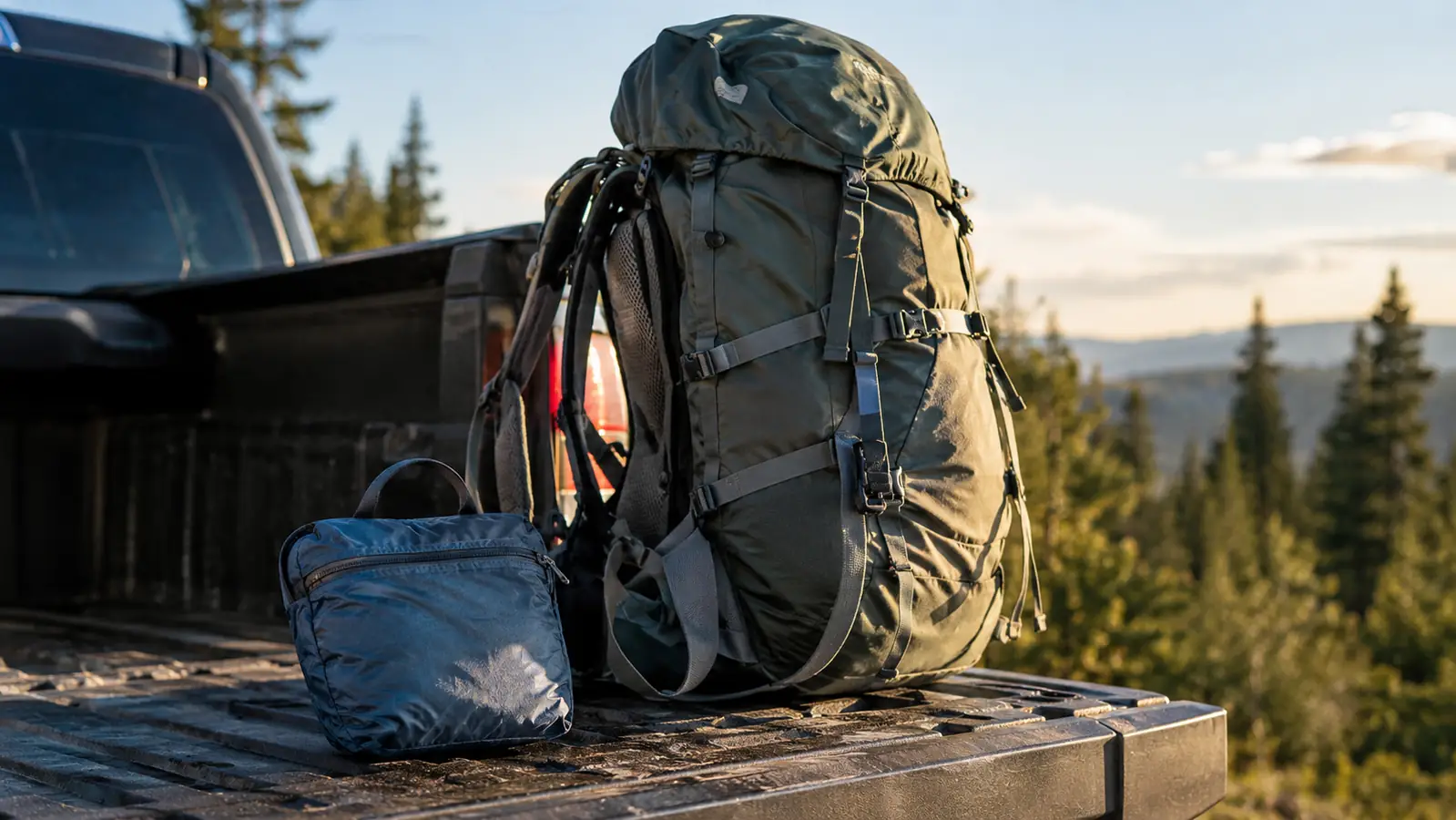
Who Should Buy Which
If you day-hike a few times a season, car-camp most weekends from May to October, and want a pack you can own as a spare without feeling the cost, buy the Outlander 20L. It is also the right call if you travel and want a daypack that does not eat a third of your suitcase. For those two jobs, the full-size pack is overkill, and overkill is just weight.
If you are planning your first overnight, or you carry fifteen pounds of camera gear, or you already wake up with sore shoulders after a walk, buy the full-size pack. The rule I use is simple. If I am back before dark, the Outlander comes. If I am sleeping out, the 45L comes. There is no shame in owning both, and most of us eventually do. You are not failing at hiking by having a daypack for day hikes and a real pack for real trips.
What About the 33L?
Outlander makes this same pack in a 33L version, and it is a fair middle ground. The 33L weighs a bit more but still folds into its own pocket, and it gives you room for a sleeping bag and a pad if you want to go very light on an overnight. I have not bought one because the 20L covers my day hikes and the 45L covers my overnights, but if you are choosing a single pack to do a little of both, the 33L is the one I would try first. The fabric and the build are the same, so the durability story carries over.
The Tradeoffs Nobody Mentions
Three things about the Outlander that do not show up in the marketing. First, the fabric is light and the pack is not built to be dragged across granite. I treat mine with reasonable care and it has held up fine through two seasons, but I would not use it as a climbing pack or expect it to survive being strapped to a pack animal. It is a daypack, and it is happy being a daypack.
Second, the shoulder straps are not padded like a big pack, so the comfort limit is real. Twelve pounds is about my ceiling, and past that I want the frame back. Third, the main opening is a roll-top with a drawstring rather than a big zipper, so you want to be thoughtful about how you load it if you carry a lot of small items. None of these are dealbreakers. They are just the reasons this pack is not a replacement for a real backpack, and nobody should pretend otherwise.
The Bottom Line
After two seasons, I have a simple answer to the question in the title. For a day hike, the packable daypack wins, and it is not close. It is lighter, smaller, cheaper, and it does the job of carrying seven pounds of gear without complaint. The full-size pack wins the moment you are carrying a tent, and I would never tell a person heading out overnight to buy a daypack instead. But for the kind of hiking most of us do most weekends, the Outlander is the pack I reach for, and that is the whole review. If you only ever hike from a trailhead and never camp, you could argue you do not need the full-size pack at all. I would not argue much.
My advice: start with the 20L and let it prove itself on your next three hikes.
Check today's price on Amazon. If it does not become the pack you grab first, you are a more dedicated hiker than I am, and either way it earns its place in the back of the 4Runner.
Amazon See the 20L Outlander on Amazon →