
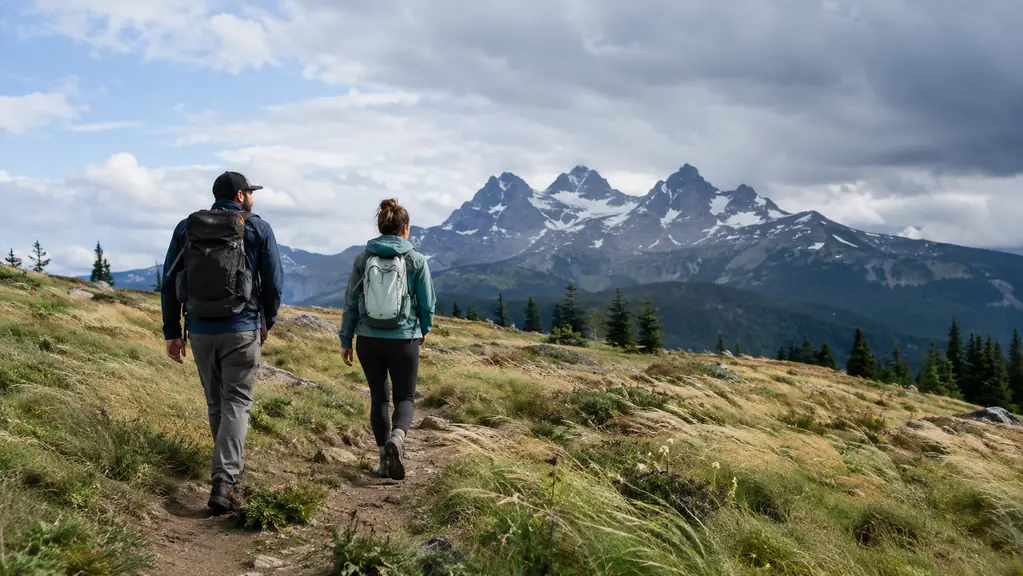
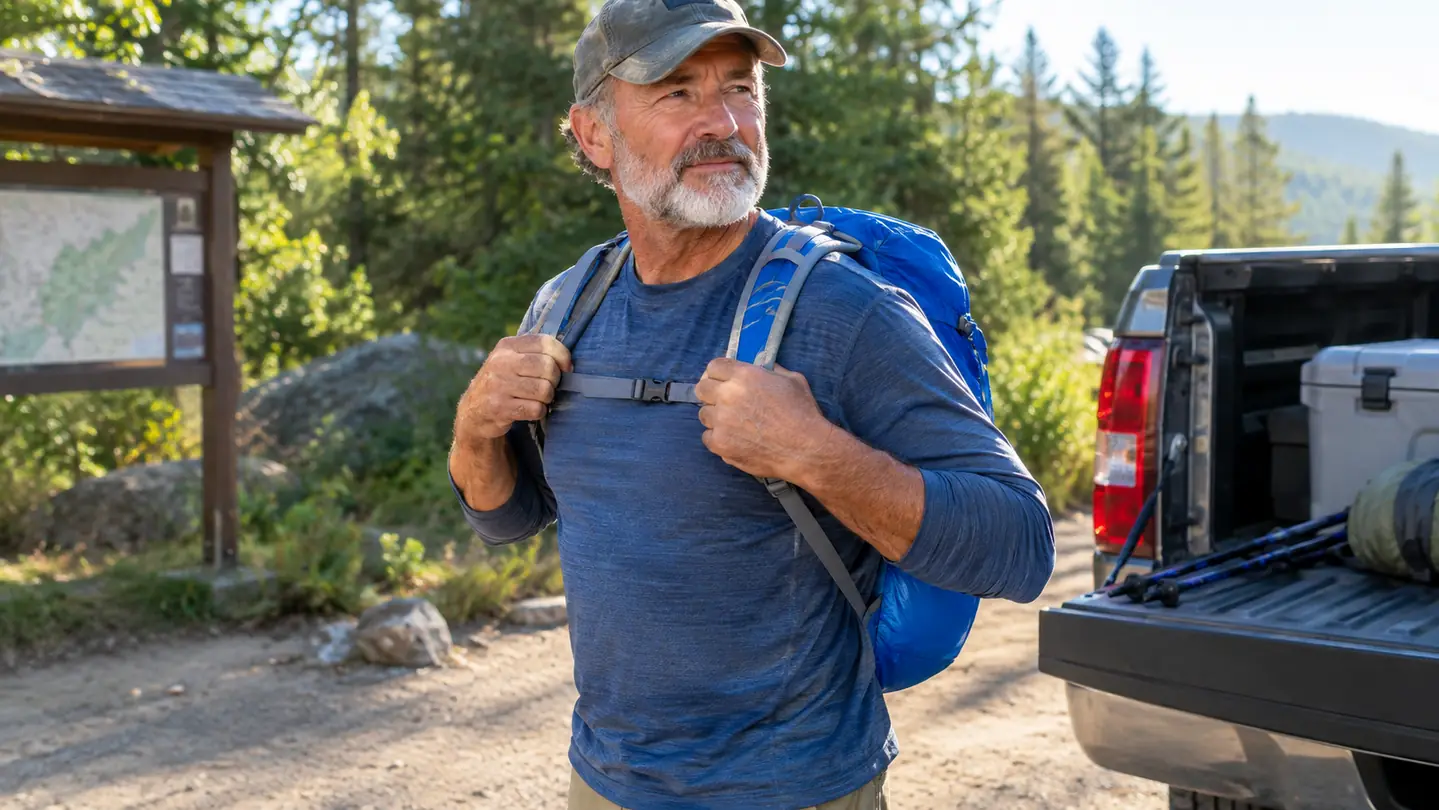
Last September, Dana and I parked the 4Runner at the Green Lakes trailhead off the Cascade Lakes Highway on a morning so clear you could count the ridges on the Three Sisters. The plan was a six-mile out-and-back to the lake, lunch on the shore, home before dark. I grabbed the Outlander packable daypack out of the back because it weighs next to nothing and I didn't want to haul the big framed pack for a short hike. That decision, made in about five seconds, is the whole reason this story ends the way it does.
The morning was the kind that makes you forget Oregon's September weather can turn on you. Warm, still, the lake flat as a window when we got there around noon. We ate lunch on a log, watched a pair of mergansers work the shallows, and I remember saying to Dana that we had picked the perfect day. She agreed. Neither of us looked at the sky behind the mountain.
The turn came about two in the afternoon, and it came fast. The wind dropped off the ridge in a way that felt wrong, the kind of sudden cold that makes the hair on your arms stand up. Inside twenty minutes the sky went from blue to a bruised gray, and the rain started as a few fat drops, then a steady slanting hiss. Up in those open meadows there is nowhere to hide, no tree line to duck under, just you and whatever the mountain decides to throw.
We were a good three miles from the truck, out in the open. That is when the daypack earned its keep. We stopped and pulled the rain shells and the extra layer out of the Outlander, and everything inside was dry. Not damp, not questionable. Dry. I put my shell on and remember thinking that if I had left the pack behind, which I nearly did, we would have done that three miles soaked and shivering.
We hustled out at a good clip, heads down against the rain, and reached the 4Runner as the first real downpour hit. We sat in the cab with the heater running, steaming, and Dana said she would never question that little pack again. She was right. That day is why I stopped thinking of a packable daypack as a gimmick and started thinking of it as the reason you stay willing to go.
Three miles from the truck in an open meadow with the sky turning gray, everything inside the Outlander was dry. Not damp, not questionable. Dry.
The pack that went with us when the weather did not hold
A packable daypack only earns its keep if it is light enough to grab without thinking and tough enough to take a hit. The Outlander folds down small, rides behind the seat, and came through a hard September afternoon without a drop inside. See today's price on Amazon.
Amazon Check Today's Price on Amazon →Back at the truck, I hung the pack on the tailgate to air out. That is when I noticed the folded emergency bill still tucked in the lid pocket, a habit from my foreman years, a little cash in case you ever need to buy your way out of a tight spot. We never touched it. We didn't need to. The pack had everything we needed, and that was the point.
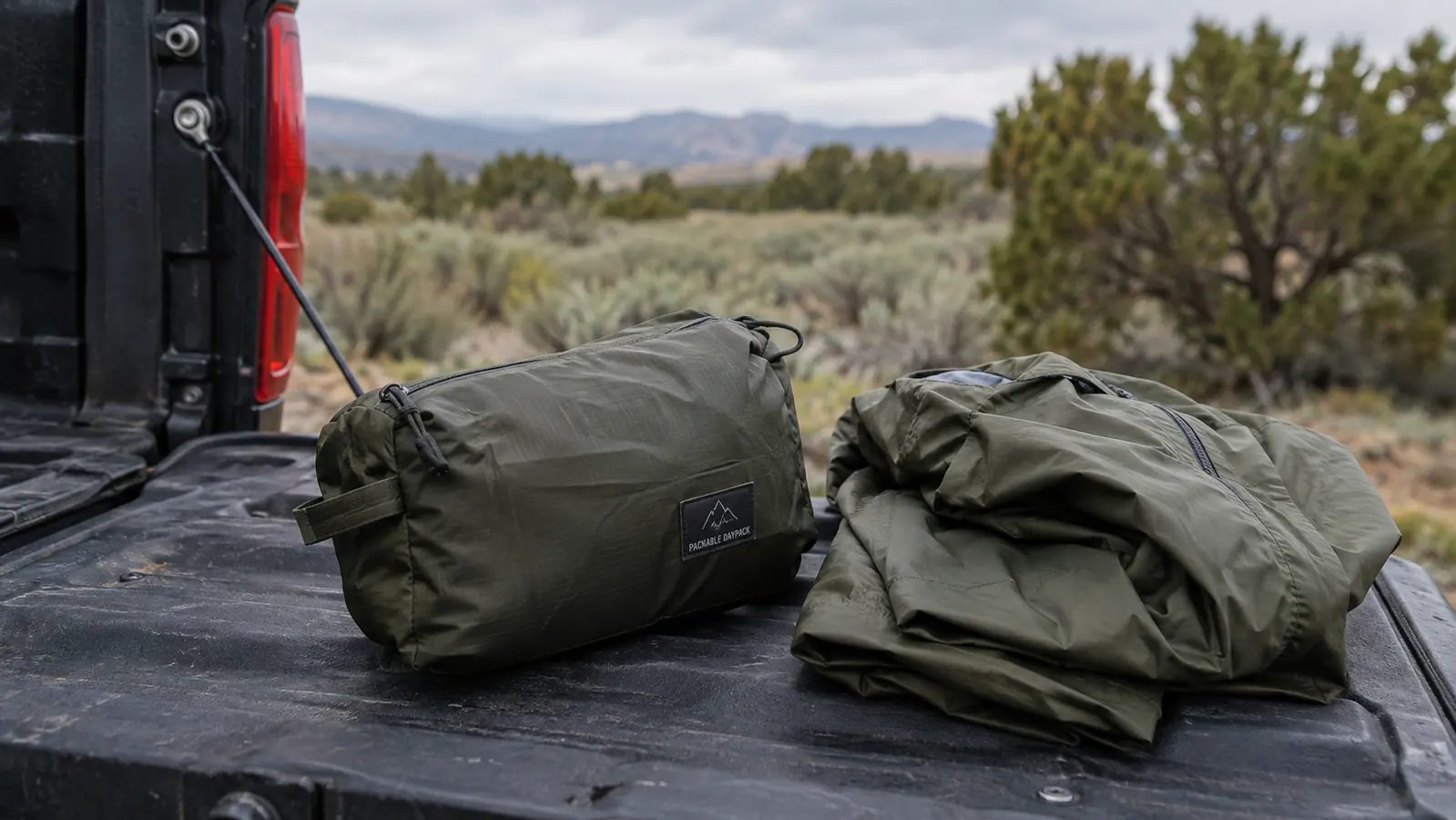
In thirty years of weekend hiking, the lesson I keep coming back to is simple: the gear you actually carry is the gear that saves you. A great pack that stays in the truck is worth less than a light pack that goes with you every time. The Outlander weighs about what a paperback weighs when it is empty, and it folds into its own little pocket. When it lives folded up behind the seat, you stop deciding whether to bring it. It is already there.
Since that afternoon, the Outlander has ridden in the back of the truck all season. It comes out for every short hike, every trip to Smith Rock, every time we park at a trailhead without a real plan. I have carried it in wind, in hard rain, and on the dusty trails east of the Cascades. The zippers still run smooth, the stitching is tight, and the shoulder straps have held up to full-day carries. It is not a framed backpacking pack, and I would never pretend it is. For a day hike and for a travel bag you can shove in a suitcase, it does the job.
The honest tradeoff is that it carries weight differently than a framed pack. If you want to carry a stove, a tent, and three liters of water, buy something with a frame and a hip belt. But most of the hikes we actually take are six miles and back with lunch and a rain shell. For that, a packable daypack is the right tool, and the Outlander is the one I reach for.
What I'd Tell You If We Were Sitting at My Kitchen Table
If you were sitting at my kitchen table, I would tell you this straight. You do not need a heavy pack for a day hike, and you do not need to spend a lot to get a good one. You need something light enough that you will actually bring it, tough enough to take a decade of weekends, and simple enough that you do not have to think about it. The Outlander is all three. It will not carry your camp stove and tent, and you should not ask it to. But for the day trips most of us actually take, it is the pack I reach for every single time, and it is the one I would buy again tomorrow if I lost it today.
The daypack that has lived behind my seat all season
Light enough to forget it is there, tough enough to trust when the weather turns. That is what a packable daypack should be. See today's price on Amazon.
Amazon Check Today's Price on Amazon →