
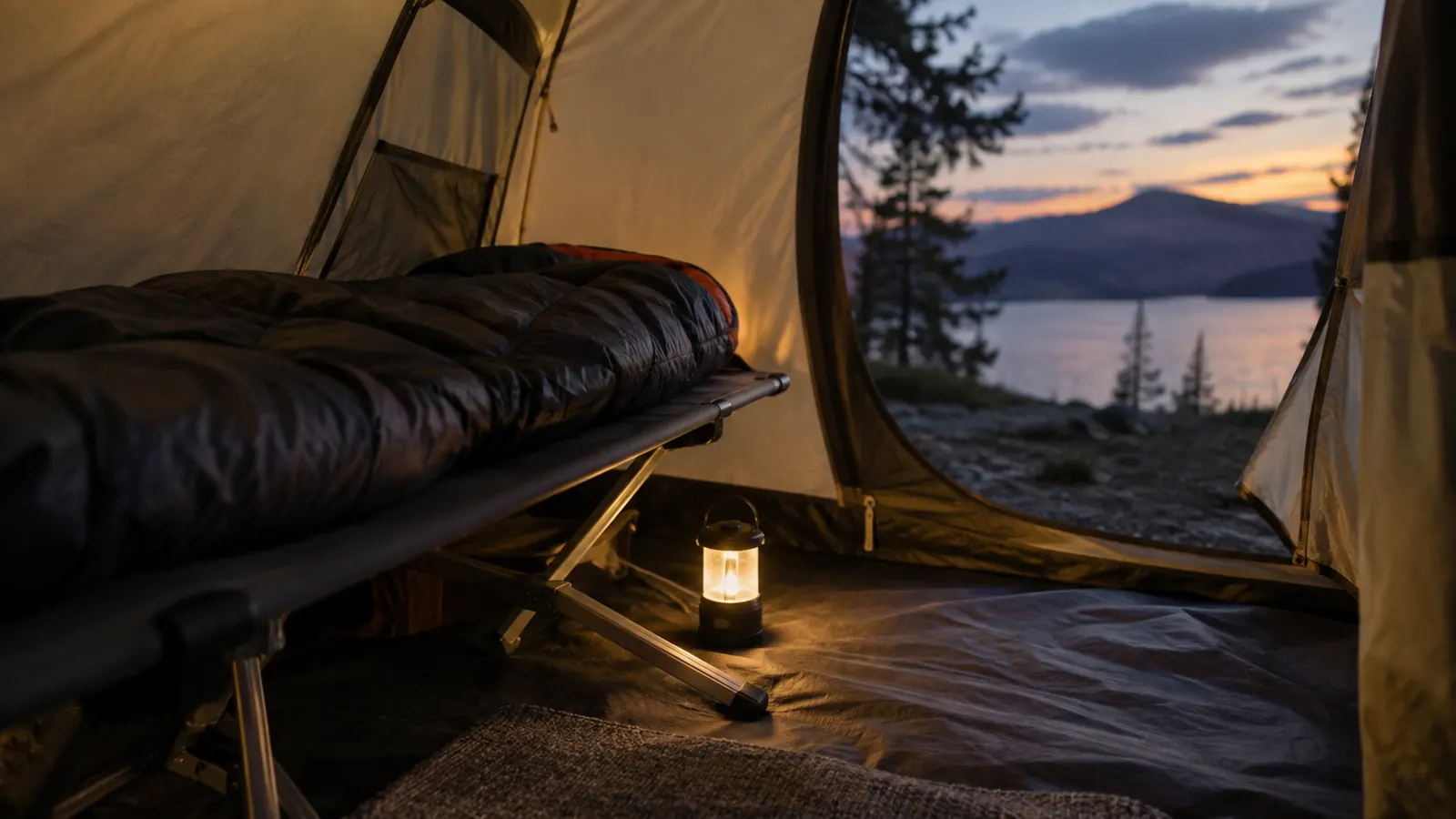
Three seasons ago I bought the Coleman Trailhead II cot on a whim. I had just spent a second night on the ground in the Three Sisters Wilderness, waking up stiff and cranky, and Dana had made it clear she was done with tent floors. The cot was supposed to be a compromise, something I could set up in the back of the 4Runner or under the vestibule, and I figured at worst I'd use it a few times and pass it along. Three seasons later it lives in the truck bed almost full time, and I've slept on it more nights than I can count. This is the long-term review I wish I'd had before I bought it. It's not a glamorous piece of gear, but it's the one that made the biggest difference to my sleep.
I'm not a gear junkie. I'm a retired power-line foreman who likes to get out of the house most weekends from May to October. Dana and I drive the 4Runner to the Cascades or out to the high desert, find a spot near the Deschutes or under the junipers at Smith Rock, and set up camp. The cot has been part of that routine longer than either of our tents has. We've had the same tent for five years, but the cot came along on every trip since that first weekend. I've learned a few things about what makes a cot worth keeping, and this one taught me most of them.
The Quick Verdict
A sturdy, comfortable cot that has held up to three seasons of weekend abuse. Not the lightest or most compact, but if you car-camp more than you backpack, it's the best value in its class.
Amazon Check Today's Price →Stop waking up stiff. Sleep off the ground.
I've used the Coleman Trailhead II for three seasons and it still feels new. It's easy to set up, holds up to weather, and folds down to fit behind the seat of a 4Runner. Check today's price on Amazon.
Amazon Check Today's Price on Amazon →How I've Used It
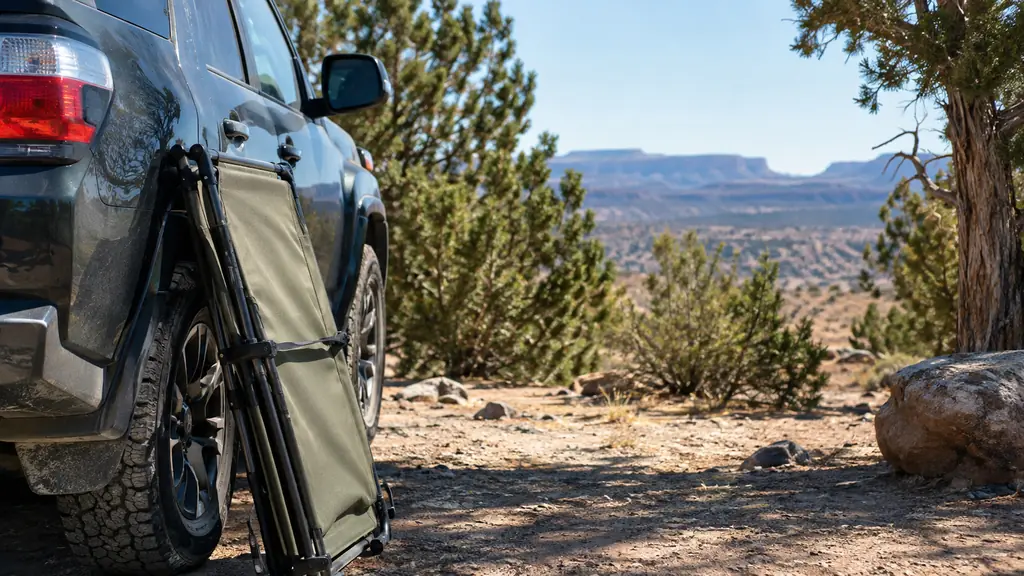
The cot has been my go-to sleep system for three seasons of car camping. Most of our trips are two or three nights, and we've done a handful of longer stretches, including a week in the Three Sisters Wilderness in July and a long weekend at Smith Rock in September. The cot goes in the back of the 4Runner, either lying flat on the platform I built or leaning against the side. It takes up about the same space as a couple of folding chairs, so it's never been a problem. I've also used it as a spare bed when a friend joined us, and it sets up in minutes.
I've slept on it in temperatures from the high 80s to right at freezing. In September we camped at Smith Rock and the nights dropped to 30 degrees. I used a 20-degree sleeping bag and a foam pad on top of the cot, and I stayed warm. The cot itself doesn't add much insulation, but it gets you off the ground, which is the biggest part of staying warm. In the summer, the airflow underneath is a blessing. I've never woken up sweaty on this cot, even on nights when the tent felt like a sauna. The cot is also stable enough that I can roll over without feeling like I'm going to tip.
The cot has also become my go-to for lounging. Dana and I will set it up outside in the shade, put a camp chair cushion on it, and read for an hour. It's the only piece of camping furniture I own that does double duty as a bed and a chair. When we're not using it for sleep, it's a great place to sit and watch the sunset. I've even used it as a changing station when the ground is wet.
One night in late May we got caught in an unexpected snowstorm at the base of the Three Sisters. The temperature dropped to 28 degrees and the wind was howling. I was glad I had the cot to keep me off the frozen ground. Dana and I huddled in our bags and stayed warm all night. The cot didn't budge and the fabric didn't tear.
Setup: Two Minutes, Once You Know the Trick
The first time I set this cot up, I fought with it for a good five minutes. The legs fold out and the spreader bars have to lock into place, and it's not obvious which way they go. I finally figured it out by reading the instructions that were printed on the carry bag. Now I can set it up in under two minutes, even in the dark. The key is to unfold the legs first, then snap the fabric over the frame, then flip the whole thing over. Once it's upside down, the weight of the cot pulls the legs into place and you just push the locking pins. It's a bit of a dance, but once you've done it a few times, it becomes second nature.
Takedown is just as fast. You pop the locking pins, fold the legs back, and fold the cot in half. It's not as compact as a camping cot that collapses into a tiny bundle, but it's manageable. The carry bag has a shoulder strap, so I can carry it one-handed across a field. The bag is a little tight at first, but it loosens up after a few uses. I keep the bag in the back of the 4Runner and the cot fits right in.
Comfort: Better Than My Bed at Home
I'm 5'10\" and 190 pounds, and the cot is rated for up to 300 pounds and 6'2\". I had plenty of room. The sleeping surface is 27 inches wide, which is a little narrower than a twin bed, but it's enough to sleep on my back or side. I sleep on my stomach sometimes, and the cot supports that too, though the edges are a little firm. The fabric is a heavy-duty polyester that has a slight give, so it cradles you rather than feeling like a board. There's a slight sag in the middle if you sit on the edge, but lying flat it's as supportive as my bed at home.
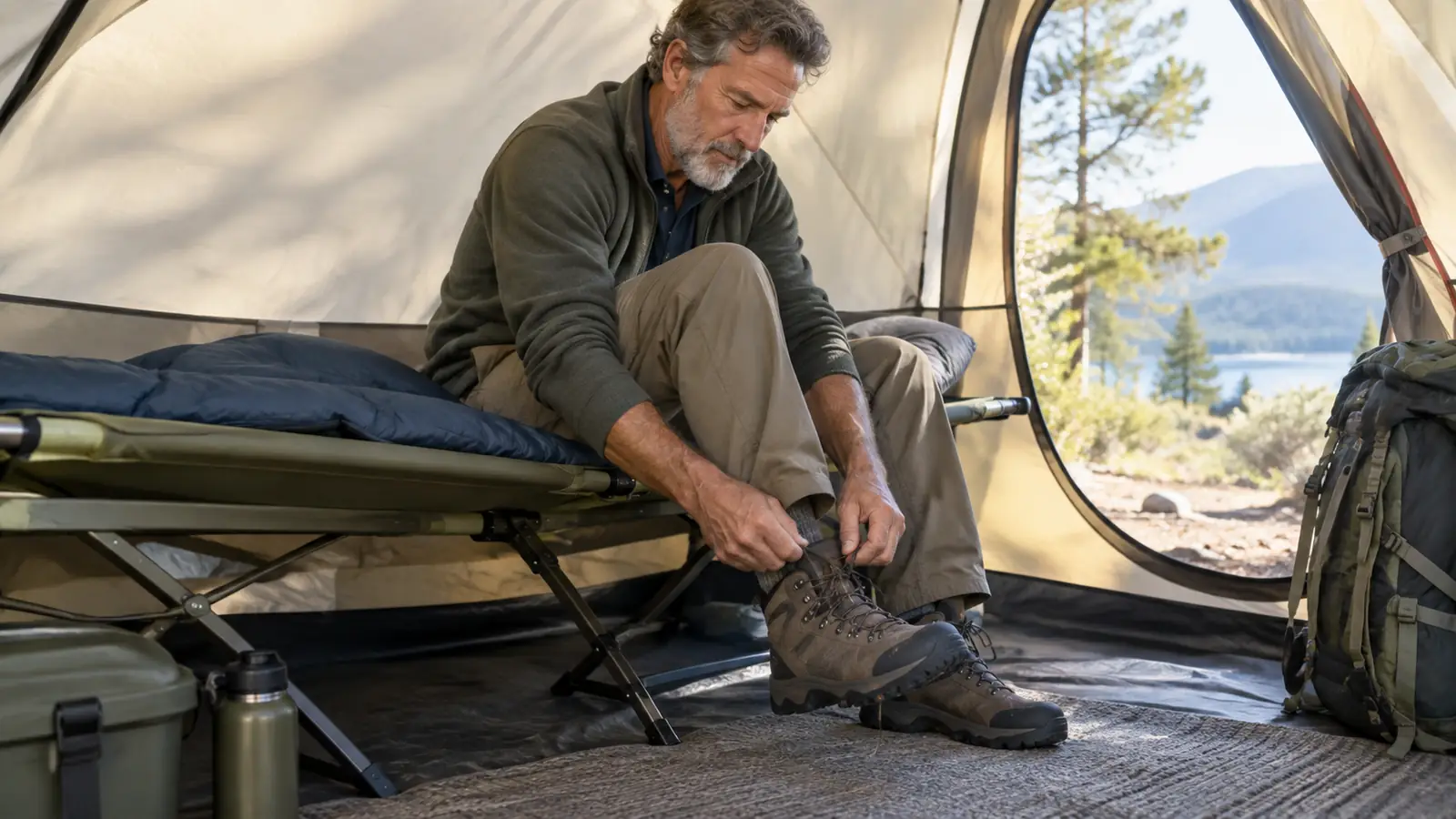
I've never woken up with a sore back on this cot, which is more than I can say for any air mattress I've owned. Air mattresses tend to lose air overnight, and they're cold in the winter. The cot keeps you off the ground, so you're not losing heat through the floor. It's also easier to get in and out of than a sleeping pad on the ground, which matters when you're 54 and your knees complain. The height of the cot is just right for sitting on the edge and pulling on boots.
I've also used it with a sleeping pad on top for extra cushioning. The pad stays put because the cot has a bit of friction from the fabric. Some cots have a slippery surface, but this one doesn't. The frame is solid enough that it doesn't wobble when I shift at night. I've had it on uneven ground and it stays stable, thanks to the wide feet.
Durability: What Three Seasons Did to It
I've had this cot out in dust, rain, and one unexpected snowstorm in May. The legs have a rust-resistant coating and the fabric hasn't torn or stretched. The only thing that broke was a cheap plastic cap on one of the legs, which I replaced with a rubber foot from the hardware store. That's it. No bent frame, no torn fabric, no squeaks. The cot has also survived being loaded and unloaded from the back of the 4Runner dozens of times, and being set up on everything from packed gravel to soft sandy soil.
The feet are wide enough that they don't sink into soft ground, which is something I worried about after my first trip to the high desert. The cot sits solidly even on packed dirt. The fabric is also easy to clean. I've spilled coffee on it and wiped it off with a damp cloth. The frame has a few scuffs from being tossed in and out of the truck, but nothing that affects performance.
I've also left it set up for a week at a time during our longer trips, and it hasn't sagged or stretched. The cot holds its shape well. The only maintenance I've done is occasionally tightening the screws on the frame, which is easy with a screwdriver. The instruction manual says to check them periodically, and I've found that they do work loose after a season of use. But it's a five-minute fix.
The only other issue I've had is that the carry bag's drawstring broke after two years. I replaced it with a piece of paracord, and it works fine. That's a minor annoyance, but it shows the bag is the weakest part of the package.
Pack Size and Weight: It's Not Ultralight, and That's Fine
When folded, the cot is about 36 inches long and 9 inches in diameter, and it weighs around 20 pounds. That's heavy for a backpacker, but for car camping it's nothing. I keep it in the back of the 4Runner and it slides under the platform I built. If I were hiking into the backcountry, I'd never carry this. But I don't. I car-camp. The weight is actually a sign of durability. The steel frame is what makes it feel solid.
There are lighter cots out there, but they're often flimsier and don't hold up to regular use. I'd rather have a 20-pound cot that lasts a decade than a 10-pound one that bends after a season. The trade-off is worth it for me, especially since I'm not carrying it far from the truck. The carry bag is a simple nylon sack with a drawstring, and it does the job. It's not padded, but I haven't had any issues with the frame poking through.
If you're considering this cot, think about how you'll use it. If you're a weekend car camper like me, the size and weight are non-issues. If you're a backpacker, you'll want something else entirely. The cot is also a good option for guests at home, because it folds up small enough to store under a bed. I've used it for that more than once.
For comparison, my sleeping pad weighs about two pounds and packs to the size of a water bottle. The cot is a different beast entirely, but it's not meant to compete with that. It's meant to give you a real bed when you're not carrying it on your back.
What I Liked
- Rock-solid steel frame that doesn't wobble even on uneven ground
- Fast setup once you learn the locking mechanism
- Comfortable for back and side sleepers, with a slight give in the fabric
- Durable fabric that shrugs off rain, dust, and spills
- Great value for the price, especially compared to flimsier alternatives
Where It Falls Short
- Weighs around 20 pounds, so it's not for backpacking
- Narrow for side sleepers who spread out
- Carry bag has no padding, so the frame can eventually poke through
Three seasons in, the Coleman Trailhead II is the one piece of gear I'd replace with the exact same thing.
Who This Is For
If you car-camp more than you backpack, this cot is for you. It's for people who want to sleep off the ground, keep their backs happy, and not spend a fortune on gear that falls apart after one season. It's also for anyone who needs a spare bed for guests, because it sets up in minutes and folds flat for storage. If you have a truck, SUV, or even a large sedan, the cot fits easily in the back. I've hauled mine in the 4Runner for three years without complaint.
This cot is also a good choice for people with back problems who find sleeping on the ground painful. The elevation and support make a big difference. I've had friends with bad backs sleep on it and they were surprised at how comfortable it was. It's not a replacement for a real bed, but it's a huge step up from the ground.
Who Should Skip It
If you're an ultralight backpacker or you only camp out of a backpack, this cot is too heavy. It's also not ideal if you sleep on your stomach and need a perfectly flat, firm surface, because the edges are a little soft. And if you're camping in a very small tent, the cot takes up a lot of floor space. If any of these apply, you're better off with a sleeping pad or a lighter cot.
I also wouldn't recommend it for side sleepers who toss and turn a lot. The cot is stable, but the edges are firm and can be uncomfortable if you roll onto the edge. And if you're a tall person over 6'2\", you might find it a bit short. I'm 5'10\" and have plenty of room, but someone taller might need the next size up.
Sleep better on your next trip
The Coleman Trailhead II has been my go-to for three seasons. If you're tired of waking up stiff, this cot is worth a look. Check today's price on Amazon.
Amazon Check Today's Price on Amazon →