
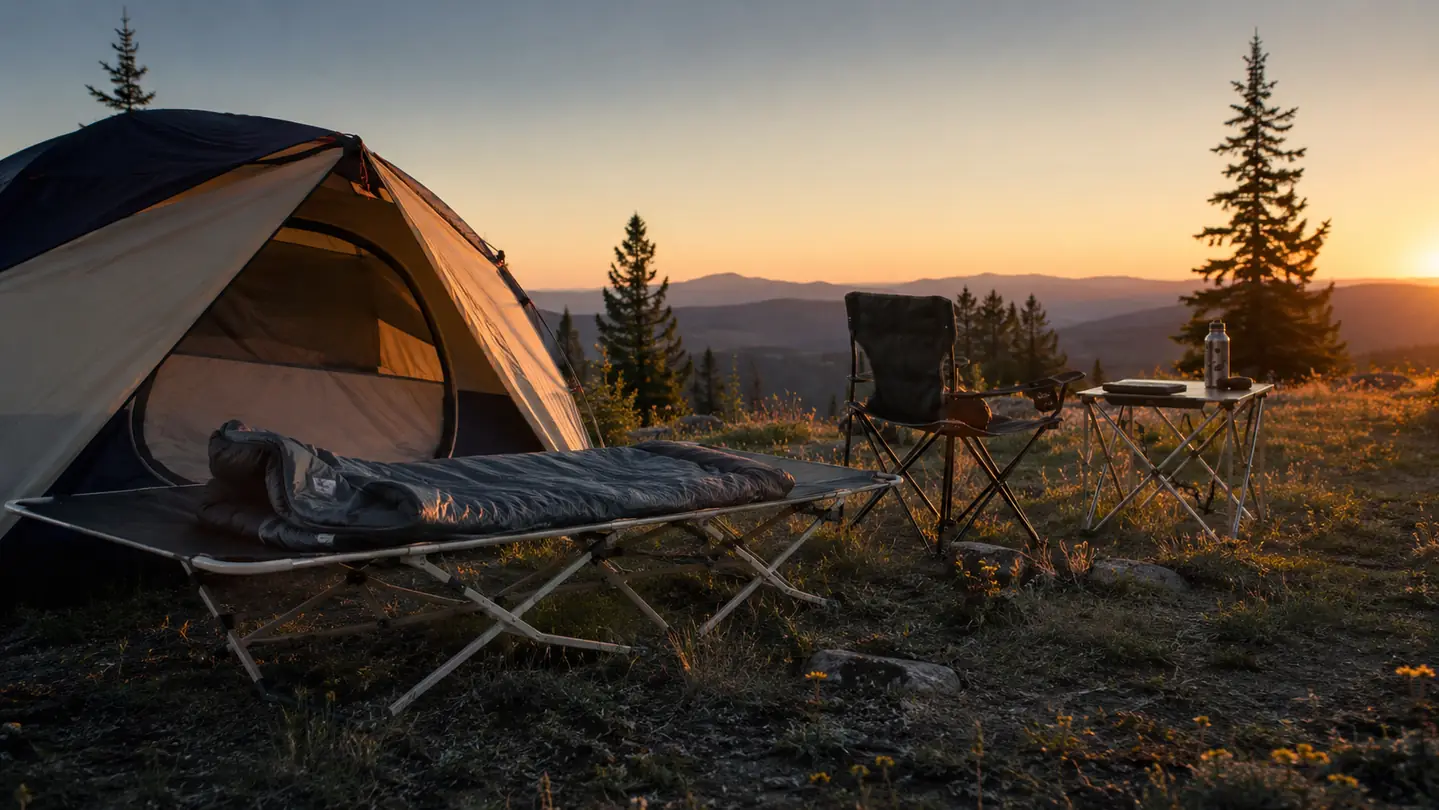
It was the second week of September, and Dana and I had driven up to Three Sisters Wilderness in the 2013 4Runner with the back seat folded flat and the gear stacked to the headliner. We'd left Bend at dawn, hiked six miles in with day packs, set up camp at the edge of a meadow, and spent the afternoon fishing the Deschutes. I was fifty-four that fall and in decent shape for a retired power-line foreman. But I'd spent the whole drive twisted sideways reaching into the cooler, and by the time we got the tent up I could feel the warning in my lower back, that dull ache that says you've done something you'll pay for at 2 a.m. Somewhere in all that gear was the Coleman Trailhead II folding cot we'd brought along for lounging in the shade at midday.
I paid for it at 2 a.m. We were camped at about 6,400 feet, and the September air had dropped into the low forties. I woke up on my foam pad flat on the ground, tried to roll onto my side, and my back just locked. Not a spasm you can stretch out. A hard lock, like someone had poured concrete into the muscles on my right side. I lay there doing the math in the dark: two more nights of this, then a six-mile hike out carrying my pack. That was the longest hour of the trip. Dana found the ibuprofen by touch and I got up on one elbow, then both, then slowly onto my knees. The foam pad that had been fine for ten years was suddenly the worst purchase I'd ever made.
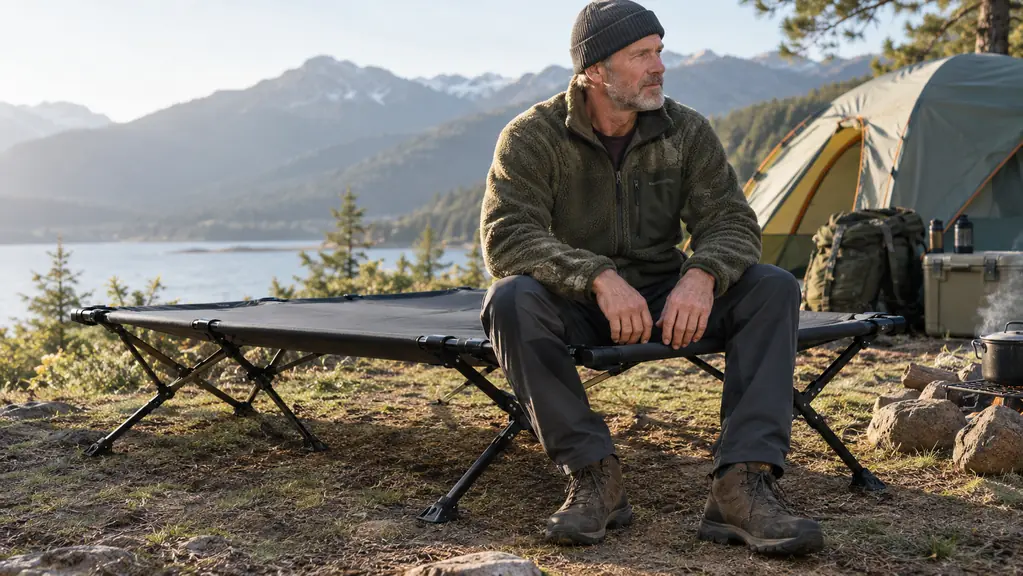
The next morning I moved like a man twice my age, and I told Dana the trip was over. She didn't argue, but she pointed out we'd paid for three nights and the fishing was just getting good. That's when I remembered the Coleman cot in the back of the 4Runner. We'd bought it the previous summer for guests at the house and never really thought of it as a sleep system. I set it up on the level spot by the tent door, half expecting it to feel like a lawn chair. That night I slept on it for the first time.
The difference was immediate. On the ground, I woke up six times a night rolling to get the pressure off my hip and my lower back. On the cot, I woke up once, and that was to pull the blanket up. The fabric is taut enough that you don't sink into a hammock curve, and the frame sits high enough that I could swing my legs off the edge and stand up straight in the morning, no crouch, no heave. My back was sore the next day, but it wasn't locked. That was the whole ballgame.
We stayed the full three nights. We fished the Deschutes, ate trout over the fire, and I slept on that cot every night. On the drive home I told Dana we'd made a mistake buying it for guests. We should have bought it for us first. She laughed and said she'd never seen me that glad about a piece of camping gear, and she wasn't wrong.
On the ground I woke up six times a night. On the Coleman cot I woke up once. That one number changed how I camp forever.
Sleep Off the Ground, Wake Up Ready to Hike
After one night on the Coleman Trailhead II, I stopped dreading the sleeping part of camping. If your back is telling you the same thing mine did, it's worth a look.
Amazon Check Today's Price on Amazon →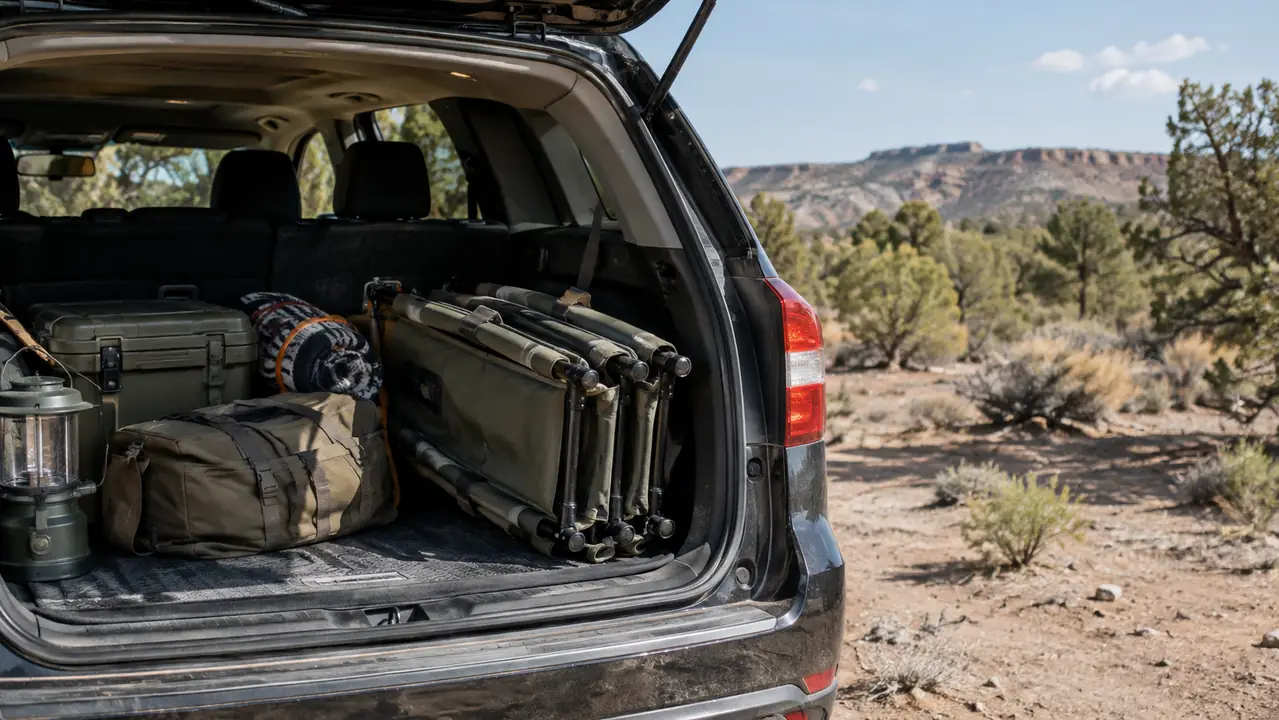
Here's what I've learned in the months since. The Trailhead II sets up the way a folding cot ought to. You lay it on its side, pull the legs out, and push the frame down until the X joints click. It's the same motion every time, and I can do it in under a minute without thinking. Coleman rates it to 300 pounds and six foot two, which covers me and then some. It sits about seventeen inches off the ground, high enough to make the morning stand-up easy. The sleeping surface is a heavy woven polyester that hasn't sagged in the middle the way cheaper cots do, even under a guy my size. Takedown is just the reverse, and the folded bundle is about the size of a rolled sleeping bag, maybe three feet long and a foot around.
I've used it on every trip since, maybe twenty-five nights a season. It's been to Smith Rock, the high desert east of Bend, and back to Three Sisters twice. The legs don't wobble, the fabric hasn't worn through, and the whole thing folds down to a bundle about the size of a rolled sleeping bag. It rides in the 4Runner behind the back seat, and it's the first thing I grab when my back starts talking to me at home too. On bad nights I set it up in the living room and sleep on it there.
Now the honest part, because you should know what you're buying. The cot is heavy. It's not a backpacking thing, and I'm not going to pretend it is. It's also cooler underneath than a pad, so on the nights that dropped below forty degrees I laid a closed-cell pad on top of it and that solved the problem. One night at Smith Rock it got down to thirty-four, and with the pad and a good bag I slept fine. And you have to find level ground or you'll roll to the low side. Those are the real tradeoffs, and they're worth knowing before you spend your money. For me, on the trips I actually take, the tradeoffs are worth it.
What I'd Tell You If We Were Sitting at My Kitchen Table
If you're my age and you're still sleeping on the ground because that's what you've always done, stop. Buy a folding cot and don't feel bad about it. You don't have to be an ultralight purist to enjoy the mountains. I'm not. I sleep on a Coleman cot, I drive a truck with 210,000 miles on it, and I've been camping most weekends from May to October for thirty years. The cot changed the part of camping I used to dread, and nothing else I've bought in the last five years has done that. If your back talks to you in the middle of the night, listen to it once. It's telling you to get off the ground.
Your Back Already Told You Once
The Coleman Trailhead II is the one piece of gear I'd replace without hesitation if it ever wore out. Check today's price and see if it fits your trips.
Amazon Check Today's Price on Amazon →