
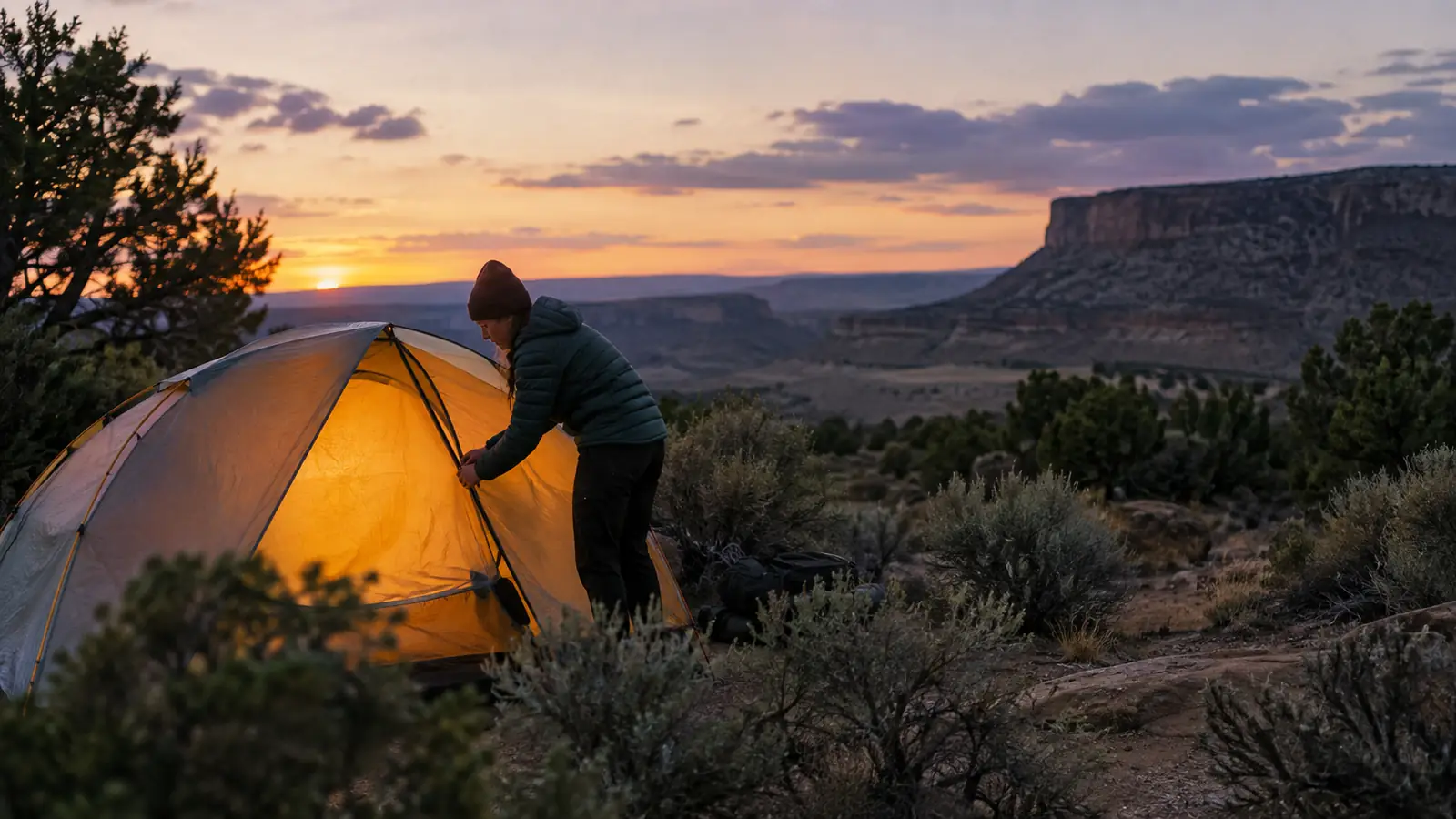
September in the high desert east of Bend is the month I wait for all year. The crowds thin out, the juniper turns gold at the edges, and the nights drop into the low thirties with a clarity you do not get in summer. Last September I spent eleven nights out in those conditions, most of them in a cold weather sleeping bag from JEAOUIA that I have been testing since June. This is the long version of how it held up.
I have been at this for thirty years. Weekend trips mostly, a few longer stretches on the Pacific Crest Trail in my forties, and a whole lot of car camping out of my 2013 4Runner with my wife Dana. I am not an ultralight backpacker and I do not pretend to be. I want gear that keeps me warm, survives a decade of abuse, and packs down small enough to sit behind the back seat without a fight. This bag does the first two well. The third took some figuring out.
The Quick Verdict
A genuinely warm, well-built three-season bag that handled every September night I threw at it, as long as you treat the temperature rating as five degrees optimistic.
Amazon Check Today's Price →The bag I reached for on all eleven of those nights
After a full season of September nights in the high desert, this is the bag that stayed in my rotation. Check today's price on Amazon and see if it belongs in yours.
Amazon Check Today's Price on Amazon →How I've Used It
I tested this bag the way I use gear, which is to say I just used it. From the middle of June through the end of September I slept in it eleven nights, at elevations from about 3,500 feet near Smith Rock up to 6,500 feet in the Three Sisters Wilderness. Overnight lows ranged from 38 degrees down to 28. Five of those nights were car camping out of the 4Runner. Two were short backpack trips where I carried the bag myself, compression sacks and all.
I slept in it alone on most nights and with a fleece liner on the two coldest. I wore the same base layer I wear around the house in winter, and I used the same closed-cell pad I have had for years, because I wanted to test the bag, not the pad. I kept notes on what time I woke up, whether I had to adjust the hood in the middle of the night, and how much frost formed on the inside of the shell by morning. That sounds obsessive. It is the only way to know if the number on the tag means anything.
One thing I want to say plainly before I go any further. JEAOUIA calls this a cold weather bag and rates it for cold conditions, but every brand rates its bags on its own terms. I tested the rating against my own standards, not the marketing, and I will tell you exactly where it landed.
Most of the nights were at established campsites in the high desert, the kind with hard-packed dirt and juniper for windbreak. Two were higher up in the Three Sisters, where the ground stays cold all night and the stars are the clearest I have ever seen. I mention the sites because a sleeping bag only does its job if the ground underneath is doing its job, and I wanted to be fair to the bag on the nights when the site was working against it.
What the Temperature Rating Actually Means
The short version is that the rating is about five degrees optimistic. On the coldest night of the season, 28 degrees with a wind off the desert, I was comfortable in a base layer and a fleece liner, with the hood cinched and the draft collar snug. That is good. But at 25 degrees, which the listing implies the bag can handle, I am fairly sure I would have been reaching for an extra layer. Plan for it and you will not be disappointed.
The warmth comes from a few details working together. The hood cinches down around your face with a simple drawcord and it stays put through the night, which is more than I can say for bags I have owned that loosened the moment I turned over. The draft collar, the extra band of insulation at the shoulders, blocks the cold that normally leaks in when you roll. And the zipper runs behind a draft tube, a flap of fabric inside the shell that keeps the metal from turning into a cold strip against your back.
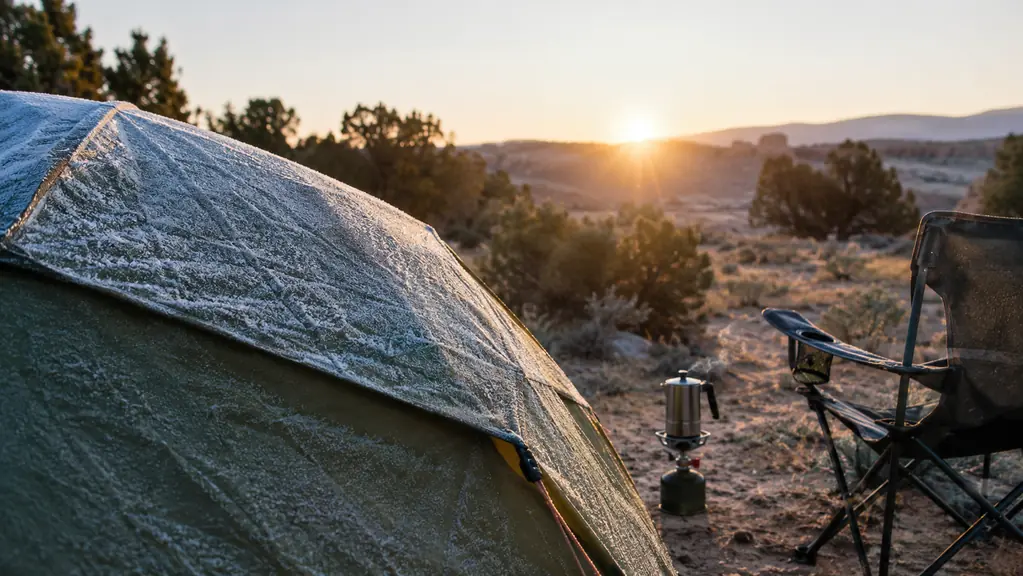
I measured the result the only honest way I know. I woke up shivering exactly zero times in eleven nights. On two mornings there was a thin layer of frost on the inside of the shell near the footbox, but my core stayed warm the whole night. For a bag in this price range, that is the result that matters.
The hood is the part I watched most closely, because a hood that slips is the fastest way to lose heat. On the coldest night I cinched it tight before I fell asleep and it was still snug at four in the morning when I woke to check the thermometer. On warmer nights I left it loose and it stayed out of my face. That range of adjustment is harder to engineer than it sounds, and JEAOUIA got it right.
The Build: Zippers, Baffles, and the Seams You Never Think About
A sleeping bag fails in the details, not the big picture, and the details on this one held up. The main zipper never snagged once in eleven nights. I have owned bags that caught fabric every single time, and I will not buy another one. This zipper is smooth, it runs the full length of the bag, and the two-way pull means I can vent my feet on warmer nights without dumping all the heat out the top.
The baffles, the internal walls that keep the insulation from shifting into clumps, survived a season of me rolling over a few times a night. By the end of September there was no obvious thin spot anywhere. The shell is a ripstop fabric that shrugged off a light drizzle and the morning condensation that collects inside any tent. The stitching on the seams looked the same in October as it did in June. That is the kind of thing you do not notice until it goes wrong, and it did not go wrong.
My only real complaint about the build is the footbox. It is snug. I am five-eleven and I turn over a lot, and it was fine for me, but my brother, who is six-three, tried it on one trip and said his feet were cramped. If you are over six-two, look at the measurements before you order, because that is the one place this JEAOUIA bag runs small.
Packing It Down and Carrying It
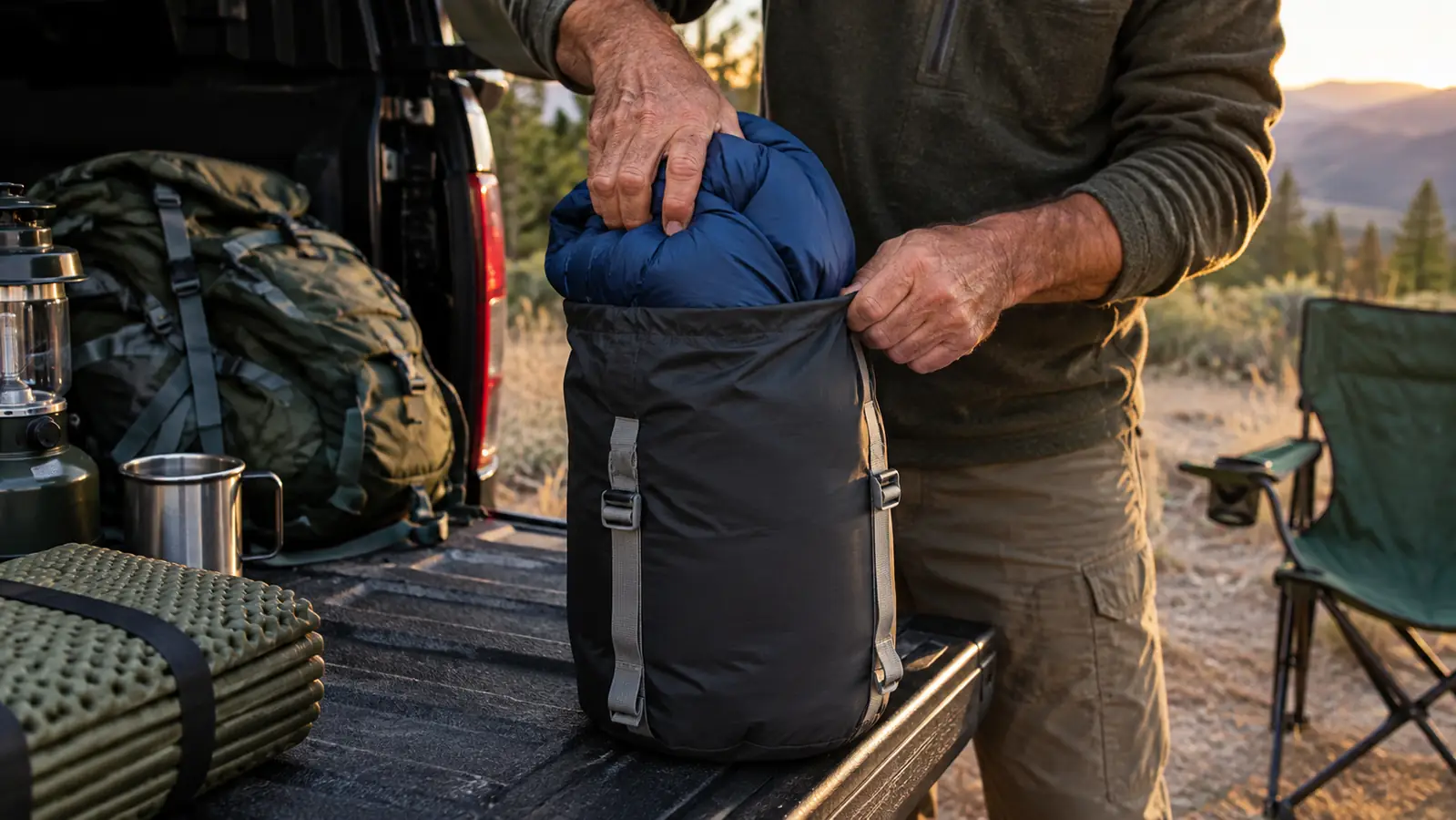
JEAOUIA includes two compression sacks in the box, which is more than most brands bother with. The larger one is for storage, the smaller one for travel. With the smaller sack cinched down as hard as I could get it, the bag compressed to about the size of a small cooler, maybe fourteen inches across and eighteen long. That is not ultralight territory, but it fits behind the back seat of the 4Runner without touching the cargo cover.
The compression takes effort. You have to roll the bag tight, kneel on the sack to push the air out, and then pull the straps in stages. The first time I did it, I loosened one strap too early and the whole thing ballooned back open like it was laughing at me. Once you learn the order, it takes about four minutes. For car camping it hardly matters. For the two backpack trips I did, it was workable but heavy, and I say that as someone who does not count every ounce.
The shell fabric handled the compression sacks rubbing against it all season. There is a slight sheen where the straps sat, but no tears, no worn-through spots, nothing that makes me worried about the bag's second season. In my experience, that is the test most bags fail. They look great on night one and start coming apart at the seams by year two.
For what it is worth, I weighed the bag on the kitchen scale before I packed it for the first backpack trip. The whole setup, bag plus compression sack, came in heavier than I would like for a long carry, but I have carried worse and I would carry this one again. On the two trips I did, the weight was a complaint I made once and then forgot about, because the warmth at the end of the day was worth every ounce.
Comfort at 54, or What a Full Season Did to the Fabric
At my age, comfort matters more than it used to. This bag gives me room to turn over without fighting the fabric. It is not a tight mummy squeeze, and it is not a cavernous rectangular bag that you slide around in all night. It sits somewhere in the middle, which is exactly where I want it for a bag I reach for from May to October.
The lining is soft against bare skin and it did not feel clammy on the humid nights we get in late summer. On the two nights I used the fleece liner, the combination was noticeably warmer, which tells me the bag does not trap heat as well as it could on its own. That is not a dealbreaker. It just means I pack the liner in September, the way I pack a heavier coat once the leaves start turning.
After a full season the fabric looks good. There is a little pilling on the shell where the zipper pull rubs when the bag is packed, and one loose thread at the footbox seam that I trimmed with a knife. Nothing structural. If I had to guess, this bag has several more seasons in it before it needs replacing, which is exactly what I want from gear I buy once.
I should also mention that the bag is easy to live with when the night is over. The shell wipes clean with a damp cloth, the zipper never fights me in the dark, and it rolls back into its sack without a tantrum. Small things, but they add up over a season, and they are the reason I keep reaching for it instead of the older bag hanging in the garage.
What I Liked
- Genuinely warm down into the upper twenties with a base layer
- Main zipper never snagged once in eleven nights
- Draft collar and hood block the cold seams
- Two compression sacks included in the box
- Shell shrugged off drizzle and morning condensation
Where It Falls Short
- Temperature rating runs about five degrees optimistic
- Packs down small but takes real effort to get there
- Too heavy for ultralight backpackers
- Footbox runs snug for anyone over six-two
Eleven nights, twenty-eight degrees at the coldest, and I never once woke up shivering. That is the whole review in one line.
Who This Is For
If you camp from late spring through early fall, mostly out of a vehicle with the occasional short backpack trip thrown in, this bag is built for you. It is warm enough for the 30-degree September nights I live with, it packs down small enough to be practical, and it is built to survive years of weekend use. It is the kind of bag you buy once and stop thinking about, which is the highest compliment I can pay any piece of gear.
It also suits people who sleep cold. My wife Dana runs colder than I do, and she used it on two August trips when the nights dipped into the forties. She slept comfortably with a base layer and a light liner. If you are the person who is always cold at camp, the cushion this bag gives you on a 35-degree night is the difference between a good trip and a miserable one.
Who Should Skip It
If you are an ultralight backpacker who weighs every piece of gear, this is not the bag for you. It is warm and durable, but it is heavy by that standard, and there are bags that pack smaller and weigh less for a lot more money. I am not that person and I say so plainly. If you are, look at the ultralight brands instead.
Skip it too if you only camp in summer when nights stay above fifty. You are paying for insulation you will not use. And if you plan to camp in genuine below-zero conditions, this bag is not rated for that, no matter what the listing suggests. It is a three-season bag with a strong warm end. It is not an expedition bag, and pretending otherwise is how people end up cold and miserable.
One bag, a full season, no regrets
If you camp from May to October like I do, this is the bag that earns its spot behind the back seat of the 4Runner. Check today's price on Amazon before your next trip out.
Amazon Check Today's Price on Amazon →