
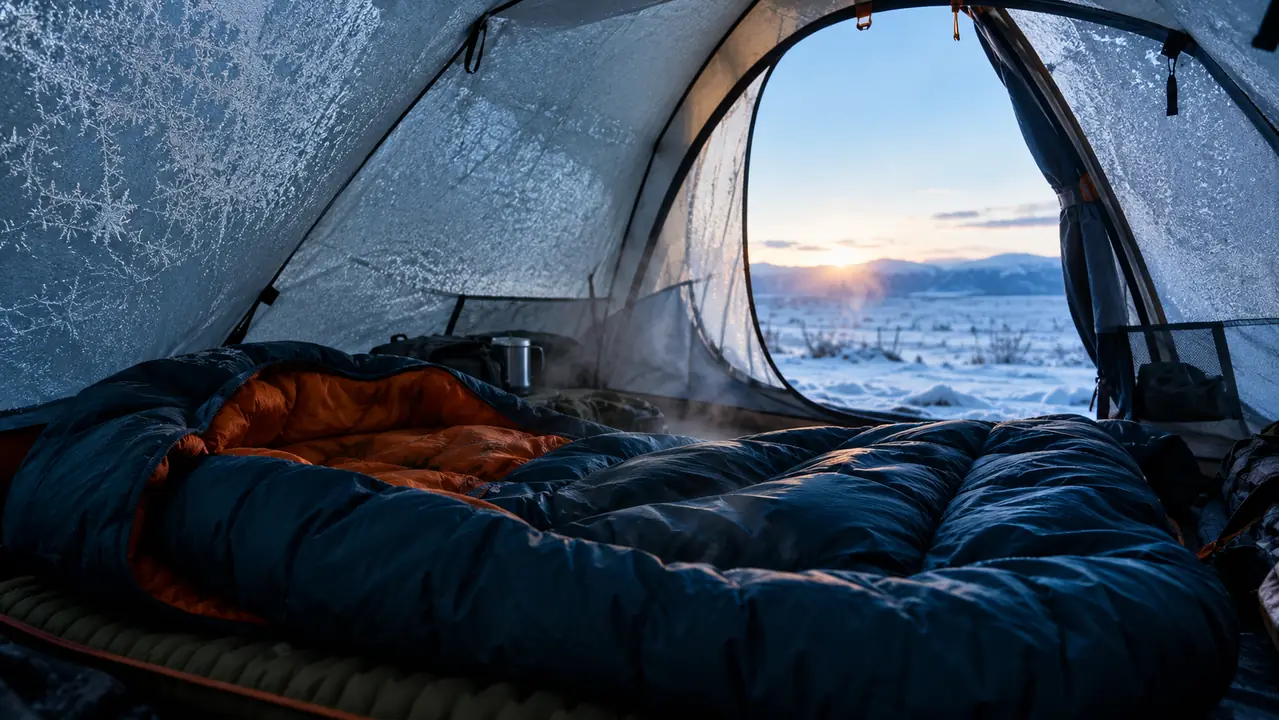
The first hard freeze I ever slept through in the Three Sisters Wilderness taught me that a sleeping bag rating is a survival number, not a comfort number. I was in a three-season bag rated to thirty degrees, the thermometer on my pack read twenty-six at dawn, and I spent most of the night curled up rubbing my own feet. The question I get asked more than any other is whether you should buy a dedicated cold weather sleeping bag like the JEAOUIA zero-degree bag, or whether you can get most of the way there by dropping a liner into the bag you already own. I have done both, across the same campsites, in the same conditions, and the honest answer is that they solve two different problems that only look like one problem from the driveway.
A liner is a thin sack you slide inside your existing bag. It adds a layer, it keeps body oil off the shell, and the good ones claim to add a meaningful number of degrees of warmth. A cold weather bag is a complete system built around a lower temperature from the start, with more fill, a hood that actually closes, and a draft collar across the shoulders. The JEAOUIA bag is the one I carry now for anything below freezing. What follows is how the two options actually compare after a season of moving between them.
| JEAOUIA Cold Weather Bag | Liner Added to an Old Bag | |
|---|---|---|
| Real warmth gained | Built as a full system for sub-freezing nights | A modest bump, far less than the packaging suggests |
| Where the cold gets in | Hood and draft collar seal the shoulders and head | Shoulders and head stay as open as they always were |
| Upfront cost | A real purchase you plan for | A fraction of a new bag, which is the whole appeal |
| Packed size | Bulky. This rides in the vehicle, not on your back | Adds almost nothing to what you already carry |
| Moisture handling | Loft recovers well after a damp night | Traps condensation between two layers |
| Getting in and out | Roomy enough to turn over without twisting | Two layers bind and wrap around your legs |
| Best use | Car camping and base camps below freezing | Shoulder season, or stretching a bag a few degrees |
What a liner actually does, and what it does not
Liner packaging talks in degrees, and those numbers are the most optimistic figures in the outdoor industry. In my own use, on the same tent pad at the same elevation, a fleece liner inside a thirty-degree bag made a night in the low thirties pleasant instead of marginal. It did not make a night in the low twenties survivable in any way I would repeat. The gain is real and it is small, and the reason is simple physics. A liner adds insulation where your body is already pressed against insulation. It does nothing about the two places you actually lose heat on a cold night, which are your head and the gap around your shoulders.
There is a second issue that nobody mentions until you have lived it. Two separate layers move independently. You roll over and the liner stays where it was, so by two in the morning it is wound around your knees like a wet towel and your torso is lying directly against the bag. I have woken up more than once to find the liner bunched somewhere around my shins doing nothing for anybody. Some liners have loops meant to fix this. The loops help and they do not solve it.
A liner adds insulation where you already have insulation. It does nothing about your head and your shoulders, which is exactly where the cold gets in.
Where the JEAOUIA bag pulled ahead
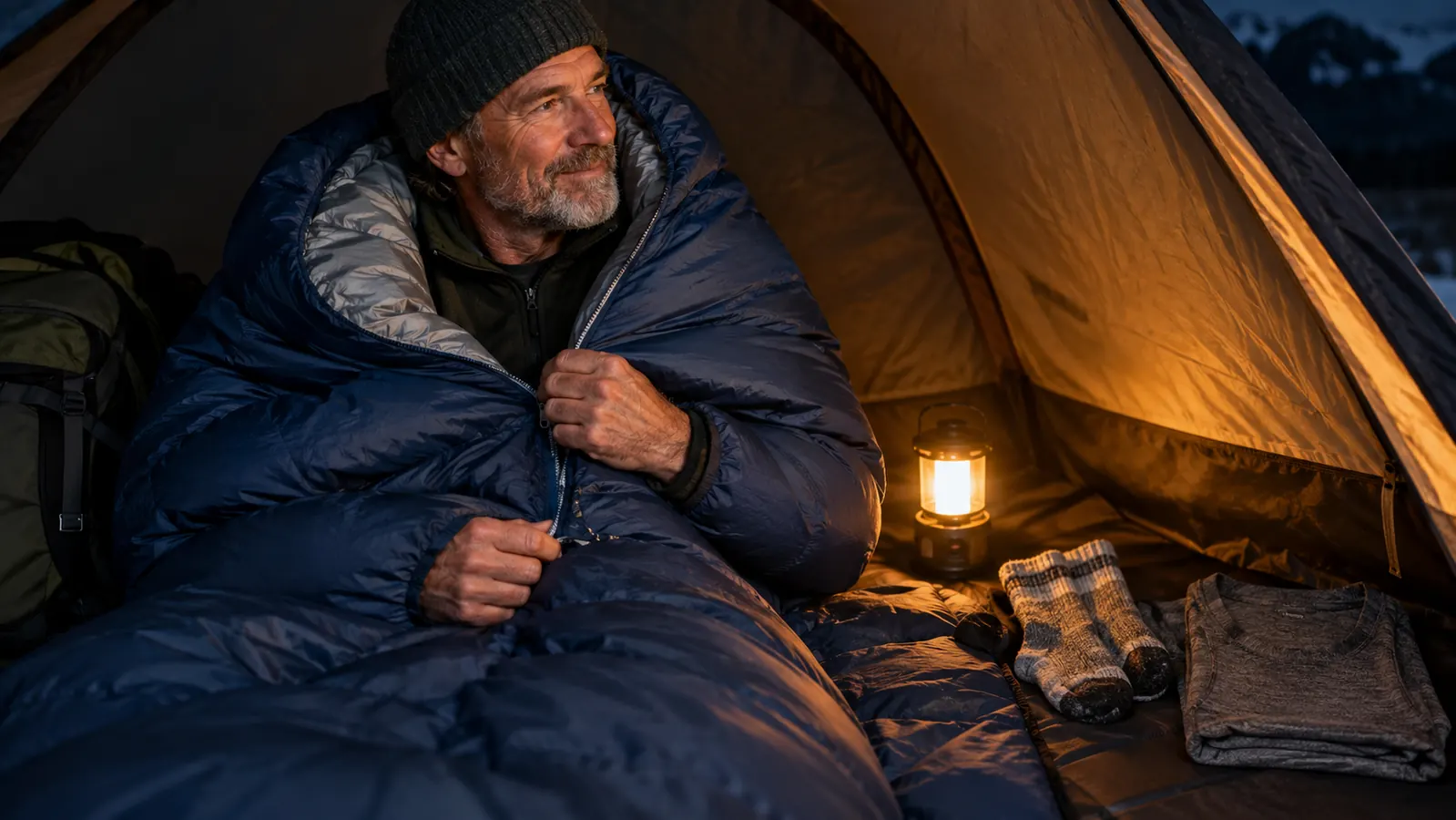
The first night I used the JEAOUIA bag was in late September east of the Cascades, clear sky, no wind, and a reading of twenty-nine degrees on the dash of the 4Runner when I shut it off. I went to sleep in a base layer and wool socks and I did not wake up cold. That is the entire review in one sentence, and everything else is detail about why.
The hood is the first reason. It cinches down to a small opening around your face, and once it is closed the warm air your body has spent an hour generating stops pouring out of the top of the bag. The second reason is the draft collar, which is the padded tube that sits across your chest and shoulders. Every time you shift in a bag without one, you pump warm air out and pull cold air in. The collar stops that exchange. Neither of those features can be added to an old bag by putting something inside it, and that is the honest core of this comparison.
The third reason is fill volume. There is simply more insulation between you and the outside air, distributed by someone who designed the whole thing for a low temperature rather than added by you after the fact. When I climb into the JEAOUIA bag on a cold night it takes a few minutes to warm up and then it stays warm, which is how a bag is supposed to behave.
The bag I reach for once the nights drop below freezing
After a season of moving between a lined three-season bag and a dedicated cold weather bag, the JEAOUIA is the one that goes in the truck from September onward. Check today's price on Amazon.
Amazon Check Today's Price on Amazon →The case for the liner is real, and it is about weight
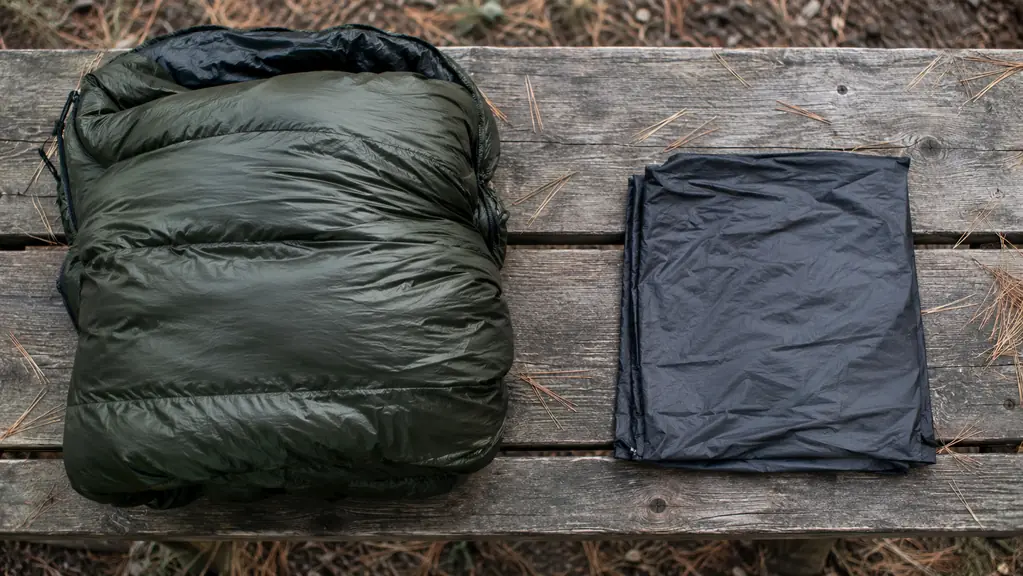
I want to be fair to the liner, because there is a scenario where it is clearly the right answer. If you are carrying your bed on your back, a cold weather bag is a serious amount of bulk. The JEAOUIA bag is a car camping bag in my kit, and I say that without any hesitation. It takes up a meaningful share of the back of the 4Runner. On a section hike where every liter in the pack is accounted for, adding a thin liner to a lighter bag is the sane decision even knowing you are buying fewer degrees than the label promises.
The liner also earns its place for a reason that has nothing to do with temperature. It keeps sweat, sunscreen and campfire smoke off the inside of your bag, and washing a liner is a trivial job while washing a down bag is an afternoon and a risk. I still use one inside my three-season bag in July for exactly that reason, and warmth never enters into it.
The moisture problem I did not expect
Here is the failure that surprised me most, because I had never read about it anywhere. On a cold night your body pushes moisture outward through your bag, and it condenses somewhere along the way. With one layer it moves through and the bag dries in the morning sun. With a liner inside a bag, some of that moisture condenses between the two layers, where there is no airflow and no sun.
Two mornings in a row in the Deschutes country I pulled a liner out of a bag and found the inside face of the bag clammy to the touch. Not soaked, but damp enough that the loft was flat in patches and the second night was colder than the first. Insulation works by trapping air, and damp insulation traps less of it. This is the quiet way a liner setup gets worse over a long cold weekend while a single bag stays roughly the same.
What the difference actually feels like at three in the morning
Numbers on a hang tag are hard to argue with in a store and easy to argue with at three in the morning. The difference between the two setups is not gradual. In the lined bag, on a night in the mid twenties, I would come half awake every hour or so, pull my shoulders in, tuck my hands between my knees and go back under. It is not dangerous, it is just poor sleep, and poor sleep on Friday costs you Saturday.
In the JEAOUIA bag on a comparable night I sleep the way I sleep at home, which is to say badly at first and then straight through until it is light. Dana noticed the change before I mentioned it, mostly because I stopped getting up to put the kettle on at four in the morning just to have something warm to hold.
Which one belongs in your kit
Buy the liner if you backpack, if your cold nights are in the thirties rather than the twenties, or if you mainly want to keep your bag clean. It is a small purchase that does a small job honestly, and there is nothing wrong with that.
Buy the JEAOUIA cold weather bag if you camp out of a vehicle and your season runs into real cold. Trying to reach a zero-degree rating by stacking things inside a thirty-degree bag is the long way around, and in my experience it does not arrive. The bag is bulky, it is not subtle, and it does the one thing you bought it for on the nights when nothing else in your kit matters much.
If you are somewhere in the middle, ask yourself where your last bad night happened. If you were cold at the shoulders and the head, no liner is going to fix that, because a liner does not go there. That was the question that settled it for me.
What a temperature rating on a bag actually means
This is the piece of context that makes the whole comparison make sense, and almost nobody explains it at the point of sale. A rating on a sleeping bag is generally a limit figure, not a comfort figure. It describes roughly the temperature at which an average sleeper stays out of trouble, curled up, wearing layers, having a rough night. It does not describe the temperature at which you sleep well. My working rule after thirty years is to add about fifteen degrees to any number on a tag and treat that as the temperature I will actually enjoy.
Run that rule through both options. A thirty-degree bag is a comfortable bag somewhere in the mid forties. Add a liner that genuinely delivers a handful of degrees, and you have a comfortable bag in the high thirties. That is a useful shift and it is nowhere near freezing. The JEAOUIA bag is built around a zero-degree figure, which by the same rule puts real comfort somewhere in the teens. That gap is not marketing. It is the difference between lying awake doing math about how many hours until sunrise and simply sleeping.
The pad underneath matters more than either one
I would be doing you a disservice if I let you think the bag is the whole story, because on cold ground it is not even the biggest part of it. Your body weight crushes the insulation underneath you flat, and flat insulation does almost nothing. Whatever is under you is doing more work than whatever is over you once the ground gets cold.
I have watched people buy a serious cold weather bag, lay it on a thin foam pad or straight onto a cot, and conclude the bag was oversold. It was not. The cold was coming up through the ground, and no bag is designed to fight that. If you take one practical thing from this comparison, put an insulated pad with a real R-value under whichever option you choose. A good bag on a poor pad sleeps worse than a modest bag on a good pad, and I have tested that accidentally more than once.
What each one costs you over a few seasons
A liner is the cheaper purchase and it stays cheaper, which is genuinely the strongest argument in its favor. If your cold nights are occasional and mild, spending a small amount to stretch a bag you already like is a sound decision, and I would not talk anybody out of it.
The arithmetic changes if you are buying a liner because you are cold, rather than because you want a cleaner bag. In that case you are likely to buy the liner, stay cold, and then buy the bag anyway the following season. That is the path I took, and the liner is still in a bin in the garage doing its real job in July. If you already know your season runs into hard frost, buying the bag first is the cheaper route by the end of the second year.
Stop trying to stretch a three-season bag into winter
A liner buys a few degrees and a cleaner bag. When the overnight low starts with a two, a bag built for the cold is the honest answer. See today's price on Amazon.
Amazon See Today's Price on Amazon →