
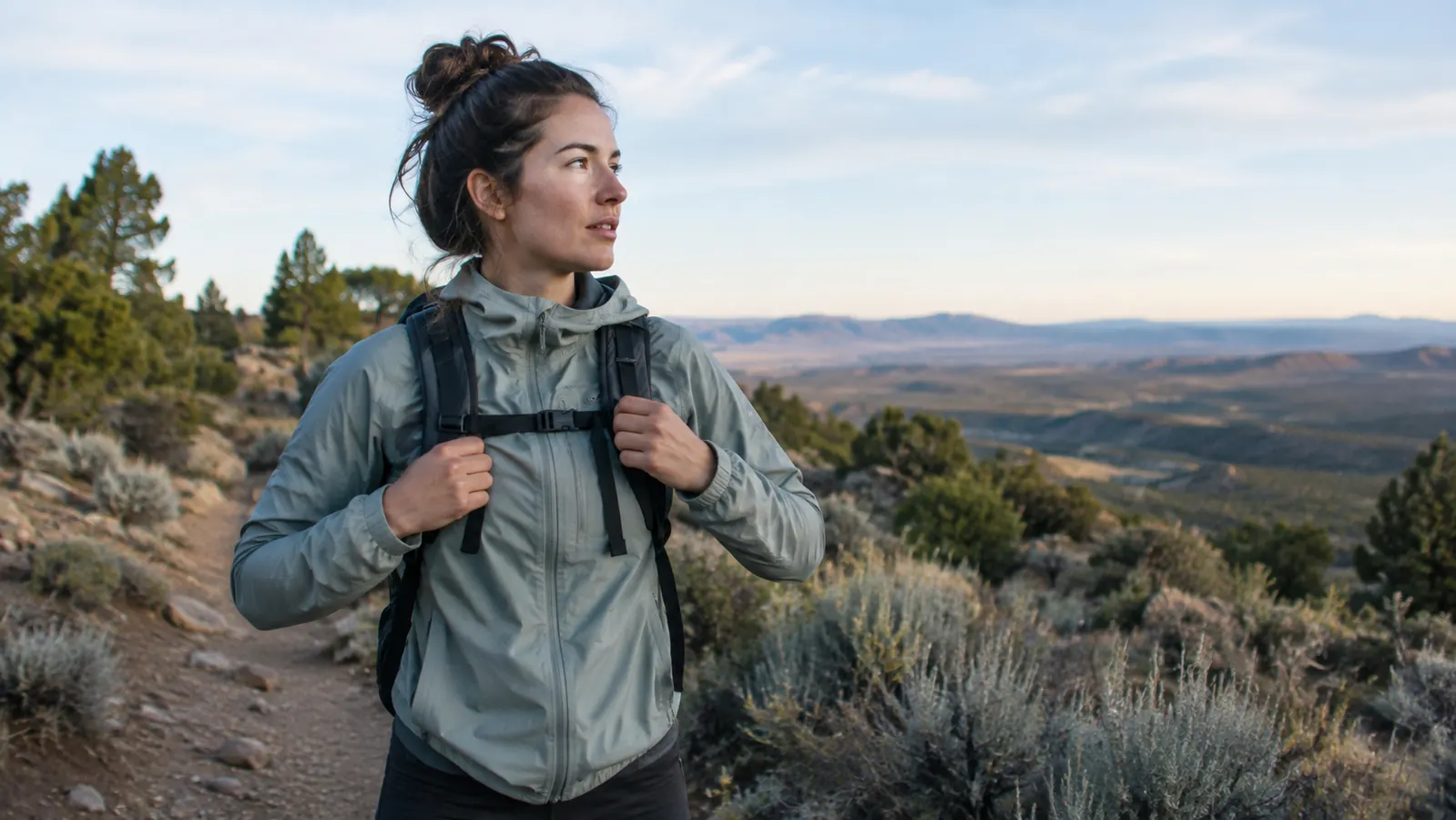
I have a rule about daypacks: if it cannot survive a full season of desert dust, June snow, and September nights, it does not get to live in the back of my truck. My 2013 Toyota 4Runner has 210,000 miles on it and I plan to keep it another ten years, so anything I store in the cargo area has to earn its spot. This spring I bought the Outlander 20L packable daypack for one simple reason: I was tired of the full-size pack taking up space all summer when I only used it on weekends. A full season of day hikes along the Deschutes and up into the Sisters later, I have a clear opinion.
Dana and I hike most weekends from May through October. We stick to the Three Sisters Wilderness and the Deschutes corridor, with the occasional trip out to Smith Rock when the wind is calm. Snow stays at elevation into June and the nights dip to 30 degrees by September, so I carry more than most day hikers: a puffy, a shell, a liter of water, lunch, a first aid kit, and a headlamp even on a three-hour walk. The Outlander has carried all of it without complaint. And it has done it while riding flat in the cargo area the other six days of the week.
The Quick Verdict
The best packable daypack I have owned in 30 years of weekend hiking, as long as you keep the load under about 12 pounds.
Amazon Check Today's Price →A daypack that earned its spot in the truck
After a full season of Deschutes hikes, the Outlander 20L is the pack I grab first. It rides flat in the cargo area until the trailhead appears, then carries everything a day hike demands without drama.
Amazon Check Today's Price on Amazon →How I've Used It
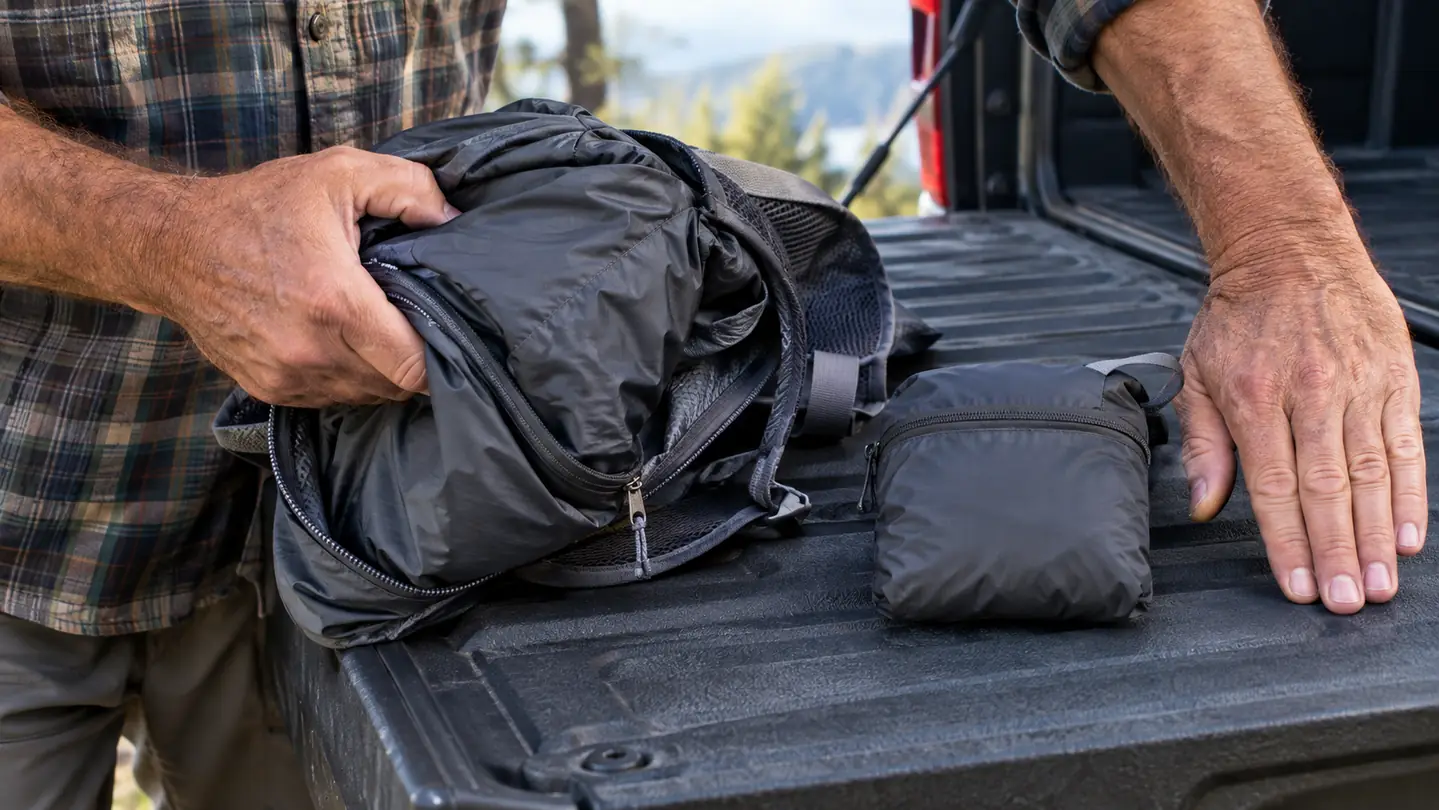
I did not buy this pack intending to review it. I bought it because I was tired of my big pack living in the back of the 4Runner from May to October, taking up space I needed for firewood and camp chairs. Two seasons back I bought a cheaper packable bag on a whim, the kind you see in a bin at the outdoor store, and it tore its shoulder seam on the second trip. I told myself I would not buy another packable pack until I found one that could take real use. The Outlander folds into its own pocket, ends up about the size of a paperback book, and rides behind the rear seat until the trailhead shows up.
Once we are out of the truck it becomes a real daypack. I have used it on two dozen trips into the Three Sisters Wilderness, a handful of mornings at Smith Rock, and a long fall walk along the Deschutes River Trail. The most I have carried is a full day of layers, a liter and a half of water, and food for two, which sits right around 11 or 12 pounds. It handles that load fine.
I also use it as a camp bag. When we car-camp, Dana and I leave the big packs at home and the Outlander carries our day gear from the tent to the trail and back. On travel days it folds flat into a suitcase. That versatility is the whole point of a packable pack, and this one delivers it.
I remember one trip in particular. We parked at the trailhead for a loop up toward the Sisters in late June, snow still in the shadows, and the Outlander carried my shell, a fleece, lunch, and a liter of water for a six-hour day. It did not feel like a compromise. That is the standard I measure this pack against now.
What the Outlander Is and Is Not
This is a packable daypack, not a backpacking pack, and keeping that straight matters. It has no frame, no padded hip belt, and no load-transfer system. What it has is a 20-liter main compartment, a small front pocket, two mesh water bottle pockets, and a chest strap. The whole thing weighs just over half a pound and folds into a stuff sack about the size of a folded rain jacket.
The shoulder straps are simple foam, not the padded suspension you get on a full-size pack. That is the tradeoff for the low weight and the packability. For what this pack does, which is carry a day's worth of gear on a hike that starts and ends at a car, that tradeoff is worth it. I have owned frameless packs that cost three times as much and did not pack down anywhere near this small.
Outlander built the zippers to last. After a summer of sand and juniper dust, the main zipper still runs smooth, and the front pocket zipper has not snagged once. That matters in the high desert, where fine dust gets into everything and ruins cheap zippers by August.
The folded size is the headline feature. Stuffed into its own pocket, the pack is about the size of a thick paperback. I keep it in the door pocket of the truck or on top of a duffel, and I forget it is there until a trailhead appears. No other pack I have owned disappears like this one.
The material is a tight ripstop nylon that feels tougher than the price suggests. It has no fancy coating, so it is not waterproof, but it resists abrasion and it has not frayed anywhere after a season. For what this pack costs, that is a lot of pack.
How It Held Up Over a Full Season
The honest answer is better than I expected. I put about 40 hikes on this pack, plus a week of car camping where it lived in the truck full time. The fabric has shrugged off brush along the Deschutes and the occasional scrape against basalt at Smith Rock. No tears, no pulled seams, no worn spots. I rinse it out with a hose when the dust builds up and it dries in an hour. No rust on the clips, no stiffness in the zipper after a wash.
The chest strap is a simple clip and it has not slipped once. The water bottle pockets are deep mesh with a stretchy edge, and they have held a liter bottle on every hike, including a couple of scrambles where I leaned well over. The front pocket is big enough for my headlamp, a small first aid kit, and a pack of playing cards for the evenings.
I have been caught in two proper showers with this pack. The fabric is not waterproof, nothing in this category is, but my shell and my lunch stayed dry inside because the top closes tight and the main zipper sits under a flap. For a pack this light, that is reasonable weather behavior.
The one wear point I noticed is the shoulder straps. They are not padded, so after a couple of hours with a heavy load I feel the edges. It has not affected durability at all. It is purely a comfort thing, and it only shows up when I overpack.
After 40-plus hikes and a summer living in the back of the truck, the zippers still zip and not one seam has pulled.
Where It Shines
For a car camper who day-hikes, this is close to the ideal pack. It solves a real problem: the big pack takes up space and the spare daypack gets lost in the clutter. The Outlander rides flat, appears when you need it, and does the job without drama. On a hike that starts and ends at the same trailhead, you do not need a suspension system. You need a bag that holds your stuff and does not fall apart. That is the whole point, and it lands.
It also shines as a travel bag. Fold it flat in a suitcase and you have a daypack for city walks, museum days, or a hike on a trip where you did not plan to hike. I took mine on a drive down to the coast and it carried my camera, a rain shell, and lunch for a long beach walk.
And because it is light and cheap enough to replace without crying about it, I do not feel guilty stuffing it under a seat or dropping it on gravel. That is a bigger feature than people admit. Gear you are afraid to use is not gear, it is furniture.
Where It Falls Short
The shoulder straps are the first thing I would change. For a load under 8 pounds they are fine. Push past 12 and the edges dig in after a couple of hours. If you are the kind of hiker who carries a full winter kit, a stove, and 3 liters of water, this is not your pack.
There is no frame and no real hip belt, so heavy loads sit entirely on your shoulders. That is the nature of packable packs, and the Outlander does not pretend otherwise. It is also a 20-liter pack, so it will not fit a bear canister, a big camera kit, or a winter load. Know that going in and you will not be disappointed.
The front pocket is small and there is no dedicated pocket for a phone, so I end up fishing for mine in the main compartment. Minor, but worth mentioning. It is a quibble, not a dealbreaker. And the fold-into-its-own-pocket trick means you have to pack it carefully, or it does not go back to its smallest size.
There is no waist strap at all, not even a simple one. On a steep descent with 12 pounds on board, a waist strap would have taken some of the load off my shoulders. I miss it on exactly those days, and I forgive it on the other 39.
Alternatives I Considered
I looked at a couple of other packable daypacks before I settled on this one. The main contenders were a few ultralight brands that cost more and pack slightly smaller, but they all had the same thin straps and some of them had flimsier zippers. One cheap pack I tried the year before tore its shoulder seam on the second trip out. That is the exact failure I was replacing.
I also considered just keeping my full-size pack in the truck. It is more comfortable for heavy loads, but it takes up a third of the cargo area and it is overkill for a three-hour walk. The Outlander does the day-hike job better because it is the right tool for it. That is the whole review in one sentence.
I will say this for the bigger pack: if I were heading out for a full day above treeline with a camera body, two lenses, a tripod, and food for eight hours, I would take the framed pack when I know the miles will be long. But that is maybe four trips a year. The other twenty-six, the Outlander is the right call.
What I Liked
- Folds flat into its own pocket, about the size of a thick paperback
- Survived a full season of desert dust, brush, and basalt with no tears or pulled seams
- Deep mesh water bottle pockets that hold a liter bottle through anything
- Chest strap that stays put and a main zipper that runs smooth after 40 hikes
- Light and cheap enough to stuff anywhere without guilt
Where It Falls Short
- Shoulder straps are unpadded and dig in past 12 pounds
- No frame and no hip belt, so heavy loads sit entirely on your shoulders
- Front pocket is small and there is no dedicated phone pocket
- Not big enough for a bear canister or a winter load
Who This Is For
Buy this pack if you are a weekend day hiker or car camper who is tired of the big pack taking up space. If your hikes start and end at a car or a campsite, if you carry a puffy, water, lunch, and a first aid kit, and if you want a pack that rides flat until you need it, the Outlander 20L is hard to beat. It also makes a great travel daypack and a spare bag to keep in the truck for the days you decide on a whim to stop at a trailhead.
If you already own a full-size pack and you just need something smaller for the 90 percent of hikes that do not need it, this is the cheapest piece of gear that will change your routine. It stopped me from hauling a 3-pound pack to carry a 6-pound load.
Who Should Skip It
Skip it if you regularly carry more than 12 pounds, if you need a pack for multi-day trips, or if you want a framed pack with real padding for long approaches. The unpadded straps and the lack of a hip belt mean a heavy load will hurt by mile three. And if you need a pack that fits a bear canister or a winter kit, step up to a full-size pack.
The same goes if you are shopping for a single pack to do everything from trail to town. This one is a daypack first and a travel bag second, and it will not pretend to be a backpacking pack.
Grab the pack that rode the whole season with me
If you want a packable daypack that handles a full season of weekend hikes, packs flat, and does not fall apart, the Outlander 20L is the one I kept in the truck.
Amazon Check Today's Price on Amazon →