
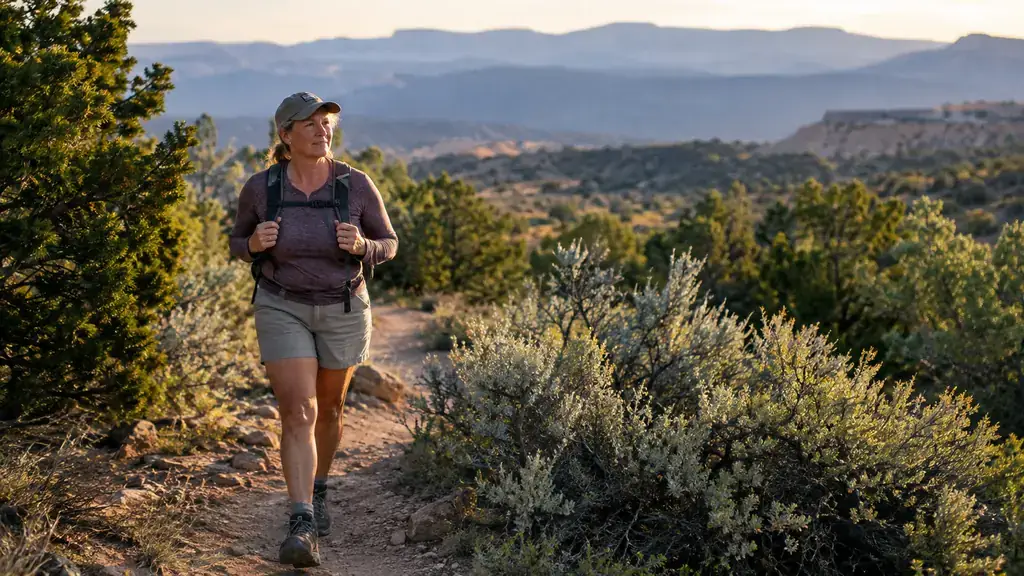
I bought the Outlander packable daypack on a Tuesday in May, mostly because it was sitting in a bin by the register and I needed something light for a walk along the Deschutes with Dana. I did not expect to still be carrying it in October. That is the honest part of this review. The other honest part is that the zipper on the main pocket started catching by late August, and I want to tell you about that before I tell you how much I have come to like the thing.
Over thirty years of weekend camping I have owned more packable daypacks than I can count, and most of them end up in a drawer. They are either too flimsy to carry anything heavier than a rain shell, or they fold into a pouch the size of a loaf of bread but ride on your back like a grocery bag. I bought the Outlander expecting the same story. It has not played out that way, and the reason it has not is worth a few minutes of your time.
The Quick Verdict
The best packable daypack I have carried in a decade. It packs down to almost nothing, carries a real daypack load, and survived a full season of weekend use. The honest caveat: the main zipper started catching by August, and it is the one part of this pack you have to treat with respect.
Amazon Check Today's Price →A daypack that earned a permanent spot in my truck
If you want a packable daypack that actually carries weight instead of folding into a useless stuff sack, this is the one I reach for every weekend, zipper caveat and all.
Amazon Check Today's Price on Amazon →How I've Used It
I ran this pack through a full season, May through October, out of the back of my 2013 4Runner. That is about 22 weekend trips between the Three Sisters Wilderness, Smith Rock, and the high desert east of Bend. On a normal day the pack carried a one liter water bottle, a couple of sandwiches, a rain shell, a small first aid kit, an extra fleece, and a folding knife. Call it eight or nine pounds, closer to eleven when Dana and I split a day's worth of food and she got tired of carrying her share.
The first thing I noticed is that it does not flop around. Most packable packs have no structure at all. You put them on and they sag, and every step the load shifts sideways. The Outlander has a little shape to it, enough that a full water bottle does not pull it off center. The shoulder straps are thin, and I will get to that, but they are wide enough that eight pounds does not dig in the way it does on the cheapest packs I have owned.
I also used it as a camp bag. On car-camp weekends it lived in the back of the truck with a headlamp, a spare pair of socks, and a paperback in it. That is where the zipper trouble showed up, because it was the pack I grabbed without thinking, and I want to be straight with you about what happened.
What Nobody Tells You About the Zipper
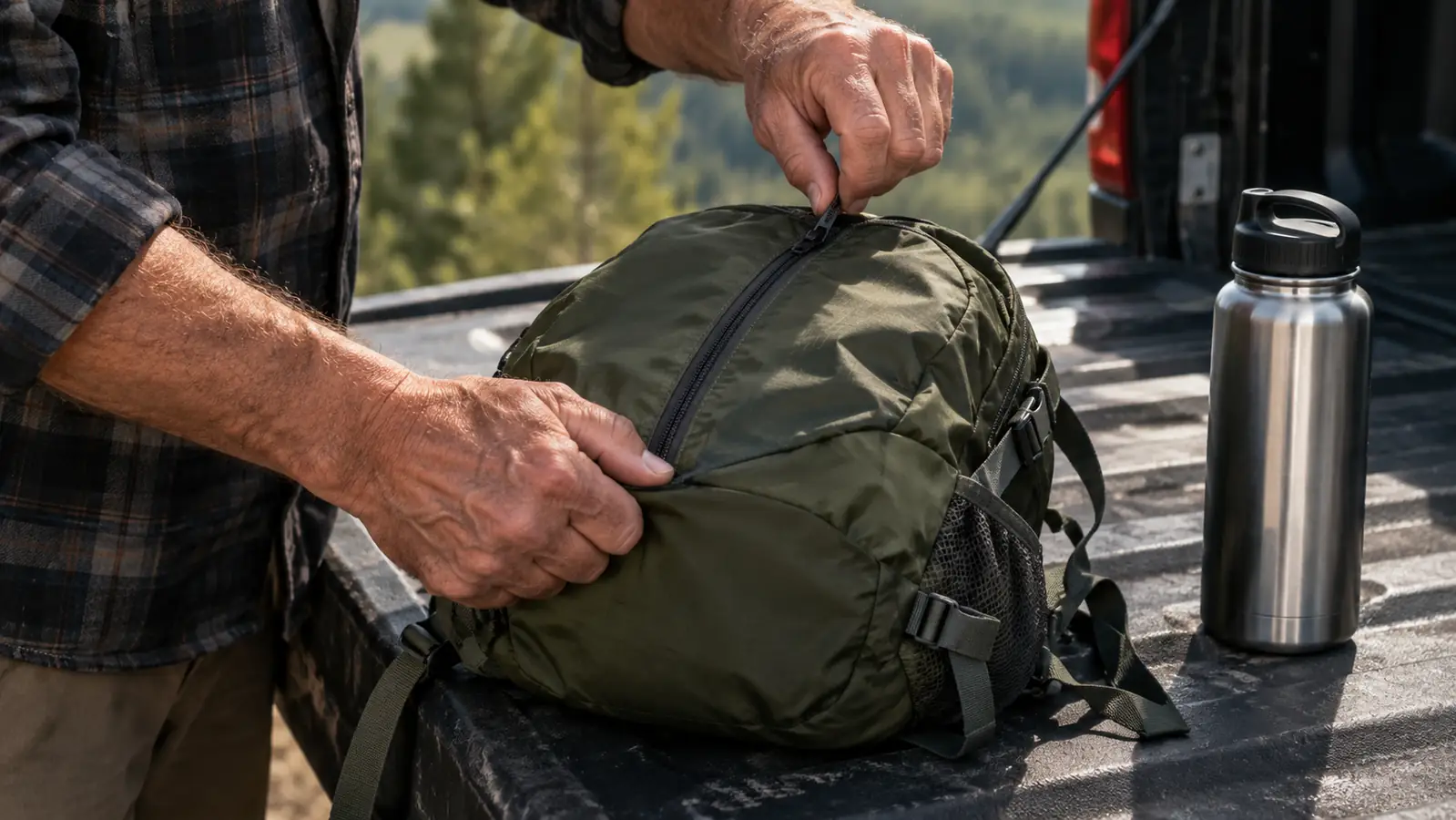
Here is the thing nobody tells you about packable daypacks. The fabric can be as tough as you want, but the zipper is the part that dies first, because it is the part that gets the most abuse. The Outlander's main compartment zipper started catching around the middle of August. Not failing, catching. I would be a third of the way around the opening and the slider would hesitate, then jump past the spot, and I would have to tug it back.
I have a theory about why, and it comes from thirty years as a power-line foreman, where I learned that zippers hate being loaded sideways. When you stuff a packable pack full, the thin fabric bulges against the zipper track. On a rigid pack the track stays straight and the slider runs smooth. On this one the track flexes with the fabric, and the slider has to work against that pressure. The more you overstuff it, the harder the zipper works.
The fix is simple and it has worked for me. I do not overstuff the main pocket. I leave it about three quarters full, and I put the heavy things, the water bottle, in the side pocket or against my back. Since I started doing that in September, the zipper has been fine. It is not as smooth as the day I bought it, but it works, and I have not had a single failure. I am not telling you the zipper is bad. I am telling you it is the part of this pack that needs a little respect, and that is a fair trade for how small this thing packs down.
How It Actually Carries
For a pack that weighs almost nothing and folds into its own pocket, the Outlander carries better than it has any right to. The shoulder straps are the weak point, and I will not pretend otherwise. They are thin foam, the kind you find on a school kid's backpack. For a nine pound load on a two mile walk to Smith Rock, they are fine. For twelve pounds on a six mile climb, you feel them after the first hour.
I have learned to work with it. I keep the heavy items low and close to my back, which is where they belong anyway. I cinch the straps so the pack rides high instead of sagging against my hips. And I take a ten minute break at the top of a climb, which I would do anyway at my age. With those habits, I have carried this pack on a full day up toward the Sisters and back without hating my shoulders by the end.
There is no hip belt and no sternum strap, and that is worth knowing before you buy. A chest strap does a lot of work on steep ground, and this pack does not have one. That is exactly why the load limit here is a daypack load, not a backpacking load. Keep it under ten pounds and you will be fine. Load it like a suitcase and you will be the one who pays for it.
Packable, But There's a Tradeoff
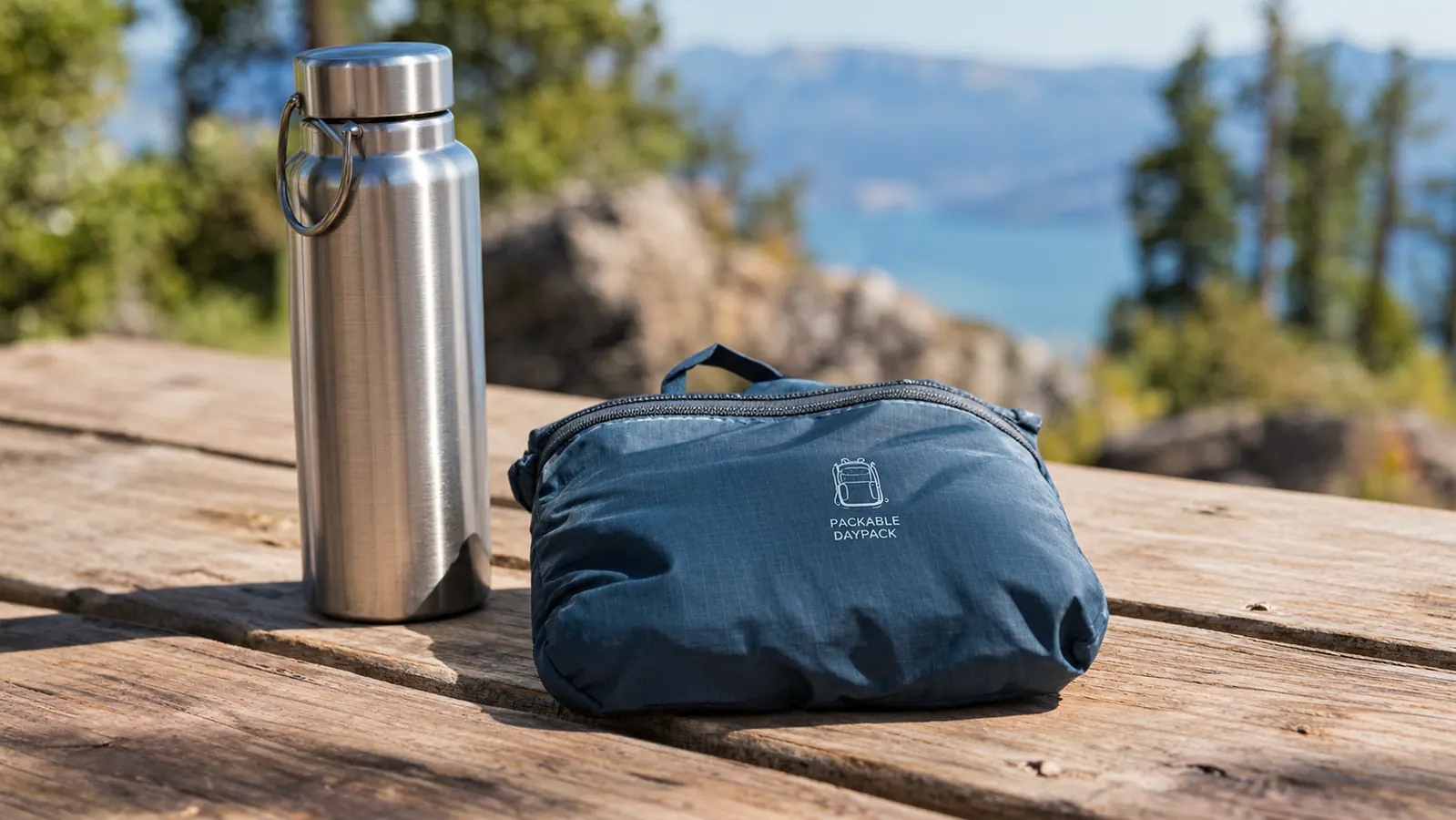
The whole point of a packable pack is that it disappears when you are not using it, and this one does that as well as anything I have owned. It folds into its own front pocket and ends up about the size of a large baked potato. I keep it in the glove box of the 4Runner, where it takes up maybe a third of the space. On a car-camp trip it rides in the door pocket, and I forget it is there until I need it.
That is the tradeoff, and you need to hear it plainly. To fold that small, you give up the frame, the padded back panel, and the load bearing harness of a real backpack. The Outlander has a soft back panel with a little padding, but it is not a frame. You feel the corner of a hard water bottle against your back if you pack carelessly. I have learned to put the soft stuff, the fleece, between the bottle and my back. That is the price of a pack that fits in a glove box, and for a daypack it is a fair one.
How It Held Up Over a Season
I want to give you the honest durability picture, because that is the reason most people read a review like this. After a full season, here is the scorecard. The fabric looks new. It is a woven nylon that has shrugged off granite slabs at Smith Rock, juniper branches on the high desert, and a tumble down a scree slope where the pack took the worst of it. There is not a tear and not a worn spot. The stitching is holding everywhere I have checked, and I have checked every seam twice.
The zipper is the one part that is not new, and I have told you about that. The side mesh pockets have stretched a little, which is normal, but they have not torn, and I have stuffed a full liter bottle into the same pocket on every trip. The little loop on top, the one you use to hang it or pull it out of the truck, is still solid. The buckles on the straps have not cracked, which surprised me, because cheap plastic buckles crack. These have not.
I will also tell you the one thing that has not been tested. I have not washed it, and I have not had to. It has been rained on a few times, and the fabric beads water well enough that the contents stayed dry, though I would not trust it in a real downpour. For a daypack that is fine. If I were carrying a camera or a phone I cared about, I would put them in a dry bag inside, which is what I do with any pack this light.
What I'd Change If I Could
If I could change one thing about this pack, it would be the zipper. I would put a heavier duty zipper on the main pocket, the kind you find on a full-size pack, even if it meant the pack weighed a few more ounces and folded a little less flat. The zipper is the part that has aged, and it is the part that will decide whether this pack lasts three years or ten.
The second thing I would change is the shoulder straps. They do not need to be backpack straps, but a little more foam would carry a ten pound load a lot more comfortably on a long climb. As it is, I manage with good packing habits, and the tradeoff is that the pack folds small enough to live in my glove box. I will take that trade, but I want you to know it is a trade and not a free lunch.
The Small Things That Add Up
A review is a list of small things, so here is mine. The front pocket is where the pack folds into itself, and it is also where I keep my keys and a headlamp. That means on every trip I am stuffing the pack into the pocket it just came out of, and the design handles it without complaint. The pocket is a little tight when the pack is new, but it loosens up after a few uses. The side pockets are the stretchy mesh kind, and I have mentioned they hold a full liter bottle without tearing.
There is no padding on the straps, and I have told you that. There is also no sternum strap, no hip belt, and no rain cover. If those matter to you, this is not the pack, and you should read my full comparison of packable versus full-size packs before you decide. What this pack has is the essentials done right: a main pocket big enough for a day's worth of gear, two usable side pockets, a top loop, and the ability to vanish when you are done.
One more small thing. The dark red color mine came in is easy to spot on a bench or in the back of the truck. That sounds trivial, but when Dana and I pack up camp in the dark, the red one is the one we can find. I have lost more gray and black gear to the forest floor over the years than I care to admit.
What I Liked
- Packs down smaller than anything else I have carried, about the size of a large baked potato
- Carries eight or nine pounds comfortably, more than most packable packs manage
- Fabric and stitching held up through a full season of hard use
- Side mesh pockets hold a full liter bottle without tearing
- Easy to spot in the dark, which matters more than it sounds
Where It Falls Short
- Main zipper started catching after about four months; it works, but it needs care
- Thin shoulder straps dig in on loads over ten pounds or long climbs
- No hip belt, no sternum strap, no rain cover
- Thin fabric means you feel hard objects against your back if you pack carelessly
After a full season of weekend use, the fabric looks new and the stitching is holding everywhere I have checked. The zipper is the only part of this pack that is not new, and it is the part that needs the most respect.
Who This Is For
Buy this pack if you are a weekend day hiker who wants one light bag that disappears when it is not in use. If you car-camp out of a truck or an SUV and you want a spare pack in the door pocket for the times you park and walk, this is it. If you fly somewhere and want a bag that folds flat in your carry-on for the day you go off exploring, this is the one. It is for people who hike a few times a season, carry water, a sandwich, and a shell, and do not want to think about their pack.
It is also for people who, like me, resent buying the same thing twice. I have owned the flimsy stuff sack packs and the ones that fall apart after a summer. This one is built to last a decade if you treat the zipper right, and that is the whole review in one sentence.
Who Should Skip It
Skip this pack if you are a serious backpacker. If you carry twelve pounds or more, if you need a frame, a hip belt, and a sternum strap to move that weight, this is not your bag. Buy a real pack with a frame and padded straps. I have one for the long trips, and I would not trade it. The Outlander is a daypack, and the moment you ask it to be a backpack, it will let you down, and it will be your fault, not its.
Skip it too if you want a pack you never have to think about. The zipper needs a little care. You have to avoid overstuffing it, and you have to pack the heavy stuff against your back. If that sounds like a chore, get a pack with a sturdier zipper and a padded back panel and pay more for it. This pack rewards a little attention, and the price you pay for it being small and light is that you handle it with some thought.
The Bottom Line
Here is my honest bottom line. The Outlander packable daypack is the best packable pack I have carried in ten years, and I say that with the zipper trouble on the record. It folds small, it carries a real daypack load, and after a full season it looks new except for the one part I have told you about. If you want a daypack that lives in your truck and is ready when you are, this is the one I reach for every weekend.
The pack that lives in my glove box, zipper caveat and all
If you want a packable daypack that carries a real load and packs down to nothing, this is the one that earned its spot in my truck. Treat the zipper with respect and it will treat you right.
Amazon Check Today's Price on Amazon →