I've hiked the high desert east of Bend for thirty years, and the one thing I've learned is that the weather doesn't ask permission. A morning that starts at fifty-five degrees can hit eighty by noon, then drop twenty degrees with wind and a passing thunderstorm before you're back at the trailhead. You need a pack that lets you add and shed layers without unpacking everything, and that carries enough water for a full day when the nearest stream is a dry wash. After a season of using the Outlander 20L packable daypack on these hikes, I've settled on a system that works. Here's how I pack it, step by step.
I've been hiking the high desert for three decades, and I've tried every kind of pack you can imagine. I've used a 65-liter expedition pack for a three-mile loop and I've used a fanny pack for a full day. Neither works. The 65-liter pack is overkill, and the fanny pack doesn't hold enough water. The Outlander 20L sits right in the sweet spot for a day hike. It's big enough for a full day's worth of layers, food, and three liters of water, but it's small enough that I don't feel like I'm carrying a suitcase on my back. I've also used it as a summit pack on multi-day trips, when I leave the big pack at camp and take just the daypack for a climb. It packs down so small that it fits in the lid pocket of my big pack.
Start with a pack that actually packs down
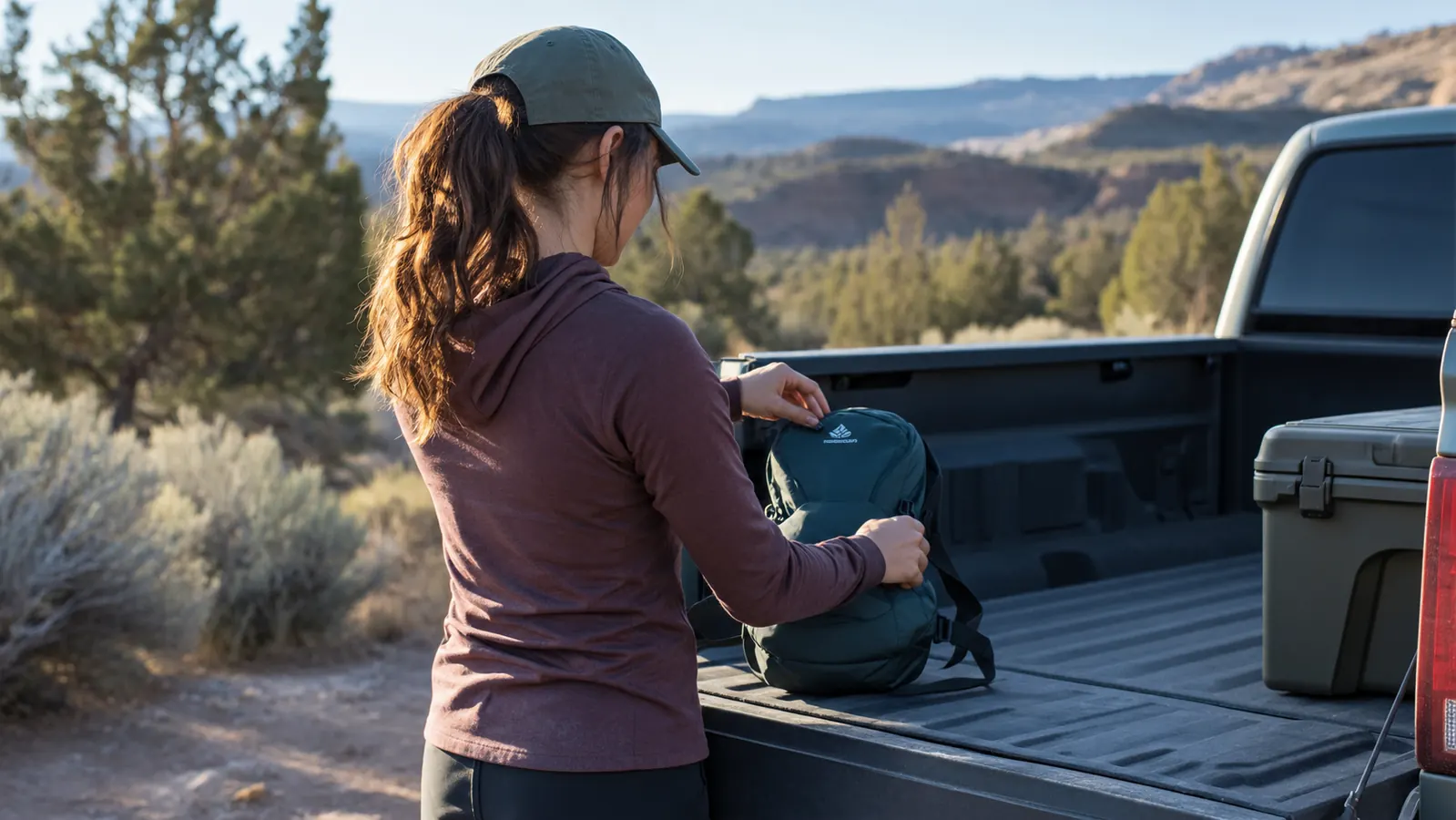
The Outlander 20L folds into its own pocket and weighs under a pound, so you can keep it in the 4Runner all summer and grab it on a whim.
Amazon Check Today's Price on Amazon →Step 1: Pick the right shell
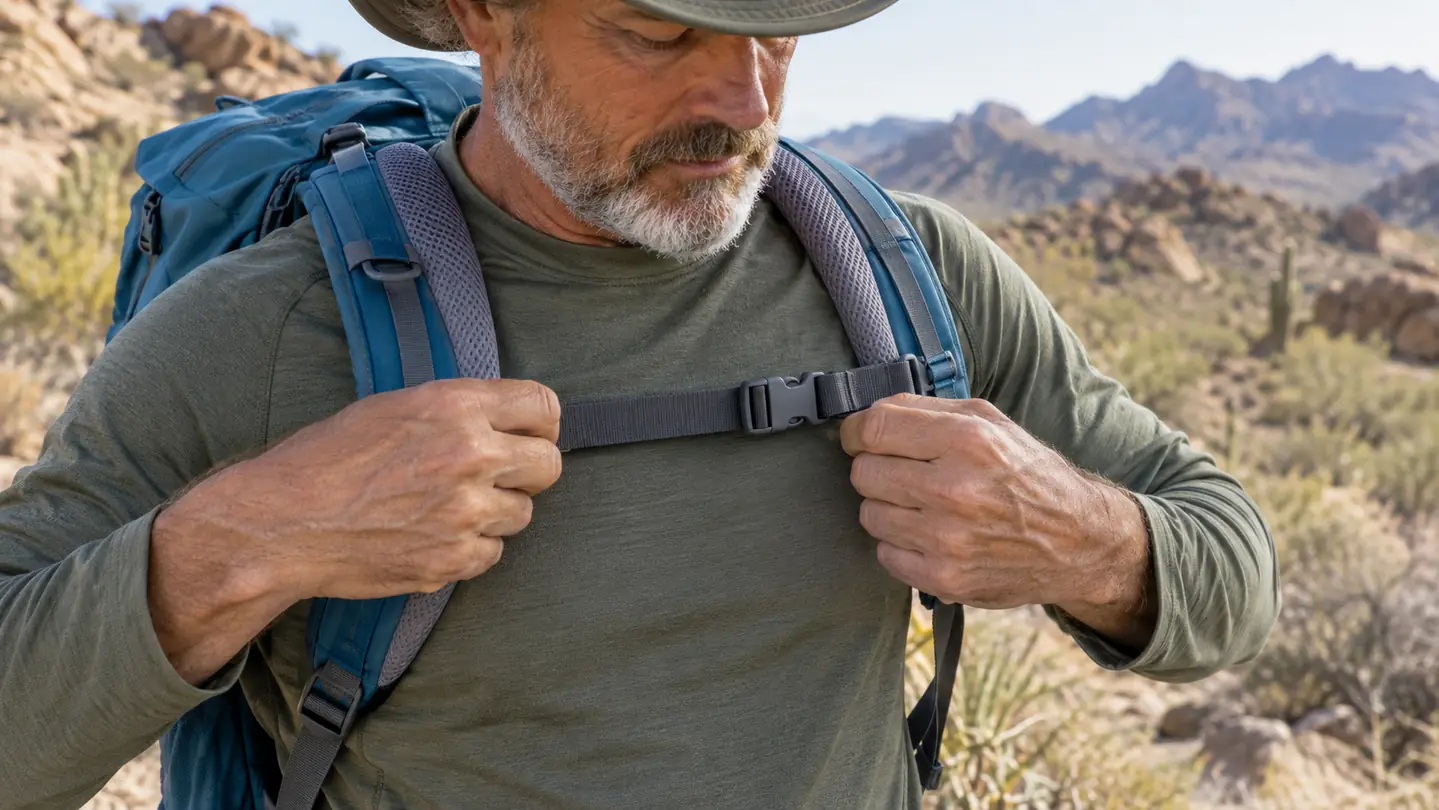
The pack is the base layer of your day-hike system. I used to grab whatever bag was closest, usually an old school backpack with a laptop sleeve and no hip belt, and I'd end up with a sore neck and a jumbled mess inside. The Outlander 20L changed that for me because it has a real hip belt, a chest strap, and two side pockets that actually hold a water bottle upright while you walk. It also packs into a small stuff sack about the size of a grapefruit, so it lives in the back of the 4Runner from May through October and never takes up space.
For a day hike in the high desert, I want a pack that sits close to my back and doesn't bounce. The Outlander has a simple frame sheet that keeps the weight on my hips instead of my shoulders. I've worn it on twelve-mile days in the Three Sisters and on shorter loops at Smith Rock, and after eight hours the straps still felt fine. The material is a ripstop nylon that has shrugged off juniper branches and granite scree without a single tear. It's not a climbing pack, but for what it is, a packable daypack that costs less than a dinner out, it's held up better than packs I've paid twice as much for.
One thing I learned the hard way is that a pack with too many pockets is a pack that hides things. My old daypack had a pocket for a laptop, a pocket for a tablet, a pocket for a water bottle, a pocket for snacks, and a pocket for a camera. By the end of a season, I couldn't remember which pocket had the sunscreen and which had the map. The Outlander's simplicity fixes that. The main compartment is one big space, and I use a couple of small stuff sacks to keep things organized. I put the first aid kit in a red stuff sack, the food in a blue one, and the layers in a gray one. That way, when I need something, I know exactly which sack to grab.
Step 2: Water first, then everything else
In the high desert, water is the one thing you can't improvise. On a full day I carry two liters, and on hot days in July I bump that to three. The Outlander has a hydration sleeve inside that fits a two-liter bladder, but I've found I actually prefer two hard-sided bottles in the side pockets because I can see how much I've drunk. I fill them the night before and put them in the fridge so they're still cold at the trailhead. I also carry a small collapsible filter bottle for the rare stream crossing, not because I plan to drink from it, but because having it means I never have to ration the last sip.
A common mistake I see on the trail is people carrying a single twenty-ounce bottle for a five-mile loop. In direct sun, at elevation, that's not enough. I learned this the hard way on a June hike on the Deschutes River Trail when I ran out of water two miles from the car and had to ask a couple for a sip. Now I use the rule of one liter per two hours of hiking, and I round up. If I'm going to be out for six hours, that's three liters. It adds weight, but the weight of the water is the weight of your safety margin.
Step 3: Layers for the swing
The high desert is a master of the temperature swing. At seven in the morning in September, it can be thirty-eight degrees with frost on the sagebrush. By one in the afternoon, it can be seventy-five and sunny. Then a cloud rolls in and the wind picks up and suddenly you want a shell. I pack a lightweight down vest, a thin windbreaker, and a sun hoodie that covers my neck. The vest and windbreaker each stuff into their own pocket in the pack, so they take up almost no room. I also always carry a knit beanie and a pair of light gloves, because the one thing that will ruin a day faster than cold hands is a cold head.
Sun protection is not optional at elevation. I wear a wide-brim hat with a cord that clips to my collar, polarized sunglasses, and SPF 50 lip balm. I also pack a small bottle of sunscreen even though I've already applied it at home, because I sweat it off and I always forget to reapply. The Outlander has a front pocket that holds a phone, a lip balm, and a small sunscreen bottle without everything falling to the bottom. That little pocket is one of the reasons I reach for this pack over my older one.
Step 4: Navigation and the what-ifs
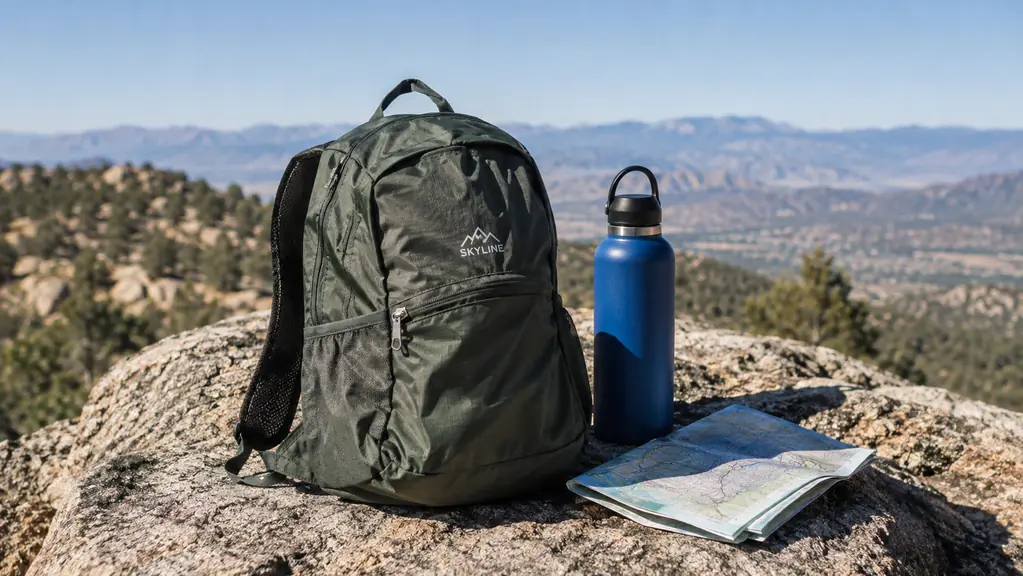
I grew up before GPS, so I still carry a paper map and a compass, even though my phone has a mapping app and I know the area. The phone is the first thing that dies at the worst possible moment, and in the high desert there are long stretches with no signal. I put the map in a ziplock bag and the compass in the small front pocket. I also carry a headlamp even on a day hike, because I've twice been caught out later than I planned and the last mile back in the dark is no fun. The headlamp weighs nothing and it lives in the pack all year.
The other non-negotiable is a basic first aid kit. I put mine together myself: a few adhesive bandages, a roll of tape, a small tube of antibiotic ointment, a blister pad, and a single dose of ibuprofen. I also carry a space blanket that's about the size of a deck of cards, because if someone twists an ankle and we have to wait for help, staying warm is the difference between a bad afternoon and a dangerous one. The Outlander has a loop on the front that I clip a small whistle to, and I've used it exactly once, to signal Dana when she wandered off the trail to take a photo. It worked.
I had a close call a few years ago that made me never leave the car without a headlamp. I was hiking up a ridge in the Deschutes National Forest, and I got so caught up in the view that I didn't notice the sun dropping behind the Cascades. By the time I turned around, it was dusk, and the trail back was a maze of game trails that all looked the same. I had my phone, but the battery was at twelve percent, and there was no signal. I made it back by the last light, but it took me twice as long as it should have because I was picking my way carefully. Now the headlamp is the first thing I pack, even for a short walk. The Outlander has a loop on the front for a whistle, but I also clip the headlamp to the shoulder strap so it's within reach.
Step 5: Food and the small comforts
A day hike is not the time to get hangry. I pack a sandwich, a bag of trail mix, an apple, and a couple of energy bars, and I put them in a small dry bag so they don't get crushed. I also carry a small thermos of coffee for the summit, because sitting on a rock at the top with a hot cup is half the reason I go. The Outlander's main compartment is a single large space, so I use packing cubes to keep the food separate from the layers and the first aid kit. That way I don't have to dig through everything to find the sunscreen or the map.
I've learned to put the snacks in an outside pocket so I don't have to stop and open the main zipper every time I want a handful. The side pockets on this pack are sized for a tall bottle, but they also fit a small stuff sack of trail mix. I also bring a lightweight sit pad that folds into a square, because the ground in the high desert is often rocky or covered in sharp juniper cones. That sit pad is the kind of small luxury that makes a long day feel shorter, and it weighs almost nothing.
I used to pack a heavy steel thermos for coffee, but it took up half the pack and weighed two pounds empty. I switched to a lightweight titanium cup and a small collapsible coffee dripper, and I just boil water on my backpacking stove if I'm on a longer trip. For a day hike, I bring a vacuum-insulated bottle that keeps coffee hot for eight hours, and I pour it into the titanium cup at the summit. It's a small ritual, but it's the thing that makes a long day feel like an adventure instead of a chore. I also learned to pack a second snack for the drive home, because there's nothing worse than finishing the trail mix and realizing you have a two-hour drive ahead.
What Else Helps
A few things that aren't essential but make a day in the desert better: a pair of trekking poles to take the load off your knees on the descents, a small camera or a phone with a good camera, and a lightweight trash bag to pack out everything you packed in. I also carry a small bottle of hand sanitizer and a bandana, which has about a hundred uses. And I always tell Dana where I'm going and what time I expect to be back, even on a day hike, because the desert doesn't forgive a careless plan.
The Outlander 20L is the one piece of gear I'd grab first if the 4Runner had to be packed in a hurry. It's light, it packs down small, and it's survived a summer of abuse without a seam pulling. If you're looking for a daypack that you can keep in the car and grab on a moment's notice, this is the one I reach for.
The Outlander has a hip belt, a chest strap, and two side pockets that actually hold a water bottle upright while you walk.
Pack once, and you're done worrying
The Outlander 20L folds into its own pocket and lives in the back of your rig all season. Check today's price on Amazon and see if it fits your next day-hike plan.
Amazon Check Today's Price on Amazon →