
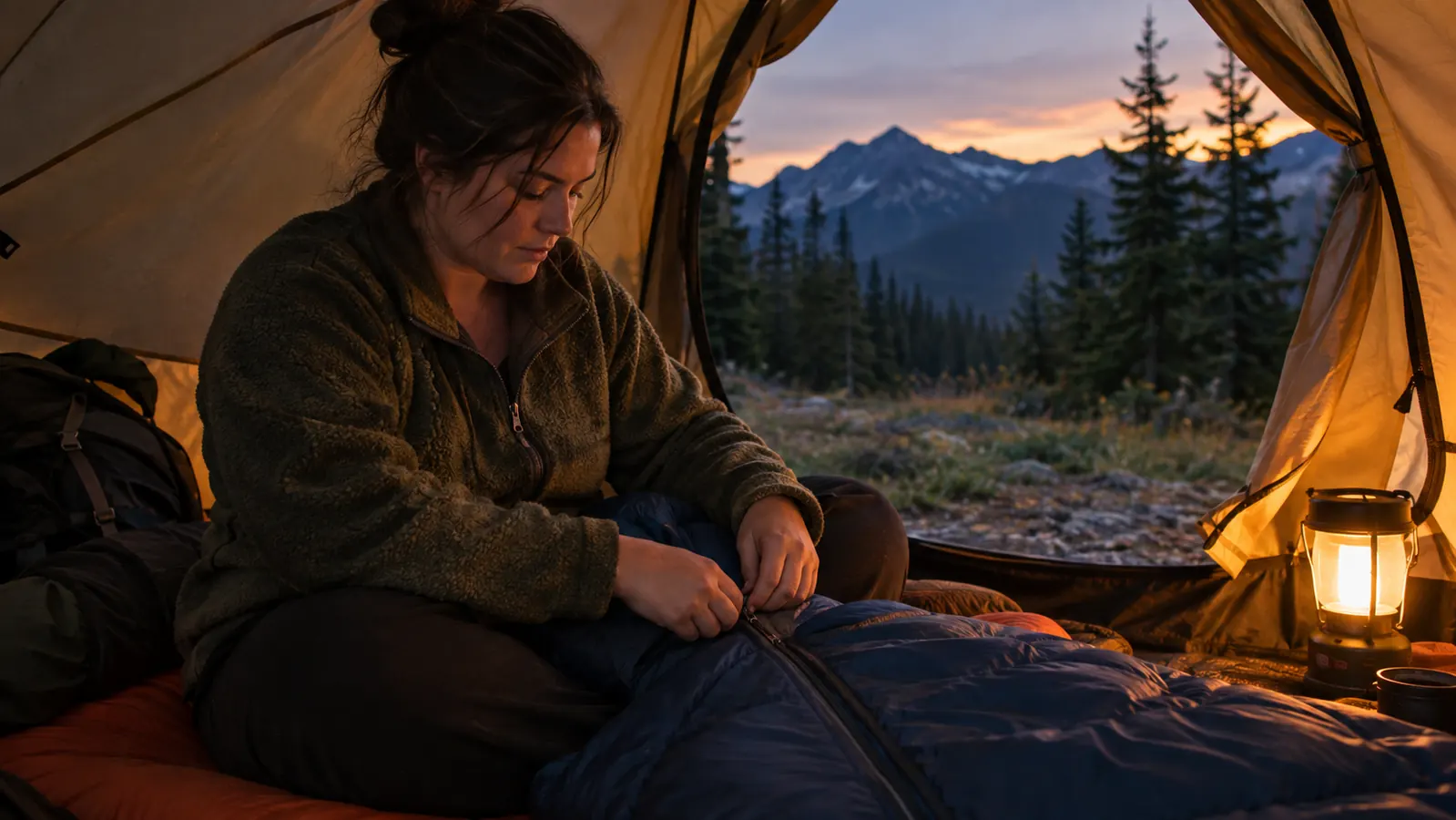
The thing nobody tells you about a cold weather sleeping bag is that you will eventually have to wash it. And if you wash it the wrong way, you can turn a bag that kept you warm at 28 degrees into something that feels like a wet blanket in a 50-degree cabin. I found that out the hard way last spring with the JEAOUIA cold weather sleeping bag I had been using since September, and this review is about both the bag and the mistake, because the mistake taught me more about how this thing is built than any spec sheet did.
Let me back up. I am Ray Hollis, 54, a retired power-line foreman who camps most weekends from May through October out of a 2013 Toyota 4Runner with my wife Dana. We hike the Three Sisters Wilderness, climb around Smith Rock, and sleep in the high desert east of Bend. September nights there routinely hit the low 30s, and for years I made do with an old rectangular bag that took up half the truck. Last fall I finally bought a proper cold weather bag for myself. The JEAOUIA was the one I settled on after a long week of reading reviews, and I have since spent maybe twenty nights in it across every season. This is the honest version of that time, including the laundry disaster.
The Quick Verdict
A warm, honest cold weather bag that shrugs off condensation and packs smaller than most bags in its class. Just never put it in a top-loading washer, which is exactly what I did.
Amazon Check Today's Price →The bag I trust down to the low 30s
If you camp a few weekends a season and want one bag that will still be going in ten years, this is the one I reach for every time. Check today's price on Amazon.
Amazon Check Today's Price on Amazon →How I've Used It, and the Conditions I Trust It In
I have used the JEAOUIA in three kinds of nights. The first is the warm one, 45 to 50 degrees in early October, where I slept with the zipper mostly open and the bag laid on top of me like a blanket. The second is the workhorse night, 32 to 38 degrees, which is the bag's real comfort zone and where it has never let me down. The third is the cold one, down to 26 degrees in late September at Smith Rock, where I needed a base layer, a knit hat, and my fleece liner to stay warm. I want to be clear about that last number, because it is where most sleeping bag reviews go quiet.
The bag is rated for cold weather, and JEAOUIA prints a temperature range on the tag, but that range is a survival rating, not a comfort rating. At 26 degrees I survived fine. I was not cozy. If you are a cold sleeper, plan for the bag to keep you comfortable about 10 degrees warmer than the printed low, and bring a liner or extra layers for anything colder. That is true of nearly every bag at this price point, and the JEAOUIA does not pretend otherwise, which I respect.
The clearest test came in early June at a site near the Deschutes River, where the forecast lied and a cold rain moved in by midnight. The temperature fell to 34 degrees, and the tent fly leaked at one corner. A drip landed on the bag all night long, and in the morning the shell was wet to the touch where the drip had hit, but the fill underneath was dry and I had slept warm. That night sold me on the waterproof finish more than any tag claim did.
The other thing I have learned is that the bag breathes better than I expected for a shell advertised as waterproof. On damp mornings after a rainy night, the outside of the bag beaded up condensation while the inside stayed dry. That has been the biggest practical win over my old bag, which would feel damp on the inside after a single dewy night.
The Wash That Nearly Ruined It
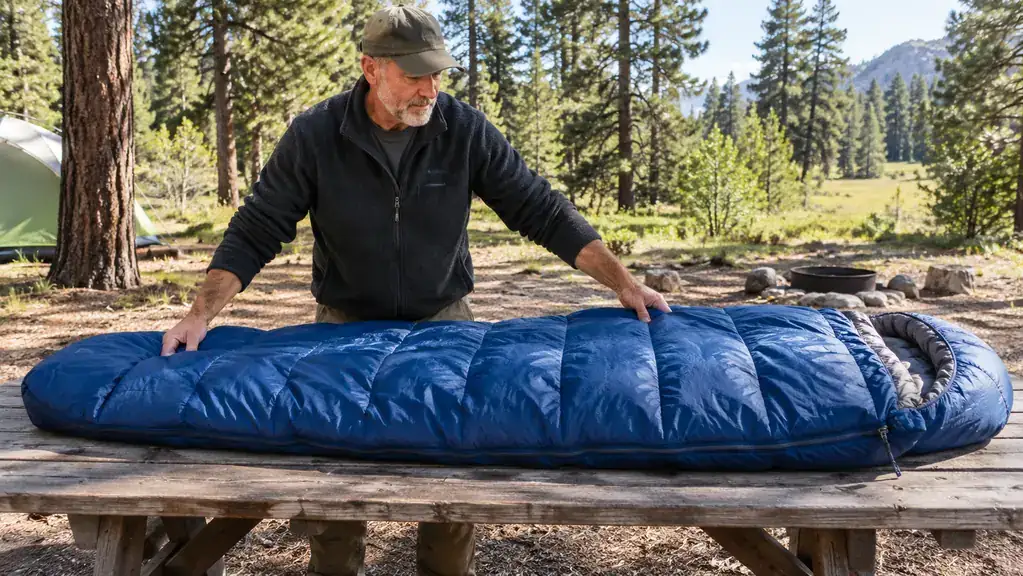
Here is what nobody warns you about. After a wet spring trip, I decided the bag needed a proper wash before I stored it for the summer. I read the tag, which said machine washable, and I took that at face value. I did not read the part about front-loading machines only, because that part was not printed anywhere obvious. So I put the JEAOUIA in our top-loading washer at home, set it to a gentle cycle with cold water, and walked away.
An hour later I pulled out a bag that looked like a deflated balloon with lumps. The agitator in a top-loading washer beats the fill the way a mixer beats batter, and the synthetic insulation inside had clumped into hard, fist-sized balls. The bag had gone from a puffy 8 inches of loft to maybe 3 inches, and the spots between the clumps were so thin you could see light through the shell. I have been fixing power lines for thirty years, and I am not easily rattled, but I will tell you honestly that my first thought was that I had just ruined a perfectly good bag over a load of laundry.
The recovery took most of a day. I moved the bag to the dryer, set it to the lowest heat setting, and ran it in long cycles, stopping every twenty minutes to break up the clumps by hand and rearrange the bag so no one spot stayed against the drum. I put three clean tennis balls in there with it, which tumble around and pound the fill back into place, a trick a friend in the outfitting business told me about. After about four hours of this, with plenty of breaks, the loft came most of the way back. Not all the way, but maybe 90 percent.
I have used the bag for several trips since the wash, including a cold night at 30 degrees, and it has performed fine. The lesson I want to pass on is simple. If you buy a cold weather sleeping bag with synthetic fill, wash it by hand in a bathtub with a mild detergent, or use a front-loading washer on the gentlest cycle, and always dry it low and slow with dryer balls, stopping to fluff it by hand. A top-loading washer with an agitator is the one thing that can genuinely wreck this kind of bag, and no review I read before buying told me that.
Since that scare I store the bag loose, hanging in a cotton storage sack rather than stuffed tight in the compression sack. A bag left compressed for months loses loft and never fully comes back. The JEAOUIA came with both a compression sack and a roomier storage sack, and I use the storage sack for the summer and only compress it for trips. That one habit probably does more for the bag's long life than anything else I do.
What the Spec Sheet Doesn't Tell You
The first thing the listing does not tell you is how the warmth rating actually works, which I covered above, so I will not repeat it. The second thing is the waterproof claim. The shell has a durable water-repellent finish, and it handles light rain and heavy condensation very well, but it is not a dry bag and it is not a bivy. If you leave this bag out in a real downpour, it will eventually wet out. I put mine under a tarp or in the tent, and I treat the water resistance as a bonus, not a promise.
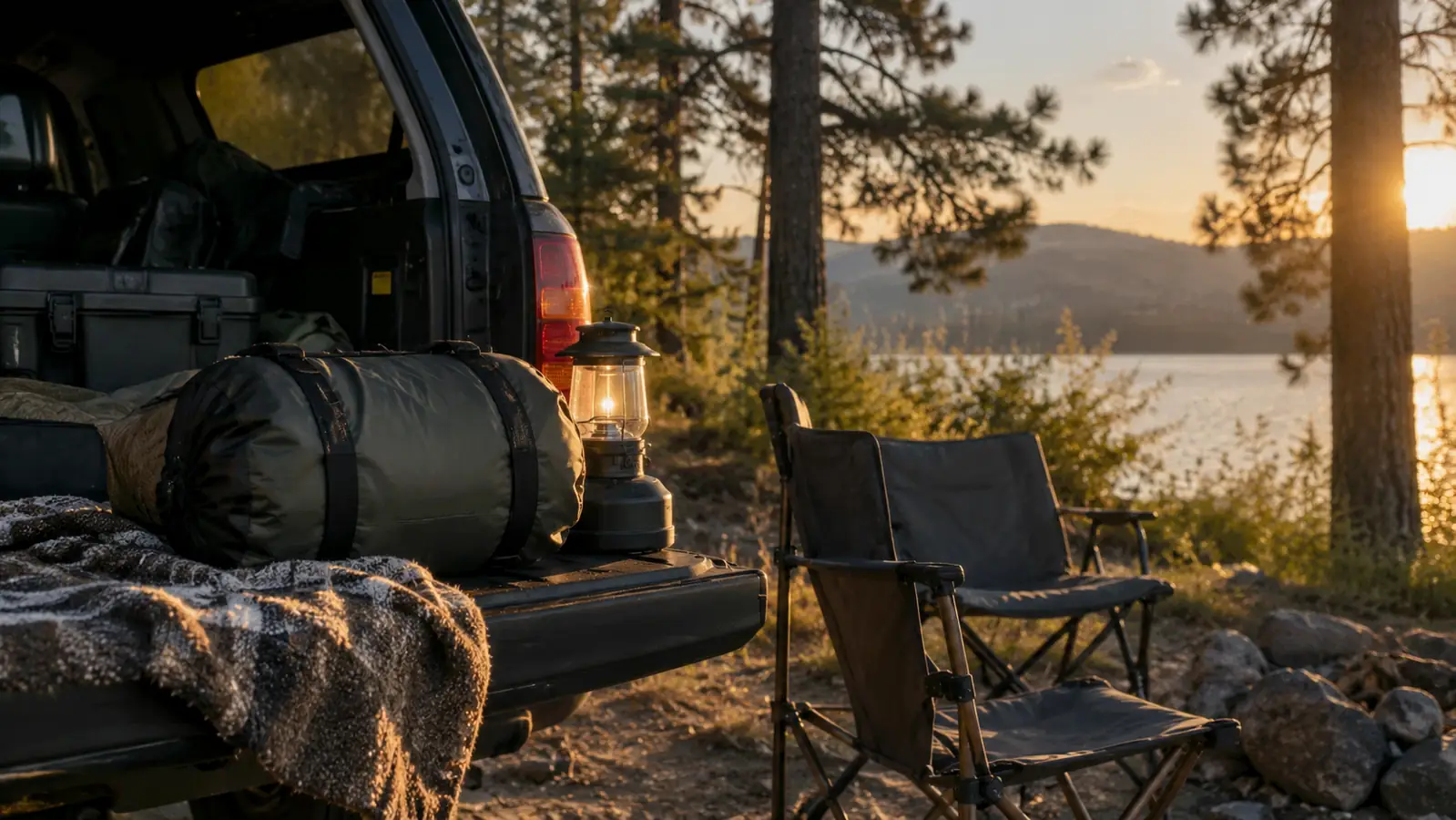
The third thing is packed size. The listing says the bag packs down small, and it does, but only with the included compression bag and only if you are willing to crank the straps hard. Out of the box, the bag is bulky, maybe the size of a large paper grocery bag when rolled loosely. With the compression sack done up tight, it drops to about the size of a sleeping bag cooler, which fits fine in my 4Runner and would fit in a big backpack. Just know that the compressed size is something you have to work for, and it takes two or three tries to get the roll right.
The fourth thing is the draft collar and hood. Both work well once you learn them, but the first couple of nights I fought with the hood, which wanted to slide over my face, and the draft collar, which I had to cinch just right to keep cold air from leaking down my neck. There is a learning curve, maybe two nights' worth, and then it becomes second nature. I mention it because the first-night experience with any new bag is the one people judge it on, and this bag's first night is a little clumsy.
The Little Things That Annoy Me
No honest review skips the annoyances, so here are mine. The zipper is functional but not buttery. It catches on the fabric about once a night if I am not careful, and I have learned to unzip slowly and guide it with my other hand. It has never failed or jammed badly, and it does not leak cold air when closed, but it is not the zipper you get on a bag three times the price.
The compression sack is fine but thin. After a season of use, the stitching at the strap anchors is starting to show wear, and I have started packing the bag in a stuff sack I already owned to spread the stress. The bag itself is holding up much better than its carry case, which is the opposite of what I expected.
The footbox is warmer than I need in mild weather. On a 45-degree night I have to kick a foot out to regulate temperature, which is a small thing, but it tells you this bag is built for cold first and mild comfort second. For a bag you will use from 30 to 50 degrees, that is a fair trade. For a bag you want for summer only, it is the wrong tool.
Alternatives I Considered
Before I settled on the JEAOUIA, I looked at two other directions. The first was a much more expensive down bag from a name brand, and it was lighter and packed smaller, but it cost several times more and down needs more careful handling than I was willing to give a bag I would use on dewy spring nights. The second was a simple rectangular bag at half the price, but it was too bulky for the truck and it would not have handled the low 30s without doubling up blankets.
In the end I chose the JEAOUIA because it hit the middle of my priorities: warm enough for September in the Cascades, durable enough for years of weekend use, and small enough, once compressed, to leave room in the 4Runner for Dana's gear and the camp kitchen. It is not the lightest or the most packable bag you can buy, and I would not take it on a multi-day ultralight trip. For what I do, which is car-camping and day-hike base camps, it is the right compromise.
What I Liked
- Warm and honest down to the low 30s with a base layer and hat
- Shell handles condensation and light rain without wetting the fill
- Packs to a reasonable size with the included compression sack
- Held up to a full season of weekend use and survived my washing mistake
- Good value for a bag you will keep for years
Where It Falls Short
- Zipper catches occasionally and needs a slow hand
- Compression sack stitching shows early wear
- Hood and draft collar take a couple of nights to learn
- Too warm for summer-only use, and the printed rating is a survival number, not a comfort number
- A top-loading washer can clump the fill for good
The bag survived my top-loading washer and came most of the way back after four hours of low-heat drying with three clean tennis balls. That is not a test any review told me to run, and it is the one that convinced me the build is honest.
Who This Is For
This bag is for the weekend camper who wants one reliable cold weather bag for years, not the lightest possible bag for a thru-hike. If you car-camp or base-camp out of a vehicle, if you sleep in the 30s more often than the teens, and if you would rather buy one solid thing than three cheap things, this is a very good fit. It is also a strong choice for someone who sleeps warm and runs cold bags, because you can always add a liner or wear a base layer, but you cannot add warmth to a bag that is already too thin.
It is also a good first cold weather bag for a couple sharing the tent, because two of them take up less room than one oversized bag, and the compression sacks let both fit in the back of the 4Runner without a fight. Dana has used it on nights when she wanted extra warmth over her own bag, and it has done the job every time.
Who Should Skip It
Skip this bag if you need a true expedition bag for below-freezing nights, if you are an ultralight backpacker counting every ounce, or if you only camp in summer and never see the 30s. Skip it too if you do not want to learn a hood and a draft collar, or if you plan to wash it in a top-loading machine and expect it to come out the same, because it will not, and no bag at this price would.
Still the bag I pack every weekend
After nine months, twenty nights, and one washing machine mistake, the JEAOUIA is still the first thing I load into the 4Runner. If you camp in the 30s and want a bag built to last, check today's price on Amazon.
Amazon Check Today's Price on Amazon →