
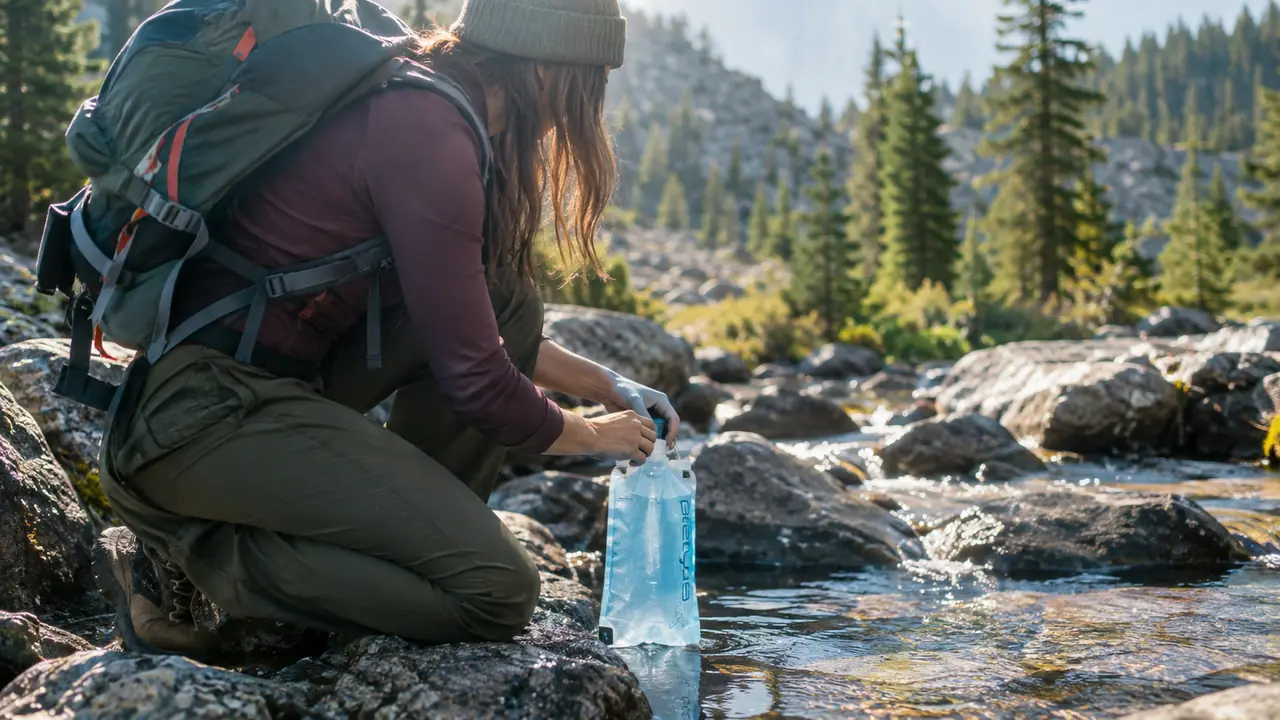
I'll give you the honest version right up front. Last July, on a two-day loop out of Green Lakes in the Three Sisters Wilderness, my Sawyer Squeeze slowed to a trickle somewhere around mid-morning on day two. The creek I was drawing from looked fine, clear and cold, but the filter had other ideas. It took a full backflush, pushing clean water backwards through the hollow fibers with the included syringe, before the flow came back. That clog cost me about twenty minutes and a fair amount of my confidence in a filter I had carried for three full seasons. This review is the stuff I wish somebody had told me before that morning on the creek.
I am not an ultralight backpacker and I have never pretended to be. I am a 54-year-old retired power-line foreman who lives outside Bend, Oregon, and I spend most weekends from May to October car-camping out of my 2013 4Runner with my wife Dana. We do day hikes, the occasional two or three night loop in the Cascades, and a lot of trips into the high desert east of the mountains. I section-hiked parts of the PCT in my forties, so I have carried my share of water treatment gear over the years, from iodine tablets to a pump filter that weighed more than my current pack does. The Sawyer Squeeze is the thing I have settled on for most trips, and this is the honest version of how it has held up.
The Quick Verdict
A durable, genuinely effective filter that earned its place in my pack, with the caveat that the pouches wear out and backflushing is non-negotiable.
Amazon Check Today's Price →The filter that clogged on me, and why I still pack it
Three seasons, one clog on Fall Creek, and a backflushing habit I now never skip. Here is the honest version of what the box does not tell you about the Sawyer Squeeze.
Amazon Check Today's Price on Amazon →How I've Used It
I bought my first Sawyer Squeeze in the spring of 2021, mostly because the pump filter I had been using was heavy and slow. The Squeeze weighs just a few ounces, packs down to almost nothing, and screws onto any standard plastic water bottle. I replaced the original with a second one two years later, not because the first one failed, but because I dropped it on a rock at Smith Rock and cracked the outer housing. That was my fault, not the filter's. The second one is what I have used for the last two seasons, and it is the one that clogged on me at Green Lakes.
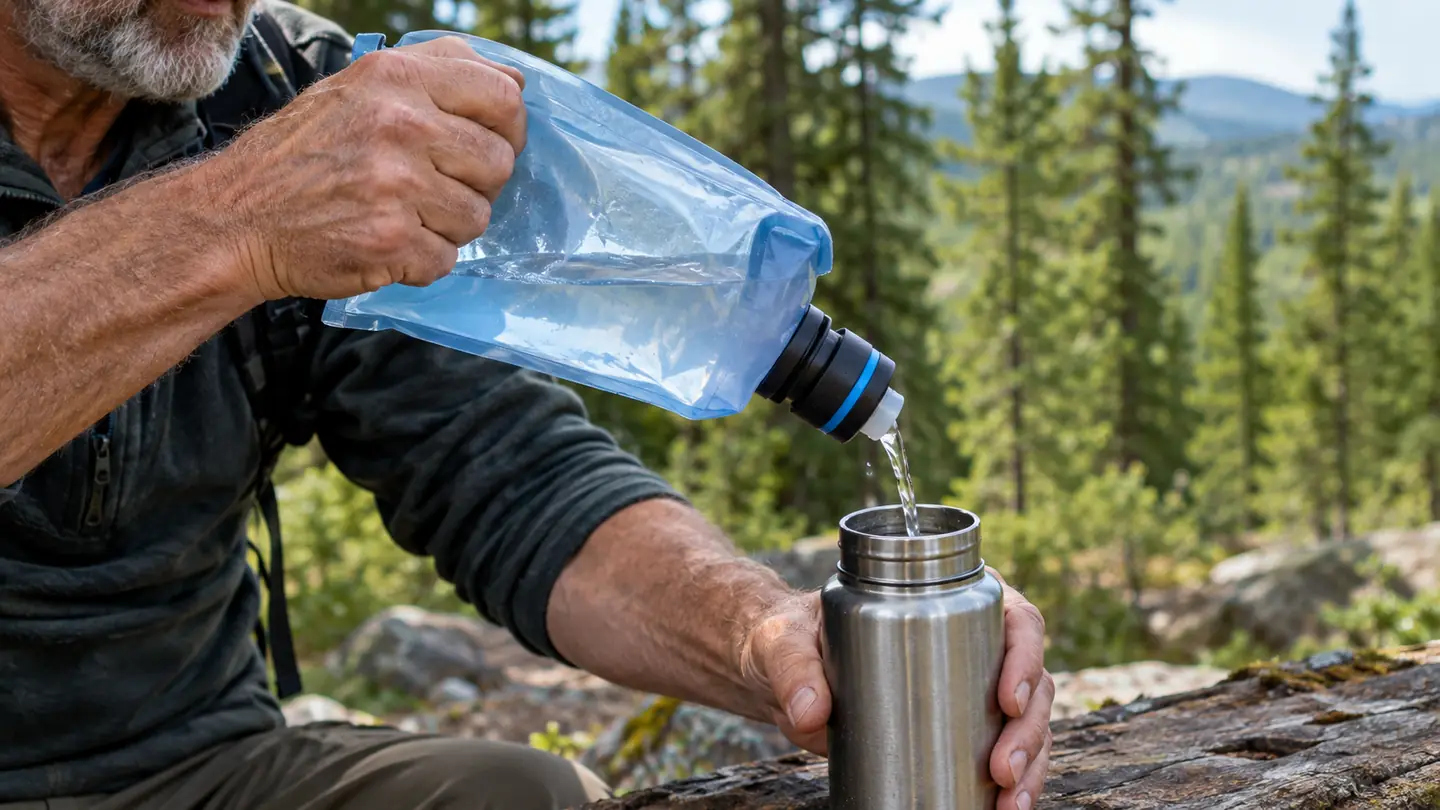
The way it works is simple. You fill one of the included squeeze pouches from a creek or lake, screw the filter onto the mouth of the pouch, and squeeze. Water is forced through the hollow fiber membrane, and out the clean side goes straight into your bottle or mouth. The filter is rated at 0.1 micron absolute, which is finer than most of the alternatives on the market. It removes bacteria and protozoa, which is what I care about in the Cascades. It does not remove viruses, but for backcountry streams in Oregon that has never been a concern for me, and it is not one for most of the places you and I are actually going to camp.
We have used it on day hikes, on a two-night loop near Mount Jefferson, and on plenty of car-camping trips where we just wanted drinking water from a creek instead of hauling jugs from the truck. Dana uses it as much as I do. I would say it has filtered a couple hundred liters of water by now, across maybe forty separate trips.
The Clog, and What Nobody Warns You About
Here is the thing nobody puts in the marketing copy. The Squeeze will clog, and when it does, it happens fast. The hollow fibers are tiny, and they catch everything the water carries, not just the bad stuff. Silt, sand, algae, tiny bits of organic matter, they all build up on the surface of the fibers. One day you are getting a good stream of water, the next day you are squeezing for a minute to get half a liter, and then it just stops. That is exactly what happened to me on Fall Creek.
I was drawing from a pool below a riffle, which I thought was the smart thing to do. The water looked clear. But it had rained hard two days before, and the creek was carrying more sediment than it looked like. The filter handled the first pouch fine. The second pouch slowed noticeably. By the third, I was getting maybe a trickle. That is when I learned the first real lesson: you cannot judge how much sediment is in the water just by looking at it. If a creek has run high recently, treat it as silty even if it looks clear.
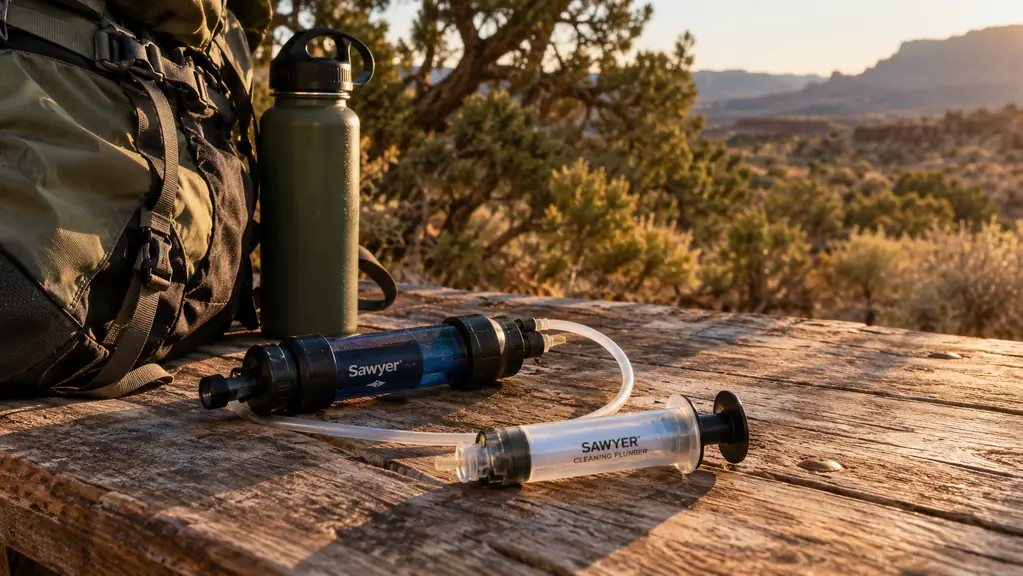
The second lesson was that a clog is not the end of the filter, but it is the end of your schedule if you are in a hurry. I had the syringe that comes with it, which I had never actually used before that morning. Backflushing is simple. You fill the syringe with clean water, screw it onto the clean end of the filter, and push water backwards through the fibers. That pushes the trapped sediment off the outside. It took me about a minute and a half, and most of a syringe of water, to get the flow back to normal. The filter worked fine for the rest of that trip and has worked fine since.
Backflushing Is the Whole Job
I will be direct about this. Backflushing is not an optional maintenance task. It is the whole job of owning this filter. The manufacturer recommends backflushing after every few uses, and more often if you are drawing from silty water. I was not doing that. I treated the filter like it would clean itself, and it does not. The fibers hold onto everything they strain out, and if you never push it back out, the flow keeps getting slower until the filter is effectively useless.
Here is what I have learned to do. After every trip, I backflush with clean tap water until the water runs clear out the dirty side. If I have been drawing from a sandy or silty source, I do a second backflush. I store the filter wet, in the fridge, because a wet filter that freezes is ruined, and a dry filter can grow mold in the fibers. The fridge keeps it damp and cold, which is what it wants between trips.
I also learned to carry the syringe on every trip, not just keep it in the gear bin at home. It weighs nothing, and it is the difference between a twenty minute delay and a trip where you are begging water off strangers on the trail. I keep it in a zipper pouch in the side pocket of my pack. It sounds like obvious advice now, but it took a clogged filter on Fall Creek to make it obvious to me.
The Bags Are the Weak Point
I have one real complaint about the whole system, and it is not the filter itself. It is the squeeze pouches. The filter is built like a tank, but the pouches are soft plastic, and they are the part that wears out. I have had two pouches develop pinhole leaks at the seams, usually after a season of use. They do not burst dramatically. They just start weeping water when you squeeze, which means you are getting wet and losing pressure, and pressure is what pushes water through the filter.
The fix is simple. You can buy replacement pouches, and I would recommend having at least one spare. You can also screw the filter directly onto a standard plastic water bottle, which is what I do most of the time now. The bottle is stiffer than the pouch, so you get a better squeeze, and bottles are cheap and everywhere. If I am car-camping, I often just fill a wide-mouth bottle and screw the filter on top. That works just as well as the pouch and removes the weak point entirely.
I will also say this. Do not squeeze the pouch like you are trying to break it. The harder you squeeze, the faster the seams wear, and the harder you are pushing on the filter itself. A steady, firm squeeze gives you plenty of flow. You do not need to wring it out. That is another thing nobody tells you, and it is another thing I learned by wrecking a pouch.
Cold Weather, Freezing, and Care
The other thing nobody warns you about is freezing. The hollow fibers are fragile when they freeze. If the filter freezes with water in it, the ice expands and cracks the fibers, and the filter is done. There is no repairing that. You will not see the damage, but the filter will let unfiltered water through, which is worse than a clog. I have never frozen mine, because I am careful about it, but I have read enough reports from people who did to take it seriously.
In the shoulder seasons, when nights drop below freezing, I sleep with the filter inside my sleeping bag or in a jacket pocket. If it is going to be a hard freeze, I drain the filter completely and dry it before I pack it. The manufacturer is upfront about the freezing limit, so this is not a hidden flaw, but it is the kind of thing you only learn to manage by actually camping in September and October. The warm months are easy. The cold months require a habit.
I store mine in the fridge between trips, as I said, and I replace it when the flow drops even after a thorough backflush. A filter that you can no longer clean is a filter that has reached the end of its life. I have seen people squeeze the life out of a filter long after it stopped working properly, and that is a gamble I do not take with drinking water.
How It's Held Up Over Three Seasons
Putting aside the one clog and the pouches, the filter itself has been remarkably durable. I have dropped it on rock, packed it loose in a stuff sack, and left it in the truck through a hot summer. It still filters to the same standard it did on day one. I had one unit crack its housing when I dropped it on granite at Smith Rock, and that was purely my fault, but the replacement has taken the same abuse without a scratch.
The flow rate when it is clean is genuinely good. I have not measured it precisely, but a full pouch empties in maybe a minute, which is faster than I need. When it slows down, a backflush brings it back. The thing to understand is that this is not a set-and-forget piece of gear. It is a tool with a maintenance ritual, and if you skip the ritual, it will remind you why the ritual exists.
I have also used it as a gravity filter, which is worth mentioning. If you hang a full pouch from a tree branch and let the filter hang below it, gravity does the work and you get a slow but steady stream of clean water. It is not fast, but it is hands-free, and it is a nice way to fill two bottles while you set up camp. The Squeeze is more versatile than I expected it to be when I bought it.
What I Liked
- Filters to 0.1 micron absolute, finer than most alternatives, and removes bacteria and protozoa
- Lightweight and packs down small enough to forget it is in your pack
- Backflushable, so a clog is fixable rather than the end of the filter
- Screws onto standard water bottles, so you are not locked into the pouches
- The hollow fiber core has survived three seasons of real abuse
Where It Falls Short
- Will clog on silty or recently rained-on water, and the first clog is alarming
- The squeeze pouches develop seam leaks after about a season
- Needs regular backflushing and cold storage, which is more upkeep than some alternatives
- Ruined forever if it freezes with water in it
- Does not remove viruses, so it is not a full purification system
A clog is not the end of the filter. It is the end of your schedule, and it is the one thing the marketing copy never mentions.
Who This Is For
This filter is for people who hike and camp in places where the water is decent, which describes most of the Cascades and the high desert east of Bend. If you are drawing from a clear mountain stream or a lake, the Sawyer Squeeze will serve you well for years. It is also for people who want one piece of gear that works for both car camping and backpacking, because it does both without complaint. It screws onto a wide-mouth bottle in the truck and onto a squeeze pouch on the trail, and the only extra you need to carry is the syringe.
It is for people like me, who would rather read one honest review than ten spec sheets. It is not the lightest filter you can buy, and it is not the fastest, but it is the one that has earned its place in my pack through three seasons of real use. If you are willing to backflush it and keep it from freezing, it will filter a lot of water for you.
Who Should Skip It
Skip the Squeeze if you mostly hike where the water is muddy, silty, or slow. The filter will clog constantly, and you will spend your trip backflushing instead of walking. In that case, you want something with a prefilter, or you want to let your water settle in a bottle for a while before you filter it, which is a workaround but not a great one.
Skip it if you are not willing to do the maintenance. If you want a filter you can ignore, there are options that treat water with chemicals or UV light instead of straining it, and those have their own tradeoffs. The Squeeze is a mechanical filter, and mechanical filters need cleaning. That is not a flaw. It is the deal you are making when you buy one. I would rather make that deal and know my water is actually filtered, but I also understand why some people prefer to skip the ritual.
Still the filter I reach for, clog and all
After three seasons, one clog, and a couple of leaky pouches, the Squeeze is the filter I pack for every trip. If you want one for your own pack, check today's price on Amazon.
Amazon Check Today's Price on Amazon →