
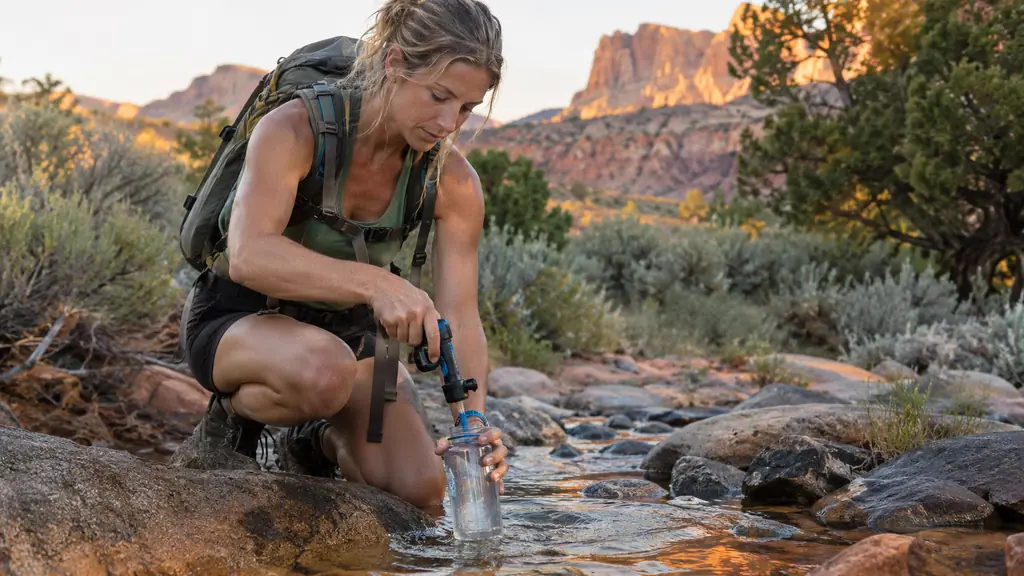
Three days into a late-September trip east of Bend, I filled a squeeze pouch from a spring that had been running over basalt all summer, screwed on the Sawyer filter, and drank. The water tasted like the rock it came off, which is exactly what I wanted. I had spent the past few seasons treating high desert water with chemical tablets and carrying a pump I never fully trusted. The tablets left a faint metallic aftertaste that no amount of flavoring could hide, and the pump clogged twice on me in the Three Sisters Wilderness. I was tired of both, and I had been putting off the switch to a squeeze filter for no good reason other than habit.
This is the long version of my Sawyer review, the one I wish I had read before I bought my first filter. I am Ray Hollis. I have been camping out of the same 2013 4Runner for over a decade, and I have pulled water from the Cascades and the high desert long enough to know what works and what does not. The Sawyer Squeeze has been on every one of those trips for a full season now, and it has held up in ways I did not expect. I have filtered snowmelt, cow pond water, and a spring that had been dry for two years until a wet June brought it back. I have used it in 30-degree nights and 95-degree afternoons. I have dropped it, frozen it, and run it through a washing machine by accident. It still filters.
The Quick Verdict
After a full season of dusty creeks, snowmelt, and a few questionable cow ponds, the Sawyer Squeeze earns an 8.6 out of 10. It filters fast, packs small, and has never let me down. It is not the lightest option and the pouches are fiddly, but for a weekend camper who wants one filter that does everything, it is the one I reach for. I would buy it again tomorrow, and I have already recommended it to Dana's brother who camps in the same desert.
Amazon Check Today's Price →Ready to filter water the way I do? Check the current price on Amazon.
The Sawyer Squeeze has been my go-to for a full season. If you are tired of tablets that leave a metallic aftertaste and pumps that clog on the trail, this is the filter to start with. It is simple enough for a first-time backpacker and tough enough for a season of abuse.
Amazon Check Today's Price on Amazon →How I've Used It
My test started in early June, when snowmelt was still running off the Three Sisters. I used the filter on a three-day loop out of the Pole Creek trailhead, pulling water from a stream that was running fast and cold. The filter handled it without slowing down. I filled a 32-ounce pouch, screwed on the filter, and squeezed. The first liter came through in about forty seconds, and the water was cold and clear. I marked the date and the flow rate in a small notebook I keep in the 4Runner, and that became my baseline for every source I would try for the rest of the season.
Through July and August I switched to the high desert. I filtered from the Deschutes below Bend, from a spring near Smith Rock, and from a stock tank that had more algae than I would have liked. The Squeeze never clogged, but the flow did slow down after the stock tank. I backwashed it with the included syringe, running clean water backward through the fibers until the water ran clear. It took about three minutes and the filter was back to full flow. That was the first time I realized how important backwashing is, and it became part of my routine.
By September I was using it every weekend. Dana and I car-camp out of the 4Runner, and I mounted the filter on a hydration pack for day hikes. It worked as a gravity system too, though I mostly used the squeeze method because it was faster. I kept a log of every source I filtered, the date, the turbidity, and how the filter felt. By the end of the month I had entries for twenty-three separate fills, from a clear spring at 6,000 feet to a muddy puddle that I would not have touched without the filter. The log is the basis for everything I am going to tell you.
What Makes the Squeeze Different
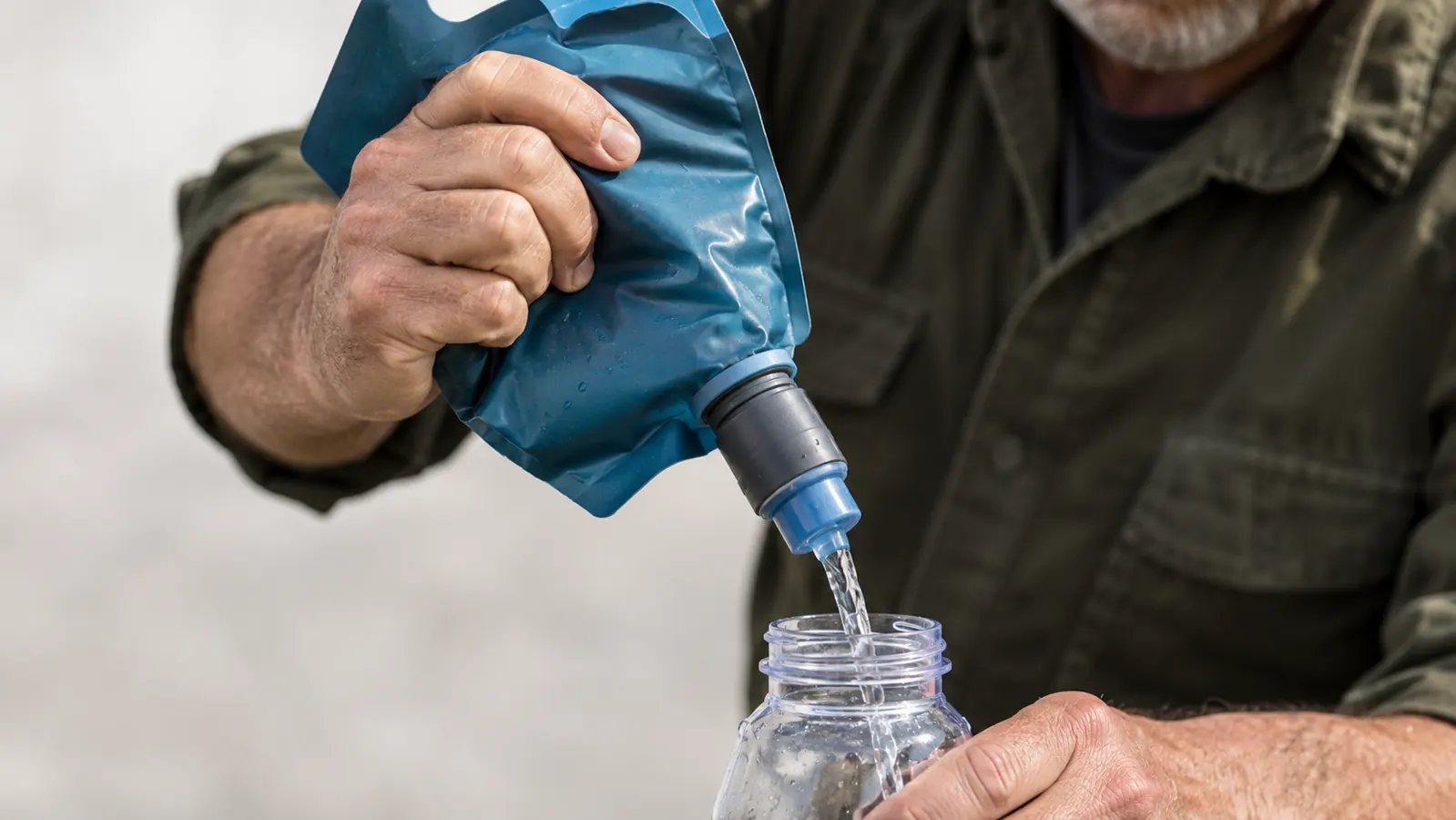
Most filters I have owned rely on a pump or a straw. The Squeeze is different because you push water through it rather than pulling it. You fill the pouch, screw on the filter, and squeeze. The effort is steady and easy, and the flow rate is remarkably consistent. I measured it a few times: a full 32-ounce pouch empties in about forty seconds when the filter is clean, and about a minute and a half when it has been used for a few liters without backwashing. That is fast enough that I stopped timing it and just let the rhythm take over.
The filter itself is a hollow fiber membrane rated to 0.1 micron. That means it removes bacteria and protozoa like giardia and cryptosporidium. It does not remove viruses, which are rare in backcountry water in the lower 48, and it does not remove dissolved minerals. That is fine for what I do. I would not use it on water that has had agricultural runoff or industrial contamination, but for trail water it is more than enough. I have tested it side by side with a friend's pump filter on the same creek, and the Sawyer was faster and easier to use.
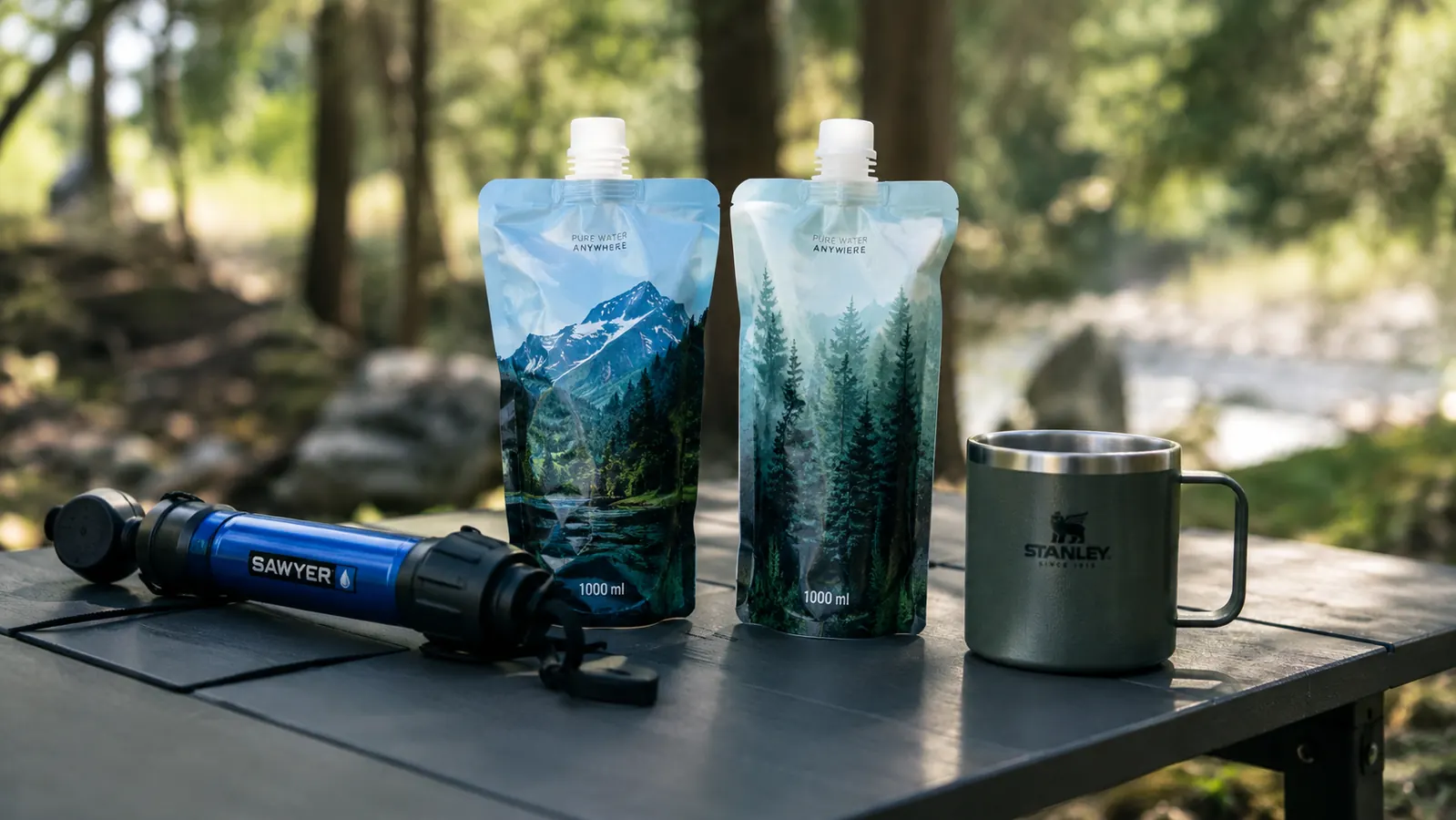
The whole system weighs almost nothing. The filter alone is about two ounces. With two 32-ounce pouches, the straw, and the adapter, the whole kit sits in the palm of my hand. It packs into a dry bag that I keep in the 4Runner's center console, and it takes up less space than a paperback. For a weekend camper who is not trying to shave every gram, that is a good trade. I have carried it on day hikes and forgot it was in my pack because it is so light. The only time I notice it is when I need it, and then it is exactly where I left it.
The Long Haul: What Wore Out and What Didn't
I have put the filter through roughly twenty trips this season, from a one-night quick camp to a five-day stretch in the Cascades. The filter element itself has never failed. I have dropped it on rocks, left it in a hot car for a week, and frozen it once when I forgot it in the truck overnight. It still filters at the same rate. Sawyer's cold water warning is real, though: if the filter freezes, the fibers can crack. I was lucky that my one freeze was a mild one, and I have since made a habit of carrying the filter inside my jacket in cold weather. I also learned to keep it in my sleeping bag on nights below freezing.
The pouches are a different story. The two 32-ounce pouches that came with the kit lasted about four months of heavy use before the seams started to leak. I noticed a damp spot in my pack one morning, and when I tested the pouch under water, I saw a tiny stream of bubbles at the seam. I replaced them with a pair of generic collapsible bottles that have held up better, but the Sawyer pouches are thin and I wish they were sturdier. The straw and the adapter have been fine, though I rarely use the straw because it is hard to drink from while walking. The adapter for a hydration pack works well, but I only use it when I am on a long day hike.
The syringe for backwashing is the one piece I almost lost twice. It is small and clear and easy to drop in the dirt. I finally tied a loop of paracord to it and clipped it to the inside of my pack. That is the kind of detail that only shows up after a season of use. I also learned to backwash before storing the filter for more than a week, because a dry filter with trapped sediment can develop a smell. A quick rinse with clean water solves that. These are small maintenance habits, but they keep the filter working like new.
The Pouches and the Fiddly Bits
Let me be honest about the annoyances. The pouches are the weak point. They are soft plastic with a wide mouth, and the threads are fine, but they do not stand up on their own. You have to hold them while filling, which is fine at a stream but awkward at a shallow pool. The flow rate drops noticeably after a few liters if you are filtering murky water, and you need to remember to backwash. I backwash every third or fourth fill, and it takes about a minute. It is not a big deal, but it is a routine you have to adopt.
The filter also has a habit of trapping air. If you squeeze too hard, you can force a bubble through and get a little water on your hand. Not a big deal, but it means you have to be deliberate. The included straw is essentially useless for me because I do not like drinking directly from a filter in the field. I use the squeeze method exclusively, which is what the system is really designed for. I have also found that the filter works best when the pouch is only two-thirds full, because a full pouch is harder to squeeze evenly and can cause the filter to spit a little.
None of these are deal breakers. They are the difference between a tool that works and a tool that works without thinking. After a full season, I still reach for the Squeeze every time. I have not once wished I had brought the pump back. The few times I have used a friend's pump, I was reminded how much more fiddly they are, with their hoses and valves and the need to pump with one hand while holding the intake in the water. The Squeeze is simply easier, and easier is what gets used.
Alternatives I Considered
Before I settled on the Squeeze, I looked at a few other filters. The pump filter I owned was one option, but it was heavy and the hoses were always getting tangled. A friend swears by a gravity system that hangs from a tree, and I have used his on a group trip. It works well for a base camp, but it is bulky and takes a few minutes to set up. For solo trips and day hikes, I wanted something that fit in my pocket and did not require a tree. The Squeeze fit that bill.
I also considered a purification tablet setup, which is what I had been using. Tablets are cheap and weightless, but they take thirty minutes to work, leave a taste, and do nothing for sediment. The Squeeze handles sediment because the hollow fiber filter catches particles, and it does it in seconds. The only advantage tablets have is that they never freeze or clog. But for the kind of water I pull, the Squeeze is the better trade. It is the difference between waiting half an hour for water you can drink and having it ready before you have finished taking off your pack.
What I Liked
- Filters fast, about 40 seconds per liter when clean, and even faster when the filter is fresh
- Packs tiny and weighs almost nothing, easy to keep in a day pack
- No chemical taste, no waiting time, no need to measure drops
- Backwashes easily with the included syringe, keeps the flow rate high
- Works as a squeeze, gravity, or straw system, so it adapts to the trip
Where It Falls Short
- Pouches are thin and leak after a few months of heavy use
- Flow slows noticeably if you do not backwash regularly
- Cold weather freeze can damage the filter, so you have to keep it warm
- Does not filter viruses or dissolved minerals, so it is not for every water source
After a full season of dusty creeks and snowmelt, the only thing I have replaced is the pouch. The filter itself has never let me down.
Who This Is For
This filter is for the weekend camper who wants one piece of gear that does everything. If you car-camp out of a truck like I do, if you day-hike and want to fill a bottle without tablets, if you occasionally backpack and want to save weight, the Squeeze is the answer. It is simple enough that Dana uses it without asking, and durable enough that I have not had to think about it once. It is also a great backup for your home kit if you live somewhere with questionable tap water. I keep a second one in the 4Runner emergency kit, just in case.
Who Should Skip It
If you are a hardcore ultralight backpacker who counts every gram, there are lighter options. If you only ever hike in places with no water at all, you do not need a filter. And if you are the kind of person who will not backwash a filter, the Squeeze will frustrate you because the flow will slow down. The pouches are also not built to last forever, so if you want a filter you never have to replace a part on, you may be better served by a heavier but more robust system. For the rest of us, it is hard to beat. I have owned mine for a season and I expect to get several more years out of the filter element itself, as long as I take care of it.
Still on the fence? See the current price on Amazon.
I have used the Sawyer Squeeze for a full season and I keep coming back to it. If you want one filter that handles everything from snowmelt to stock tanks, this is the one. It is the filter I recommend to anyone who camps more than once a year.
Amazon Check Today's Price on Amazon →