
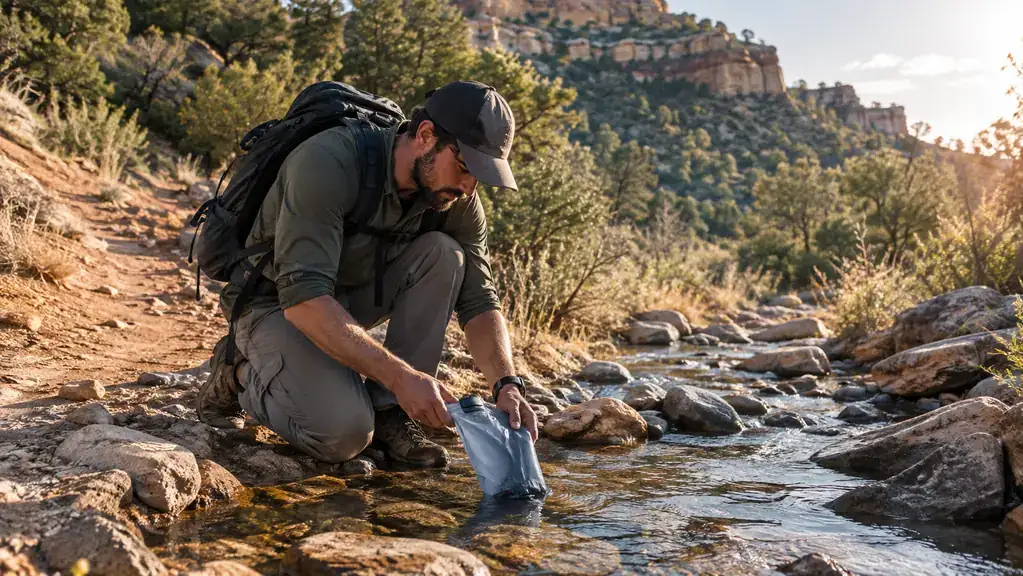
I have carried a Sawyer Squeeze on nearly every hike I take out of Bend, and I have also carried chlorine dioxide tablets, and after a full summer of using both I can give you the honest answer: they are not really competitors, they are backups for each other. The Squeeze is the filter I trust for day hikes where I can reach running water, and the tablets live in the bottom of my pack for the days when the only water around is a stock tank or a puddle the cows have been standing in. My name is Ray Hollis, I am 54, I have been hiking the Cascades and the high desert east of Bend for thirty years, and I am not an ultralight purist, so I will happily carry both. But if you only want to buy one, here is what I learned comparing them side by side all season, with a field notebook and a lot of thirsty afternoons behind the numbers.
The short version is this. The Sawyer Squeeze filters water on the spot, about a liter and a half a minute in my testing, with no wait and no chemical taste. The tablets kill everything the filter cannot, including viruses, but they work on a schedule, thirty minutes in warm clear water and up to four hours in cold or cloudy water. So the real question is not which one is better, it is which one fits the water you actually hike near. I spent July and August at Smith Rock and in the Three Sisters Wilderness testing both, and this is what I would tell you over a camp table. If I could only keep one, I would keep the Squeeze. But I would not go into the high desert without the tablets in my pack.
| Sawyer Squeeze | Chlorine Dioxide Tablets | |
|---|---|---|
| Water in hand | Inside a minute, straight from the creek | After 30 minutes, longer in cold water |
| What it removes | Protozoa and bacteria down to 0.1 micron | Adds viruses, which no squeeze filter this size catches |
| Taste | Clean, like the creek it came from | A mild chemical note that fades after 15 minutes |
| Weight in the pack | About 3 ounces with a pouch | Under an ounce for a dozen doses |
| How long it lasts | Years, backflush and keep going | Shelf life of a few years, then the dose weakens |
| Trail maintenance | Backflush after muddy water | Nothing to clean, ever |
| Cold or cloudy water | Flows the same, filters out the silt | Slower in cold water, duller in cloudy water |
| Best for | Running creeks on a day hike | Stock tanks, puddles, water you do not trust |
How I Tested Both
I did not test these in a lab, I tested them the way I actually hike. I park my 2013 4Runner with 210,000 miles on it at trailheads and I carry whatever I am testing in my pack. All summer I carried the Sawyer in my side pocket and a strip of tablets in the lid of my pack, and on every trip I made a point of filling from the first water I found instead of rationing from the car. Dana hikes with me most weekends from May to October, and she will tell you I overpack water gear, and she is not wrong, but it means I have notes from thirty or forty real water stops, from clear snowmelt in the Three Sisters to warm stock tanks east of Bend.
The trip that settled it for me was a hot Saturday in July on the dry side of the Cascades. The creek was running low and warm, the kind of water that has been sitting in the sun all week, and it was cloudy enough that I could taste the silt before I even drank. The Squeeze handled it, the flow slowed a little as the filter caught the sediment, and the water came out clear and cold enough. The tablets would have worked too, but in that warm cloudy water they would have needed close to an hour, and I was thirsty then, not in an hour. That is the moment the comparison stopped being academic for me.
The second thing I tested was the failure mode. I backflushed the Sawyer with the syringe that comes with it after every muddy trip, and it has kept the same filter running for three seasons. I also deliberately left a strip of tablets in my pack through a stretch of ninety degree days to see if the heat hurt them, and they still cleared a bottle of creek water on schedule. Neither one fell apart, and that is the honest headline of this comparison. What failed, both times, was my patience, and that turned out to be the real deciding factor between the two.
Where the Squeeze Wins
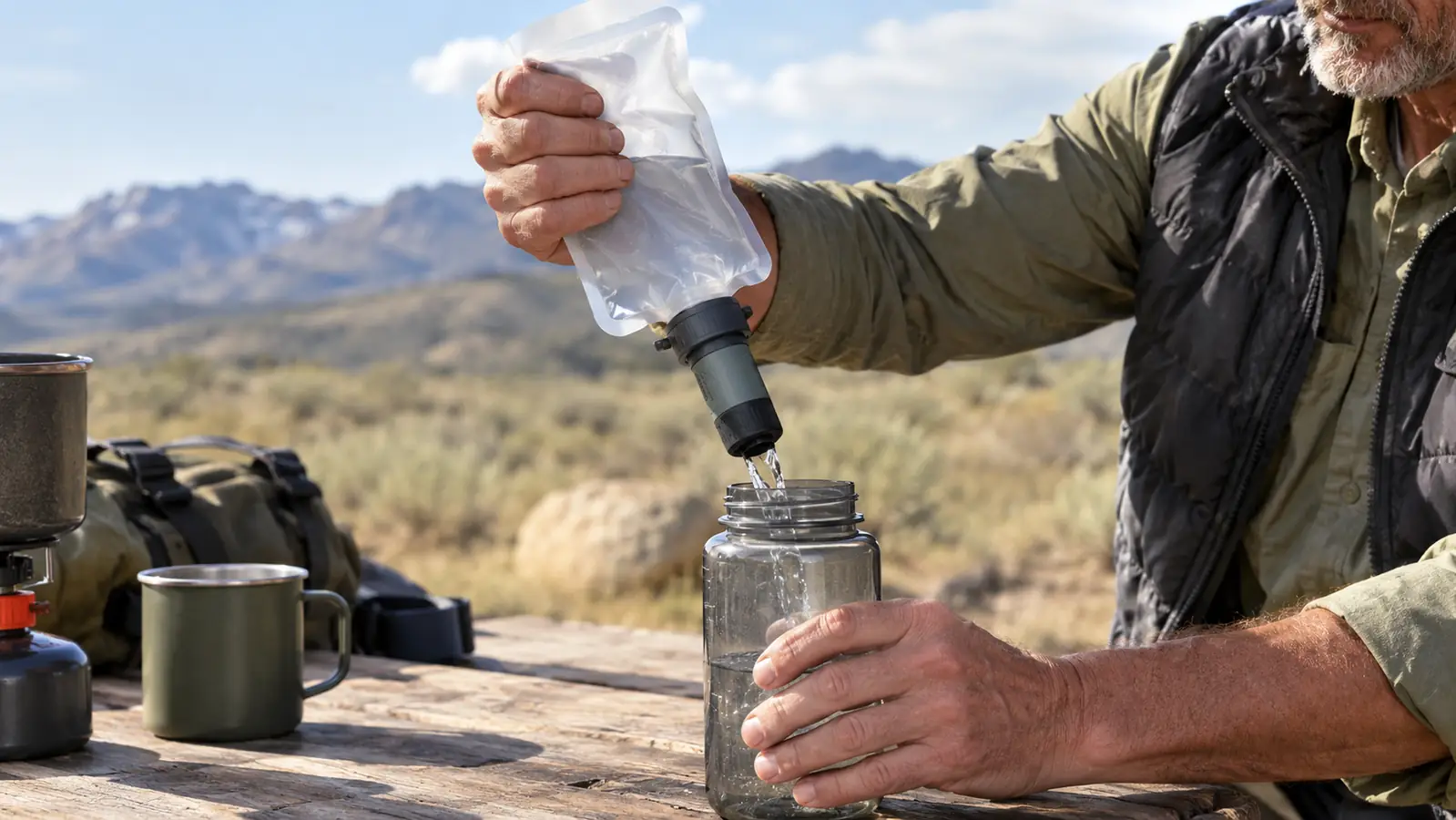
The reason I reach for the Sawyer first is flow. You fill a pouch, squeeze, and you have a liter of clean water before the tablets have even started working. On a hot August afternoon at Smith Rock, that difference is everything. I have stood at a creek with the sun on my neck and gone from an empty bottle to a full one in under a minute, and I have never once wished I was waiting on a chemical reaction. The water tastes like the creek it came from, which is to say it tastes like nothing, and that matters more than people admit when they are deciding what to carry. I have drank from the same creek three ways, straight, filtered, and treated, and the filtered water is the one I would choose every time.
It also changes how you plan the day. Because the Squeeze filters on the spot, you can top off at every crossing instead of carrying your whole day's water from the trailhead. That means a lighter pack on the uphill and cold water at the top instead of warm water you hauled from the car. On the long dry stretches east of Bend, I found myself seeking out creeks I used to walk past, because they became a refill instead of a reason to ration. I measured the flow at a little over a liter and a half a minute with a full squeeze, and that is fast enough that stopping for water never feels like a chore. The two 32-ounce pouches that come with it are enough that I can filter and keep moving without breaking my rhythm.
Where Tablets Win
The tablets win the moments the filter cannot help with. The Sawyer catches protozoa and bacteria down to 0.1 micron, but it does not catch viruses, and if the only water you can find is a stock tank or a seep that cattle have been standing in, you want the tablets. Chlorine dioxide kills viruses, and that is the one honest advantage the tablets hold that no squeeze filter at this size matches. On the high desert routes where the water is scarce and suspect, I carry the tablets and I do not argue with the weight, because there is no filter in my pack that does what they do. It is not the situation I hope for, but it is the situation the tablets are made for.
They also weigh almost nothing and they never fail. I have dropped a strip of tablets in the mud, rinsed them off, and used them anyway. I have carried the same dozen doses for two seasons and they still worked on schedule. The Squeeze is dependable, but it is a piece of equipment with a bladder and a filter element, and equipment eventually needs attention. Tablets are a few grams of chemistry that do not care how you treat them, and on a trip where I did not want to think about my water gear at all, that is a real comfort. I keep a strip in the glove box of the 4Runner too, so if we stop at an unexpected trailhead on the way home from a trip, I am never caught short.
Want clean water in under a minute on your next hike?
The Sawyer Squeeze is the filter I reach for first on every day hike. It filters on the spot, tastes clean, and has held up for three seasons with nothing but a backflush after muddy water.
Amazon Check Today's Price on Amazon →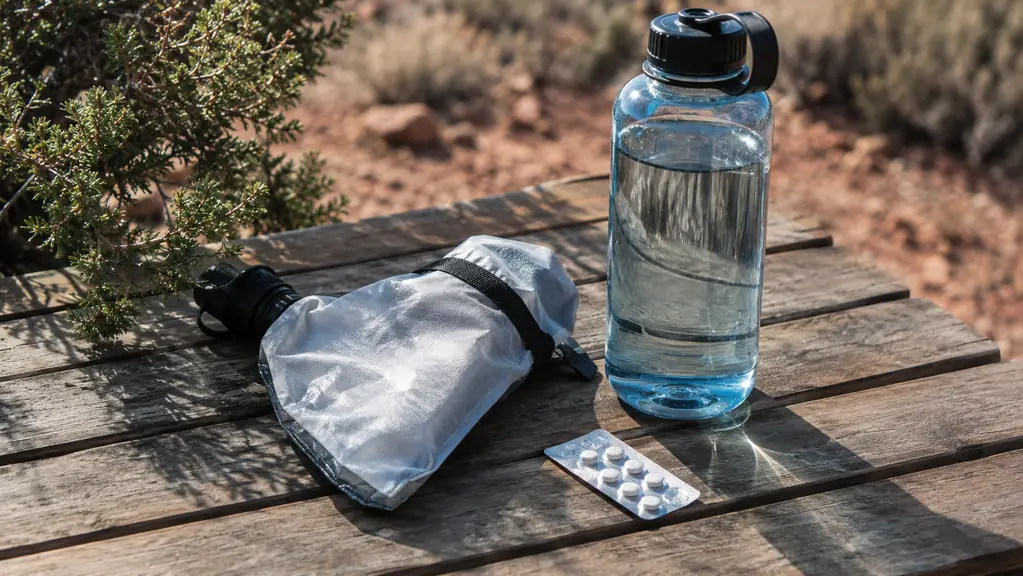
Who Should Buy Which
If you hike where there is running water, creeks and springs and snowmelt that runs clear, buy the Sawyer Squeeze. It is the thing I reach for nine times out of ten, and it makes a day hike simpler in a way I did not expect until I used it. You stop planning around water and start planning around the trail. I would not go back to hauling my whole day's supply from the car, and I would not go back to waiting thirty minutes for a liter when I could have had it in under a minute. On a day hike from the car, the weight difference between the two is meaningless, so the only thing that matters is which one you will actually use at the water.
If you hike in the high desert where the water is scarce and suspect, or if you travel where you cannot trust any of it, buy the tablets and keep them in your pack for the days the filter cannot help you. The honest answer, the one I keep coming back to after a whole season of testing both, is that most of us should own both. The Squeeze for the creeks, the tablets for the stock tanks, and together they cover every water situation I have hit in thirty years of hiking out of Bend. That is the real conclusion of this comparison, and it is the one I wish someone had told me when I started.
The Fine Print Nobody Mentions
The things the spec sheets do not tell you: the Squeeze needs backflushing after muddy water, and if you skip it the flow drops off and you blame the filter when the real problem is silt packed into the fibers. I carry the little syringe that comes with it and flush it at home after every trip that involved dirty water. It takes two minutes and it has kept the same filter element going for three seasons, which is the durability I care about more than any advertised number. The first time I skipped it, the flow dropped to a trickle on the next trip, and I almost replaced the whole system before I remembered the syringe.
And the tablets have a catch too. They work on a schedule, thirty minutes in warm clear water and up to four hours in cold or cloudy water, and if you are thirsty you will not want to wait. I made the mistake once of treating cloudy water with tablets and drinking too early, and I tasted the result all afternoon. The filter gets you clean water now. The tablets get you clean water later. Knowing which one you need on any given day is the whole game, and it is why I carry both. There is no shame in carrying both, and no rule that says you have to pick one.
The filter gets you clean water now. The tablets get you clean water later. Knowing which one you need on any given day is the whole game.
Start with the Squeeze, add the tablets for the dry country
The Squeeze covers every running creek I hike near, and the tablets cover the rest. That combination has handled every water situation I have hit in thirty years of hiking out of Bend.
Amazon Check Today's Price on Amazon →