
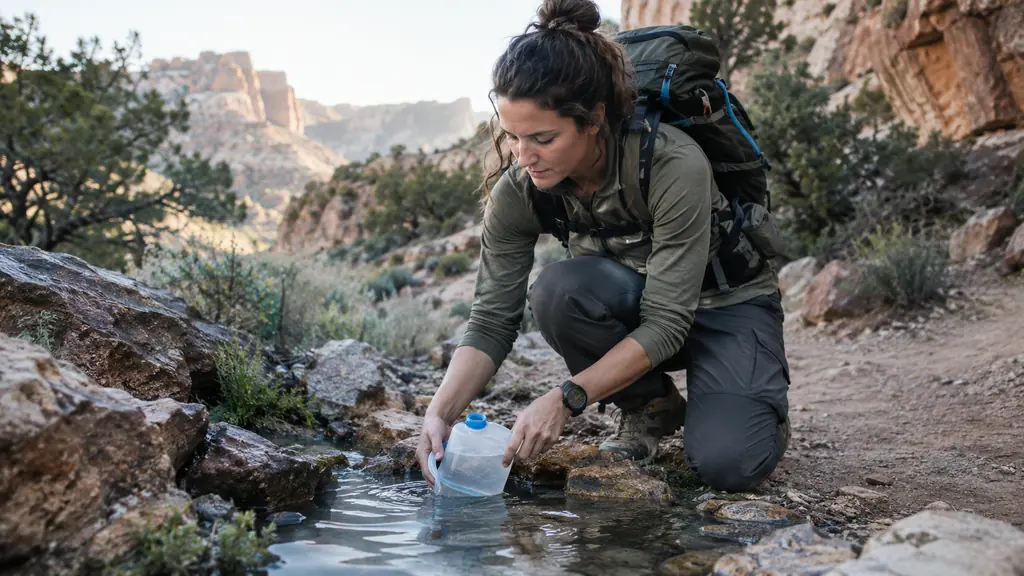
The first time I filtered water on a desert trail, I was overconfident. I had done the math on the map, marked the springs, and packed a Sawyer Squeeze that had served me fine in the Cascades for years. What I had not accounted for was the difference between a mountain stream and a desert seep. The stream I found that afternoon was barely a trickle, warm and silty, with cattle tracks pressed into the mud right at the edge. Standing there, I realized my usual routine, fill the pouch from the cold clear creek, screw on the filter, squeeze, was not going to cut it. The desert asks you to do a few extra things, and doing them in the right order is the difference between a clean bottle of water and a plugged filter at the worst possible moment.
I live on the dry side of the Cascades, outside Bend, and most of my summer hikes are on trails where water is a plan, not an afterthought. Smith Rock, the high desert east of the Three Sisters, the canyon country along the Deschutes, these places make you work for every liter. I am not an ultralight backpacker. Dana and I carry a reasonable pack and we stop when the view is worth it. But water is the one thing I have learned to treat like a job. This is the routine I have settled on after years of dry trails using the Sawyer Squeeze, and it will keep you moving without turning the whole hike into a chore. None of it is complicated. It is just a few steps in the right order.
Most of what I know about filtering water I learned the hard way, by making the mistakes in the field. I have carried a filter that was still wet from a mountain trip into the desert and watched it work fine. I have also backflushed a filter with gritty water and paid for it later. The good news is that none of this is hard to learn. You just have to know the steps and trust them. What follows is the order I use every single time, and it has not failed me in years of dry trails.
The filter I carry on every dry trail
The Sawyer Squeeze has handled every source I have thrown at it, from clear mountain creeks to warm desert seeps. It is light, packs small, and filters fast when you do the routine above.
Amazon Check Today's Price on Amazon →Step 1: Read the terrain and find water before you need it
I start a desert hike by reading the map for water before I ever lace up my boots. On a dry trail, a water source is not a feature, it is a destination. I look for the obvious marks, creek crossings, spring symbols, the word tank or trough next to a little blue square, and I mark them in pencil on the map. Then I figure out the spacing. If the map shows nothing for eight miles, I plan to carry eight miles of water, not hope I find some.
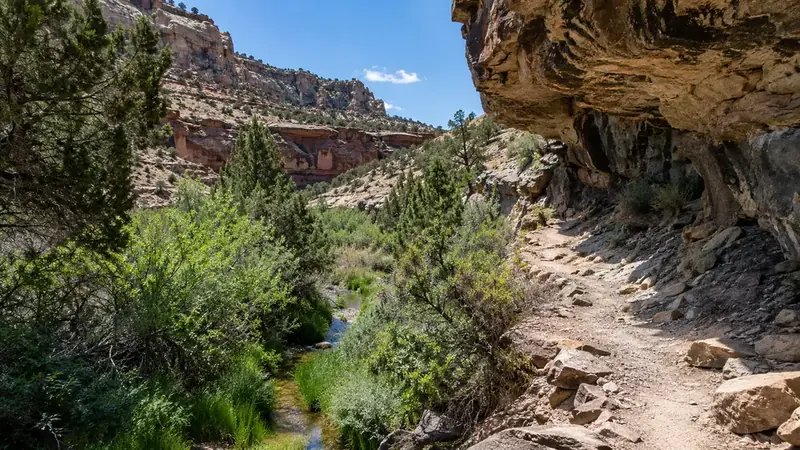
I also pay attention to the kind of terrain the water is likely to be in. In the high desert east of Bend, the reliable water tends to sit in canyons and narrow drainages where the sun does not hit all day. A spring on a map might be a dry crack in the rock by August. A seep in a shaded canyon, with green grass and willows around it, is usually still flowing. The green is the clue. If I can spot the green from the trail, I head for it.
I carry the Sawyer Squeeze in the side pocket of my pack, with the two squeeze pouches rolled up beside it, so it is always reachable. The worst thing you can do on a dry trail is wait until you are already thirsty to start looking. By then you are making decisions with a dry mouth, and dry-mouth decisions are bad ones. Find the water first, then hike to it.
Step 2: Let muddy or cloudy water settle, or pre-filter it
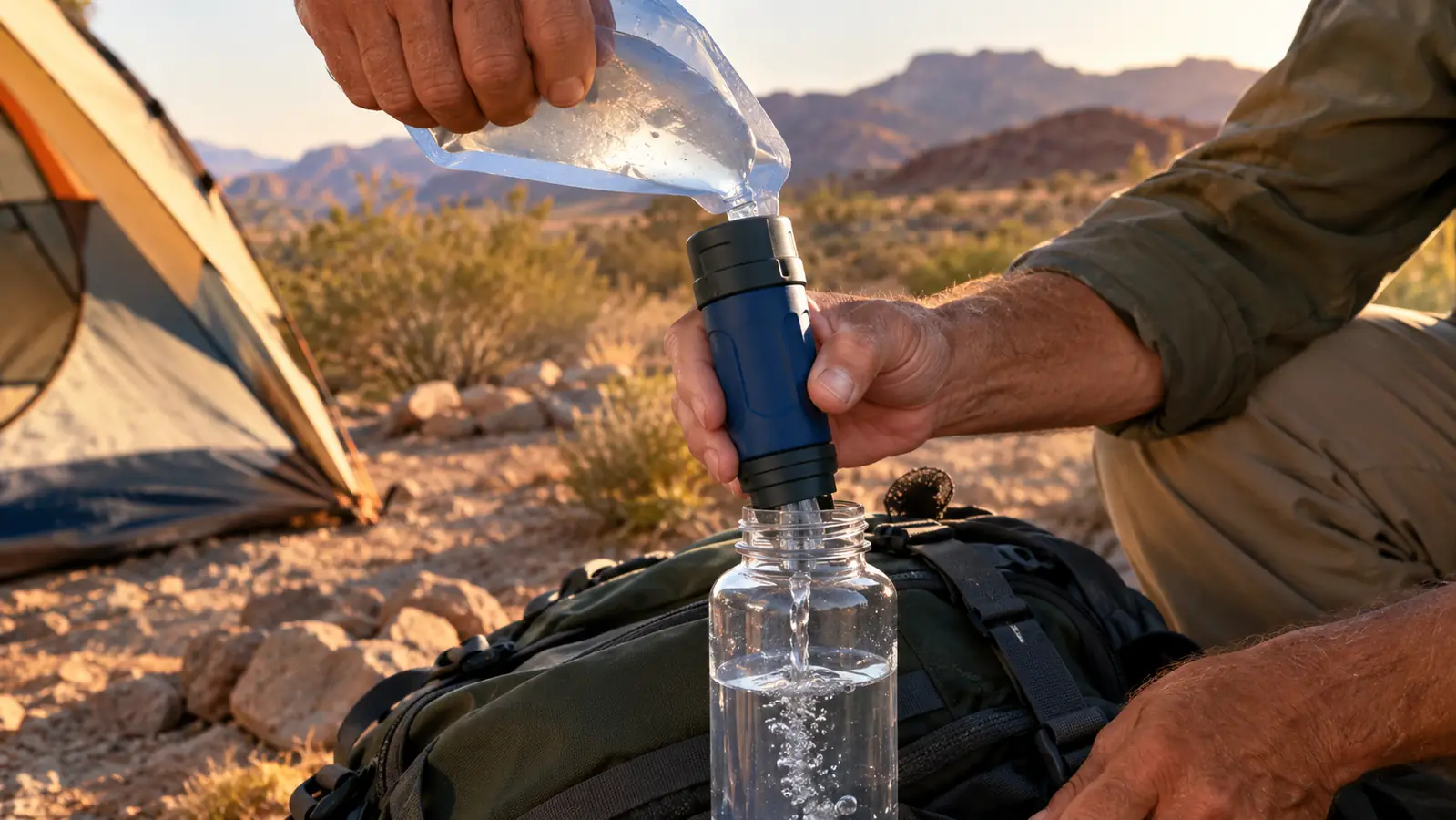
Desert water is rarely clear. It is warm, silty, and often has a film of algae or a few bugs skating on top. The Sawyer Squeeze will filter that water, but it will work slower, and the sediment will clog the filter faster. The fix is simple and costs you ten minutes. I fill a pouch with the murkiest water I can reach and set it in the sun or shade, whichever keeps it cool, and let the silt settle to the bottom. By the time I have eaten a snack and checked the map, the top half of the pouch is noticeably clearer.
I take it one step further when the water is really bad, the kind of muddy stock tank that is the only source for miles. I pour it through a bandana first, into the pouch, to catch the big debris. A coffee filter works too if I have one, but a bandana is lighter and I always have it. This pre-filter step is what keeps the Sawyer filter itself from doing all the work, and it is the difference between a filter that lasts the season and one that plugs halfway through a trip.
I want to be clear about one thing, because people get this wrong. Settling and pre-filtering are about making the filter's job easier. They are not a substitute for filtering. The Sawyer filter is what removes the bacteria and protozoa, and I never skip it, no matter how clear the water looks. Clear water in the desert can still make you sick. The filter is the last word, and it always is.
Step 3: Fill the dirty pouch, screw on the filter, squeeze
Once I have the clearest water I can get, the actual filtering is almost embarrassingly simple. I fill one of the squeeze pouches, screw the Sawyer filter onto the top, and squeeze the pouch into my bottle or straight into my mouth through the straw. The whole motion takes maybe a minute for a liter, and it does not require taking my pack off if I have the pouch handy in the side pocket. That matters on a desert trail, where stopping to dig out gear is how you lose momentum and your cool.
The key detail, and the one the instructions in the box do not emphasize enough, is to fill the pouch no more than about three-quarters full. A completely full pouch is hard to grip and the water just sloshes back out the top. Three-quarters gives you room to fold the top over and get a good grip with both hands. I squeeze steadily, not in a panic, and I let the filter do its job. If it starts to go slow, I stop and backflush, which is the next step. Forcing it is how you damage the filter.
I usually filter into one of the two included pouches and then pour it into a wider bottle, or I drink straight from the filter with the straw if I am really thirsty. On a long carry, I fill both pouches plus my main bottle, so I am leaving the water source with as much as I can comfortably carry. A liter of water is about two pounds, so I am honest with myself about how much I want on my back. But on a dry stretch, I would rather have the weight than the worry.
Step 4: Backflush the filter the right way
This is the step most people skip, and it is the reason so many squeeze filters end up thrown in a drawer. The Sawyer Squeeze comes with a small syringe, and you use it to push clean water backward through the filter to clear out whatever got caught in the pores. I do this every time I filter from dirty water, and always at the end of a trip. It takes about two minutes and it keeps the filter flowing at full speed.
The routine is simple. I take the syringe, fill it with clean water, and push it into the back of the filter, the side that normally delivers clean water. I push the plunger down, which forces water backward through the filter and out the dirty end. I repeat that a few times until the water coming out the dirty end runs clear. If I filtered from a particularly muddy source, I might do it a few extra times. The water I use for backflushing should be the cleanest I have, because whatever I push in is what the filter has to work with next.
Between trips, I store the filter wet. I keep it in a zipper bag with a little water in it, so the filter never dries out completely. A dry filter is a dead filter, the membrane can crack and the filter stops working, and there is no way to tell by looking at it. Keeping it wet is the whole job of maintenance. Dana teases me about the little bag in the fridge, but it is exactly what the instructions recommend and it means the filter is ready the moment we hit the trail.
Step 5: Plan your carries and treat the filter right between trips
On a desert trail, the single biggest mistake I see is people carrying too little water because they think a filter means they can fill up anywhere. A filter only works if there is water to filter, and on a dry trail there often is not. I plan every carry as if the next water source might be dry. If the map says a spring at mile six, I carry enough to get there and back, plus a liter I do not plan to touch. That buffer has saved me more than once when the spring turned out to be a damp spot in the dirt.
I also think about where I put the filter in my pack. The Sawyer Squeeze is durable, but it is not indestructible. I keep it in the side pocket, away from the weight of the pack, so nothing crushes it against a rock. And I keep the two pouches rolled and clipped to the outside, so they can dry between uses. A wet pouch left balled up in the bottom of a pack is how you get mold, and mold in a water system is a problem you do not want.
The last part of the routine is the mental one. I have done this enough that filtering water on a desert trail is not a project anymore, it is just part of the day. I find the water, I settle it, I filter it, I backflush, and I carry more than I think I need. It is a rhythm, and once it becomes automatic, a dry trail stops being a worry and becomes just another part of the hike. That is the whole point of a good routine, you stop thinking about it and start enjoying the view.
What Else Helps
Two things make the whole system easier. The first is a wide-mouth bottle to filter into, because pouring from a squeeze pouch into a narrow bottle is how you spill half a liter on your boots. The second is a spare set of the small O-rings that come with the filter. They are tiny and easy to lose, and a missing O-ring turns a good filter into a leaky mess at the worst time. I keep a spare set in the little bag with the filter. Neither is a replacement for the filter itself, just a way to make the routine smoother.
The other thing I would add is a simple piece of rope or a carabiner to clip the pouches to the outside of my pack while they dry. Wet gear shoved inside a pack in the desert heat is how things get musty, and a water pouch with a musty smell is a hard thing to forget once you notice it. Let them hang in the dry air for an hour and the problem never starts.
I plan every carry as if the next water source might be dry, and that buffer has saved me more than once when a mapped spring turned out to be a damp spot in the dirt.
The last water filter you will buy for a while
If you hike the dry side of the Cascades, or anywhere water is a plan and not an afterthought, the Sawyer Squeeze is the piece of gear I reach for first. Settle the water, do the backflush, keep the filter wet between trips, and it will keep up with you for years.
Amazon Check Today's Price on Amazon →