

I'll be straight with you. I did not buy the Coleman Trailhead II cot because I needed a cot. I bought it because a buddy from the line crew was coming up to fish the Deschutes for a weekend and I was tired of watching him sleep on the ground in the spare tent. That is the kind of purchase that usually ends up at a garage sale two years later, half remembered and lightly used. This one did not end up there, but it also did not sail through two years of use without a few honest bruises. This is the story of those eighteen months, including the parts Coleman's product page does not tell you.
I have been car camping out of a 2013 Toyota 4Runner for the better part of a decade, and before that I spent thirty years weekend camping all over the Cascades and the high desert east of Bend. I am not an ultralight backpacker and I have never pretended to be. I want gear that survives a decade of weekend use, packs down small enough to fit behind the rear seat, and does not make me resent the purchase a year later. The Trailhead II has been in my kit for about eighteen months. In that time it has been slept on by me, my wife Dana, a fishing buddy, and a neighbor, and it has been loaned out twice. That is the honest review I could not find anywhere before I bought it, so I wrote it myself.
The Quick Verdict
A genuinely comfortable elevated cot for car campers and guest duty, with a frame that is honest about its limits after heavy use. The fabric sags a little and the legs will bend under a tossing heavyweight, but for most weekend campers it is the right buy.
Amazon Check Today's Price →The cot that earned a permanent spot behind my rear seat
If you car camp, host guests, or just want to sleep off the ground, the Trailhead II is the one I keep reaching for. Check today's price and see if it fits your setup.
Amazon Check Today's Price on Amazon →How I Actually Tested This Thing
The cot showed up in early May, right when the snow was finally off the lower trailheads around the Three Sisters Wilderness. I set it up in the living room first, the way I do with any gear that is going to have to work at the end of a long day. The first setup took me about four minutes, and most of that was me reading the little diagram printed on the storage bag and getting the X-frame the right way around. By the third time I could do it in under ninety seconds with my eyes half closed in the dark. That matters more than people think. You do not want to be learning a cot's folding geometry at 11 p.m. under a headlamp in a cold wind at 6,000 feet.
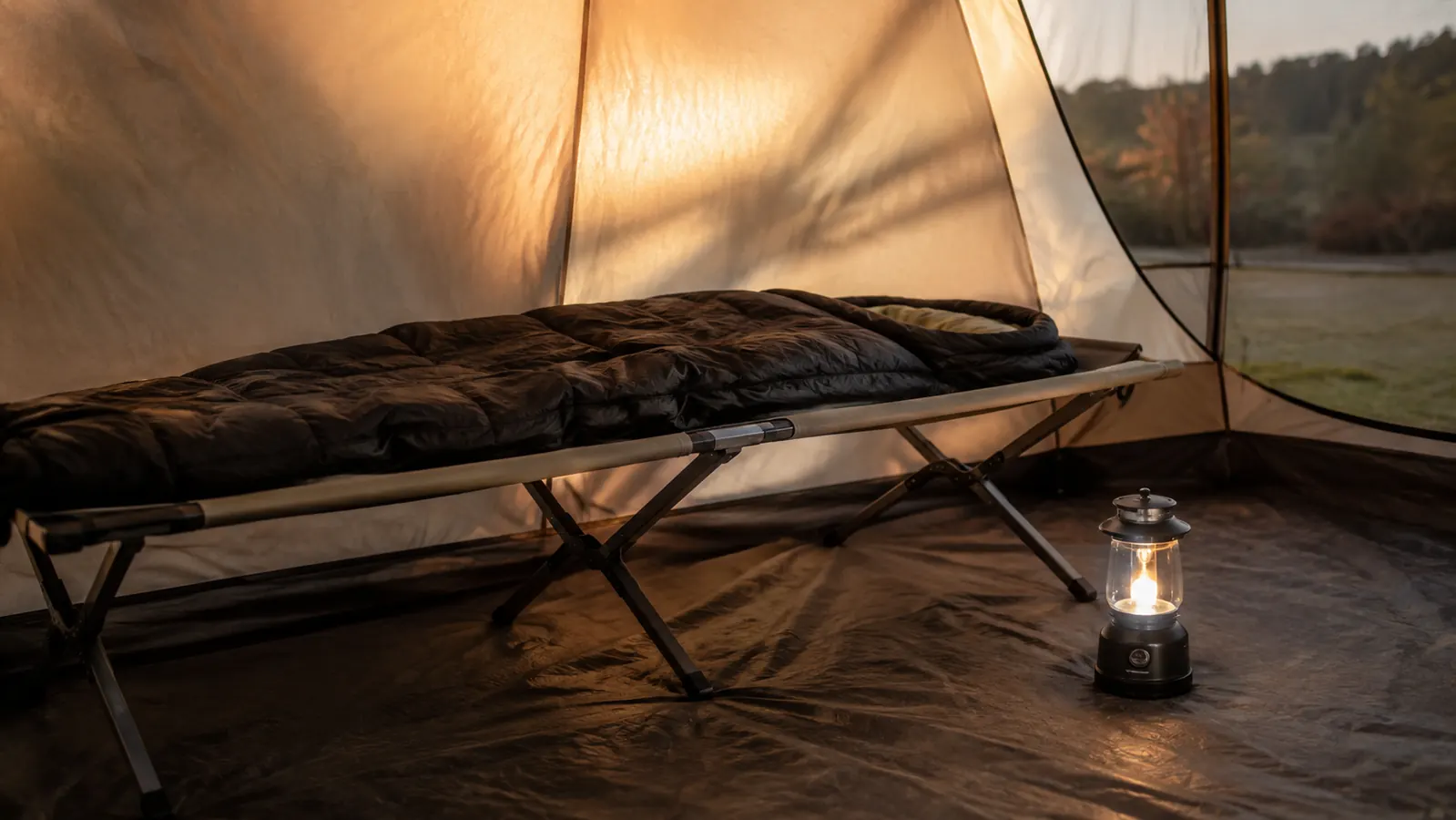
The first real trip was a weekend at a dispersed site off the Cascade Lakes Highway in late May. Dana and I got a night that dropped to about 38 degrees, and that first night taught me the thing nobody mentions in any of the reviews I read before buying. A cot lifts you off the ground, which is good for your back and bad for your warmth. Under you is a pocket of air, and air at 38 degrees is cold air. On the ground with a pad you have insulation beneath you. On a cot you have a thin layer of polyester fabric and then a freezer of moving air. I slept fine, but I slept with a puffy jacket over my legs and I was glad I brought it.
Over the next four months the cot went out on six more trips, always in the back of the 4Runner, usually under a duffel bag or two. It rode to Smith Rock in June, and to a couple of high desert spots in July where the nights were warm enough that the cold-air problem flipped and the cot was actually cooler and more comfortable than the ground. That is a real advantage nobody talks about. On a hot July night on the high desert, the elevated cot lets air move underneath you and you sleep better than you would on a pad that is cooking you from below. I have spent enough July nights on that ground to know the difference.
What the Spec Sheet Doesn't Tell You
The product page will tell you the Trailhead II supports up to 300 pounds and a person six foot two. That is true and I do not doubt it, but the spec sheet will not tell you how the thing actually behaves when you use it for a year. So here are the things I learned that the listing does not mention, in the order they surprised me.
First, the sag. The fabric is a polyester that stretches a little over time. When the cot was new, the surface was tight enough that I barely felt the frame bars. After about four months of regular use, the fabric had relaxed enough that I could feel the two side rails through the material when I rolled over. It is not uncomfortable, and it never woke me up, but it is a change from the new cot and it is worth knowing about before you buy. The sag also means the cot does not sit quite as flat as it did on day one. It develops a shallow hammock effect, which honestly most people like. Your body settles into a gentle curve instead of lying on a board.
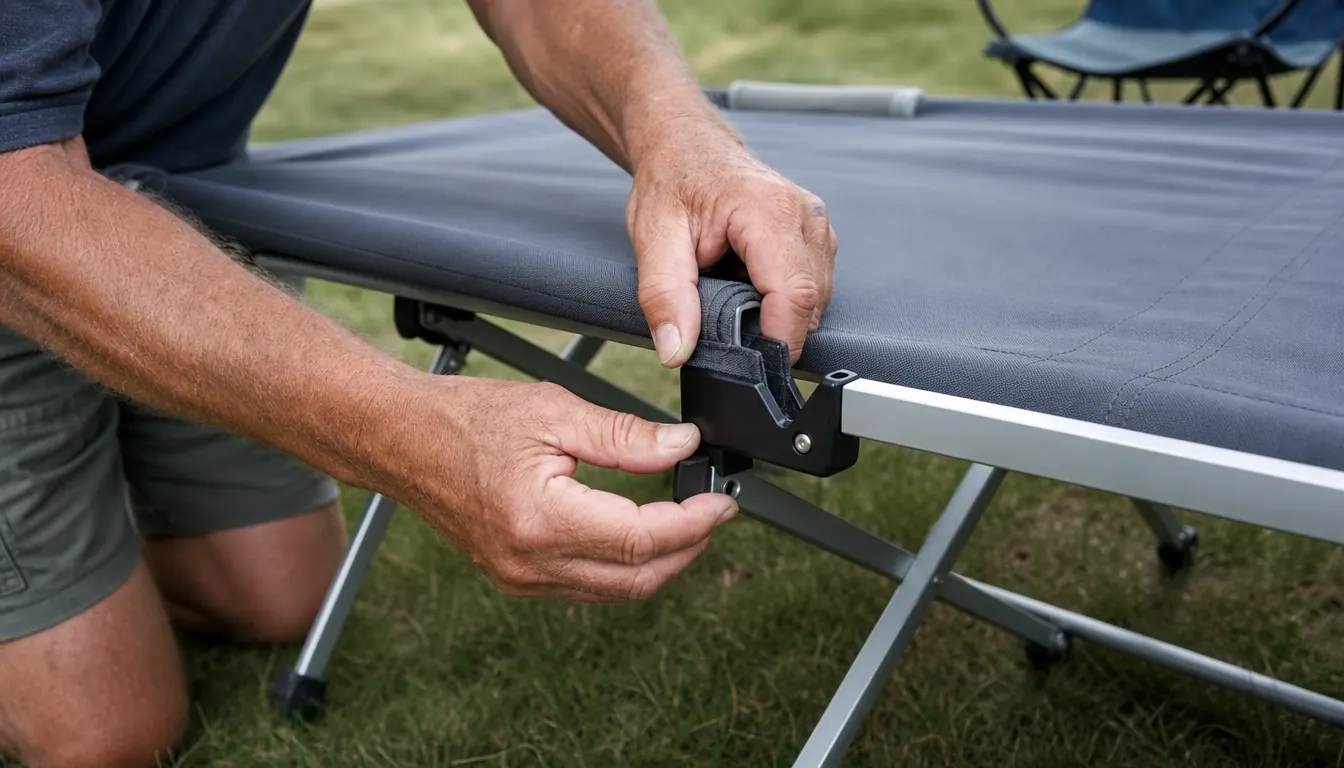
Second, the setup quirk. The instructions want you to unfold the X-frame legs first and then snap the fabric rails over the ends. That works, but if you have ever fought with a cot in the dark you know the trick is to get one rail fully seated before you touch the other. If you do the two ends at the same time, the fabric twists and you fight it for a minute. Once I learned to seat the foot rail first, the whole thing came together in under a minute and a half. It is not a flaw. It is a technique, and nobody tells you about it until you have done it wrong three times.
Third, the cold-air thing I already mentioned. I am going to say it again because it is the single biggest thing a first-time cot buyer does not expect. A cot is great in summer and a cold trap in shoulder season unless you bring insulation. I fixed it with a cheap closed-cell foam pad cut to fit the cot, which also solved the bar-through-the-fabric issue in one move. That combination, cot plus foam pad, is what I have used ever since, and it is the setup I would recommend to anyone who camps in September when the nights drop into the thirties.
There is a fourth thing, and it is the one that genuinely surprised me. The cot is bouncy. Not in a bad way, but it has give. When you roll over at night the whole frame flexes a little and then settles. It feels like a very firm spring mattress, and after a few nights you stop noticing it. But if you are a light sleeper who shares a tent with someone on a cot, you will feel every time they shift. Dana slept on it one night in June and told me it felt like sleeping on a dock. I took that as a compliment, because a dock does not poke you in the ribs.
The Loaning Out Test
The frame of this review is that I loaned this cot out twice, and that is where the honest part really starts. The first loan was in July to a fishing buddy who wanted to bring his teenage son along and only had one tent pad worth of floor space. The boy slept on the Trailhead II and the cot came back two days later looking exactly as it left, with one complaint from the kid that the cot was too bouncy when he rolled over. I took that as a good sign. Bouncy means the suspension is doing its job, and a teenager who found it fun is a teenager who slept through the night.
The second loan is the one that matters. In late September I loaned it to a neighbor who was hosting his brother and only had a guest bed and a floor. The brother is a big guy, north of 250 pounds, and he slept on the cot for four nights. When it came back I found a bent leg. The bend was not dramatic. It was maybe an eighth of an inch out of true on one of the four legs, right at the point where the leg meets the X-frame. The cot still stood fine, still supported my weight, still folded and unfolded normally. But it was bent, and it did not get bent by me.
I called the neighbor to ask about it and he was apologetic, said his brother did not sleep well and spent a lot of the night shifting around, trying to get comfortable. I am not blaming the cot for that. A 250-plus-pound man tossing on any cot for four nights is going to stress the frame. The point is that the frame is built to take a static load very well and a dynamic load less well. If you are a calm sleeper near the weight limit, you will be fine for years. If you toss and turn, or if you loan the cot to someone who does, the legs will eventually show it. Coleman does not advertise that, and I wish they did.
What Held Up and What Didn't
Eighteen months in, here is the honest ledger. The fabric has held up completely. No tears, no pulled seams, no failed stitching anywhere, even after a season of being shoved under duffel bags in the back of the 4Runner and set up on gravel, pine needles, and once on a patch of bare volcanic rock. The carry bag is still intact, which surprised me because it is a lightweight nylon sleeve and I expected the zipper to be the first casualty. It is still working fine, and the grab handle at the top has not ripped, which is more than I can say for two other bags I have owned.
What did not hold up is the finish on the frame. The dark coating has worn off in patches where the legs rub against the X-frame pivot during setup. It is purely cosmetic. There is no rust because I keep the cot dry, but if you camp in the rain a lot, those bare spots are exactly where rust will start. It is worth wiping the frame down when you pack it up if you have been out in wet weather. I started doing that after a wet trip in June and the bare spots have not spread since.
The other thing that showed wear is the webbing on the two end caps. There is a little strap on each end that helps you pull the fabric taut during setup. Those straps are fine, but the stitching that holds them to the frame has loosened on one side. Nothing is torn. It is just looser than it was, and the strap flops around a little more than it did new. I have started treating the straps gently during setup, and I expect they will outlast the cot itself, but it is the first thing I would check if I were buying a used one.
What I Liked
- Sets up in under ninety seconds once you learn the order, and folds back down just as fast
- Genuinely comfortable for a side sleeper, especially with a thin foam pad over the fabric
- Pack size is manageable for car camping and fits behind the rear seat of an SUV
- Elevated design keeps you off cold, damp, or rocky ground and is cooler on hot nights
- Built to take a static 300-pound load without complaint
Where It Falls Short
- No insulation under you, so it runs cold in shoulder season unless you add a pad
- Fabric sags after a few months and you can feel the side rails through it
- Frame legs will bend under heavy tossing, so it is not ideal for a restless heavyweight sleeper
- Powder coat wears off at the pivots, which matters if you camp wet
The fabric has held up completely, but the frame is honest about its limits: it takes a static 300-pound load all day and a tossing 250-pound sleeper less well.
How It Compares to the Alternatives I Tried
I did not buy this cot in a vacuum. Before I settled on the Trailhead II I spent a season sleeping on the ground with a thick air pad, and I owned a cheaper folding cot years ago that I gave away because the frame folded up under me in the middle of the night. That experience is the reason I was willing to pay a little more for the Coleman. The cheap cot taught me that the frame is everything, and the Trailhead II frame, for all its quirks, has never once threatened to fold. That is the single most important thing a cot does, and it does that job without drama.
Compared to a sleeping pad on the tent floor, the cot wins on getting you up off the damp, the cold, and the rocks, and it loses on pack size and weight. The Trailhead II packs down to a long, flat bundle that fits fine in the back of a 4Runner but would be a problem in a small car full of people. It also weighs noticeably more than a pad. For a car camper who is not counting ounces, that trade is easy to make. For anyone who has to carry a cot any real distance from the vehicle, it is not. I have carried this cot about forty yards from the truck to a campsite and I would not want to carry it much farther.
Who This Is For
Buy this cot if you are a car camper or a basecamp camper who sleeps off the ground, if you host guests on a regular basis, or if you just want a spare bed that packs flat. It is ideal for the person who camps from a vehicle, wants to be up out of the dirt and the damp, and is willing to add a cheap foam pad for the cold months. It is also the right call for anyone who needs a cot for a kid or a teenager on a camping trip, because the bounce that bothered the fishing buddy's son is exactly what makes it fun for a younger sleeper. For that use it will last for years and years, and it will survive being loaned out more gracefully than most gear I own.
Who Should Skip It
Skip it if you are an ultralight backpacker, because this cot is heavy and it does not pack down to anything close to a backpack size. Skip it if you are a restless heavy sleeper over about 240 pounds, because the frame will show it, and skip it if you do most of your camping in cold weather and are not willing to carry an extra pad to insulate the cot from below. And if you sleep hot, the foam-pad solution I use will make that worse, so think about whether you would rather be on the ground with a ventilated pad instead. For those people, a sleeping pad on the tent floor is the better buy, and the cot will just sit in your garage.
The cot I keep reaching for, eighteen months and two loans later
It is not perfect, and I told you exactly where it is not. But for car camping, guest duty, and a solid night's sleep off the ground, it is the one I trust. Check today's price and decide if it belongs in your kit.
Amazon Check Today's Price on Amazon →