For years I packed a single backpacking burner on car camping trips to save room in the back of the 4Runner. It fit in a shoebox and lit on the first try, but every meal was a one-pot waiting game. Coffee had to finish before bacon started. Dinner for four took three rounds and the first plate was cold before the last one was served. Every trip started with the same argument about what to leave behind.
Last spring I finally gave in and bought the Camp Chef Explorer two-burner stove. The truck had the room, and after one trip I could not figure out why I had waited so long. Here are ten reasons a full two-burner stove is worth the space it takes in the back, in the order I noticed them over the season.
Cook the whole trip on two burners, not one
If you are tired of eating cold food in shifts, the Camp Chef Explorer fixes it on the first trip out. Two burners, real simmer control, and a lid that doubles as prep space.
Amazon Check Today's Price on Amazon →Coffee and a hot breakfast at the same time
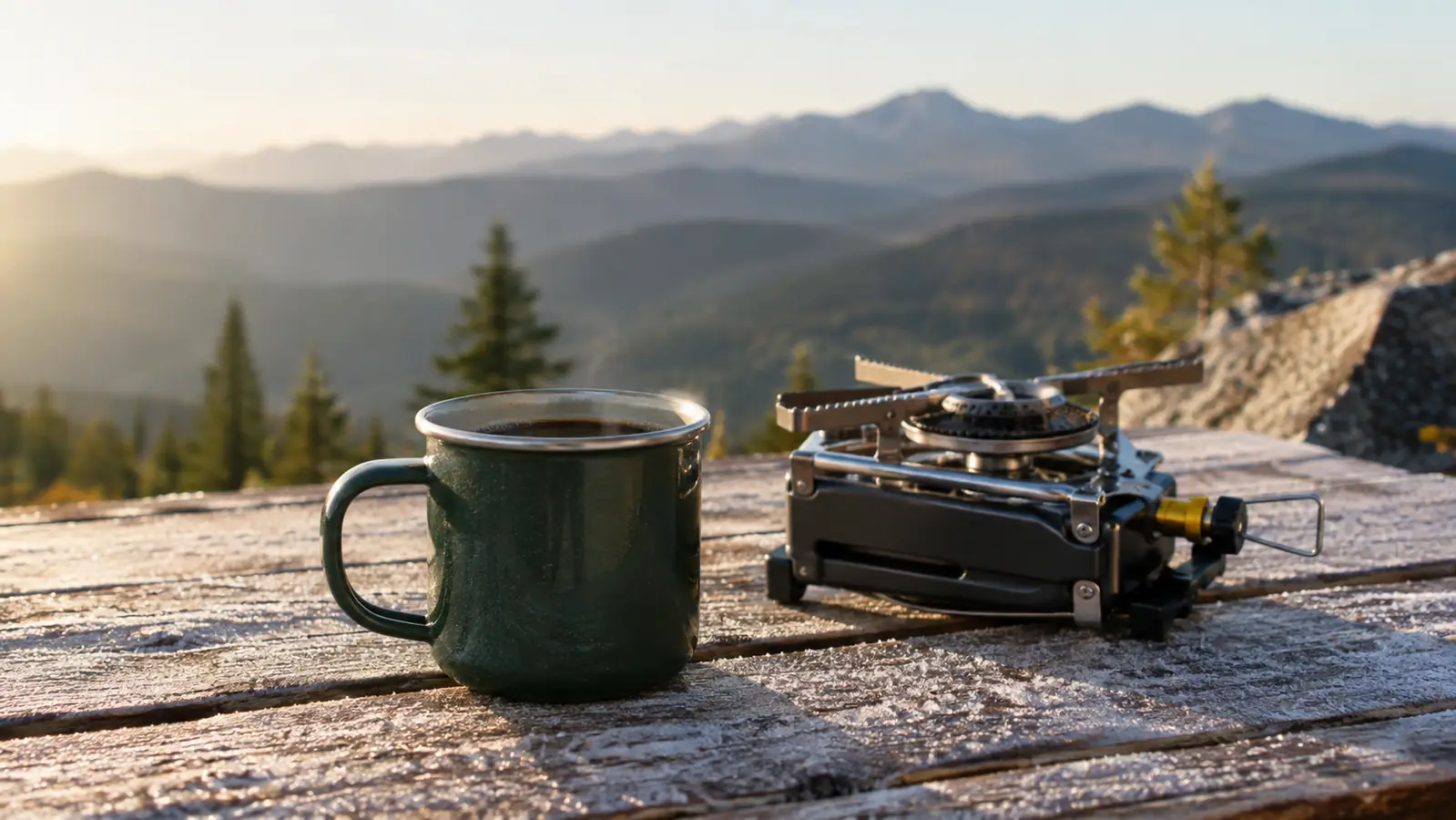
A single burner makes you choose, and I got tired of choosing. In September at Smith Rock, with frost on the picnic table at 7 a.m., I wanted coffee before eggs and eggs before anything got cold. The second burner gave me both in about twelve minutes. The single burner I had packed for years meant one or the other, then a reheat that turned the eggs rubbery by the time the coffee was ready. I had tried brewing first and reheating, and reheated eggs are a sad breakfast. The coffee was done and staying hot while the eggs cooked, and we sat down to eat together instead of one at a time. That one morning sold me.
Cooking for a crowd without a second round
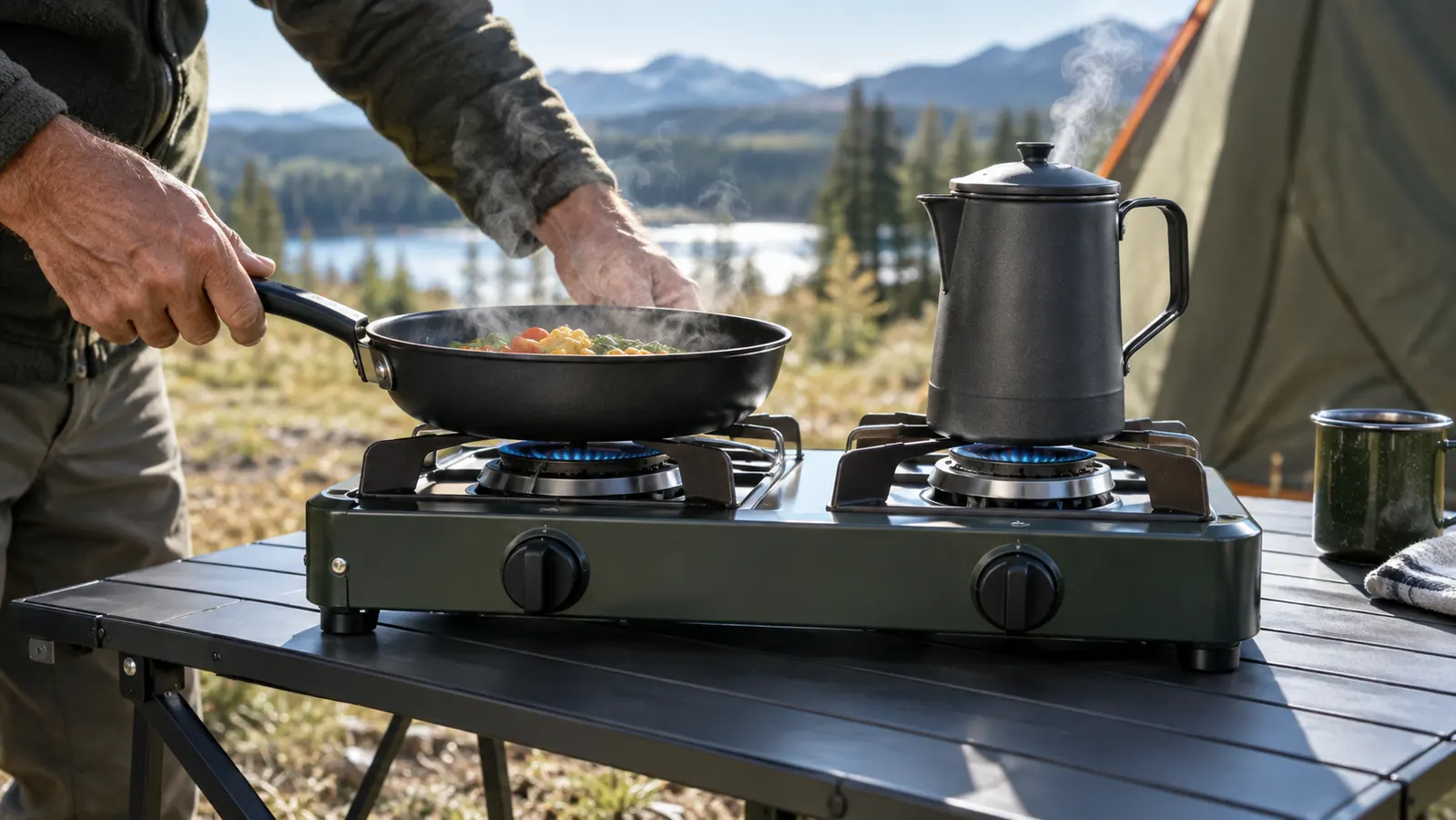
Camping with friends a few times a summer means cooking for four or six, and four adults eat a lot. With one burner, pancakes came out in shifts and the first plate was cold by the time the last one hit the table. Two burners handle a full griddle of pancakes and a pan of sausage at once. Breakfast for six is done in one round, nobody eats cold food, and we are on the trail by nine instead of ten. That hour matters when the fishing is good. A cold first plate was the norm for so long I forgot it was not normal.
It actually simmers instead of scorching
The Explorer's burners put out 30,000 BTUs each, but the control goes down to a real simmer. My old single burner had one useful setting, basically high, and chili burned on the bottom every time I tried it. With this stove I can hold a pot of beans at a gentle bubble for a full hour without stirring every two minutes. That matters at altitude, where water boils at a lower temperature and a bare flame makes everything scorch faster. The simmer knob has a detent that holds the flame steady, so I do not have to babysit it.
Wind screens a bare burner never had
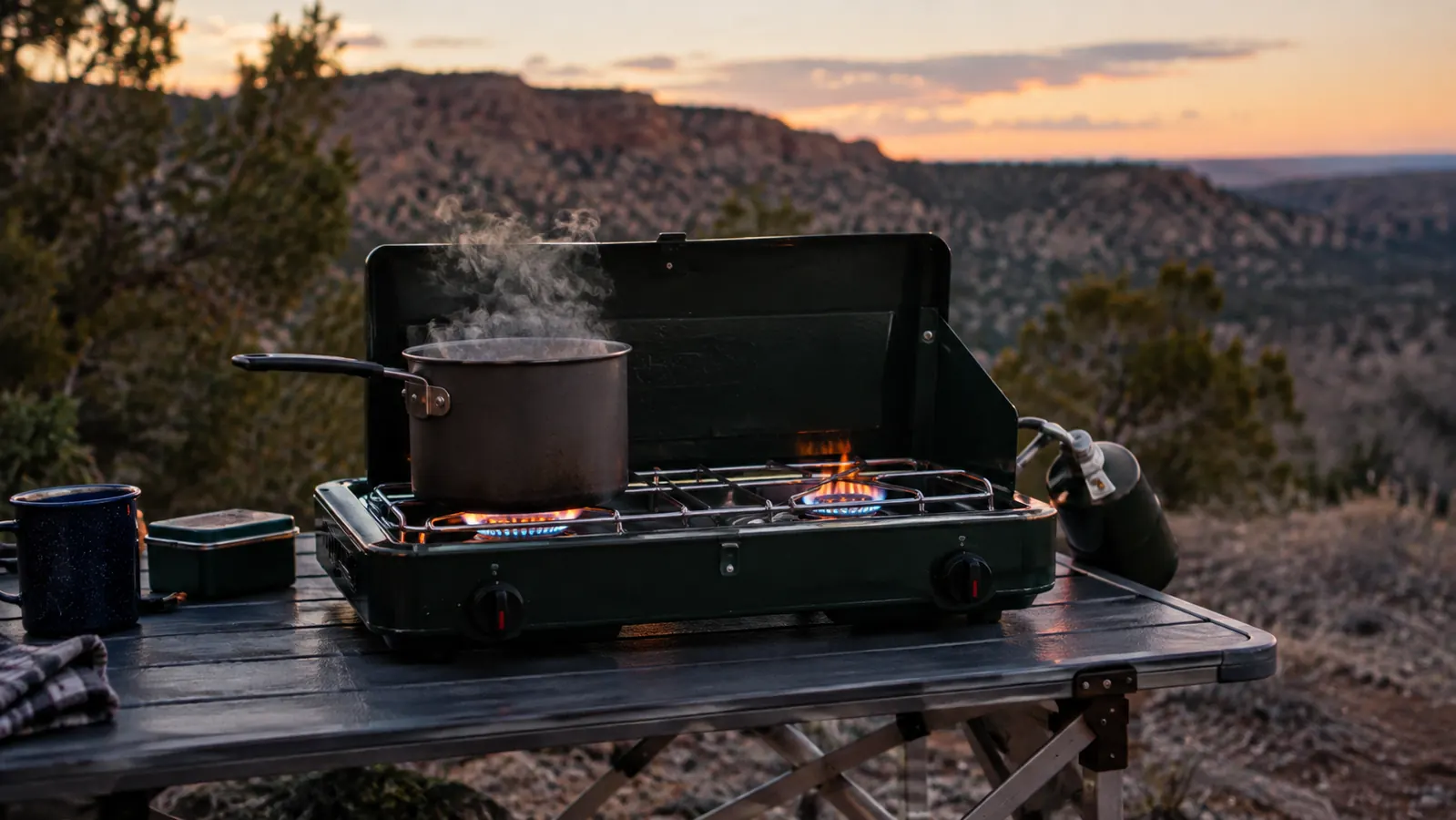
The high desert east of Bend is windy most afternoons, and a bare flame gets blown sideways so dinner takes forever. The Explorer has folding wind screens on three sides, and on a gusty May evening at the Deschutes the water boiled as fast as it does in my kitchen. That one night was worth the space by itself. The wind screens fold flat when I pack it, so they cost no extra room. I stopped hunting for a sheltered spot behind a rock to set up the stove. By August I stopped even looking for a windbreak and just set up wherever the view was good.
A flat lid that doubles as prep space
Camp tables are small and Dana and I both need room to work. The stove's lid folds down into a clean metal surface about the size of a cutting board. I can chop vegetables on it, set a bowl on it, and keep the table clear. On a cramped site that extra square foot counts more than you would think, and it keeps the food off the gravel. We have eaten off that lid more times than I can count. It is the extra counter I always wished camp tables had.
One griddle feeds the whole crew
I bought the flat griddle that Camp Chef sells for the Explorer and it changed camp breakfast entirely. Bacon, eggs, and hash browns all cook on one hot surface at the same time. For years I flipped each thing separately and ate my breakfast cold. Now one trip to the stove and the whole meal is going. Cleanup is one scrape and a wipe, and I am back on the trail sooner than I used to be. The griddle fits in the stove's own lid when I pack it, so it does not take extra space.
Stable enough to ignore while it cooks
A full pot of water on a backpacking stove is top-heavy, and I have tipped more than one. The Explorer sits wide and low and the legs lock solid. In June up at Three Sisters, with a seven-quart pot of pasta water sloshing, nothing moved. The legs lock with a firm click and there is no wobble, even on the uneven gravel. I stopped thinking about knocking it over, and that lets me relax while I cook. That peace of mind is worth more than any cooking feature.
Fuel you can find in any small town
Backpacking fuel canisters are expensive and hard to find off the highway. The Explorer runs on the same standard propane bottles you can buy at any gas station between Bend and the trailhead. The bottles screw on and off without tools, and a spare takes up less space than a jacket. I keep two in the back of the 4Runner and I have never once been stuck without fuel on a trip. In ten years of weekend trips I have never once run out, because the fuel is everywhere. It is one less thing to plan around.
Built to last a decade, and repairable
I am on my second season with this stove and it looks like the day I bought it. The paint is scratched from bouncing around the back of the truck, but the burners still light instantly and the knobs have not loosened. Camp Chef sells replacement parts, so when something does wear out I can fix it instead of replacing the whole unit. The burners are simple to pull out and clean, and a stuck burner is a repair, not a trip to the store. That is why I buy gear to keep for a decade, not gear to replace next spring.
It changes the whole trip for the better
The real reason is simpler than any feature. When cooking stops being a chore, the trip gets better. I look forward to camp dinners now, and the space the stove takes is a trade I would make every weekend. Thirty years of camping and I should have made this switch a decade sooner. Dana noticed the difference before I did, and that says a lot. It is the closest thing to a kitchen I have ever had at a campsite, and that is exactly what I wanted.
What I'd Skip
The Explorer is not a backpacking stove, and I would never carry it on my back. If you are hiking miles into the backcountry, a single burner and a light pot are the right call, and I say that as someone who has done both. I also skip the big griddle on solo trips where I am only cooking for myself; the stove alone is plenty. And if you drive a small hatchback with no room to spare, a full two-burner may not fit your loadout. Know what you are carrying before you buy, and buy the stove that matches the trips you actually take.
Two burners changed camp cooking more than any other piece of gear I own.
Give your next trip a real camp kitchen
The Camp Chef Explorer has been on every trip since last spring, and I have not once wished for the single burner back. Two burners, real simmer control, and parts you can actually replace. Check today's price and see if it fits your next weekend out.
Amazon Check Today's Price on Amazon →